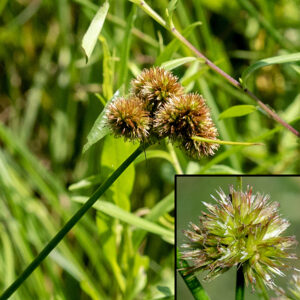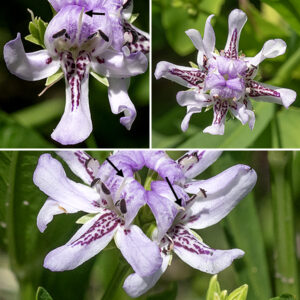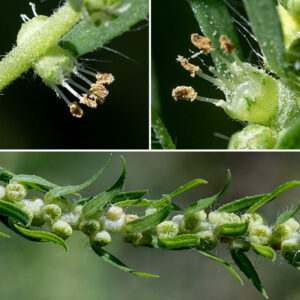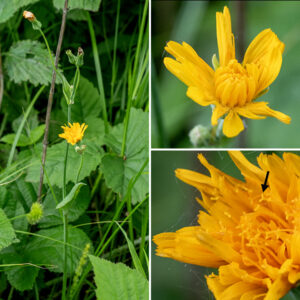
Carex muehlenbergii
sand sedge [Blooms: Apr-May]

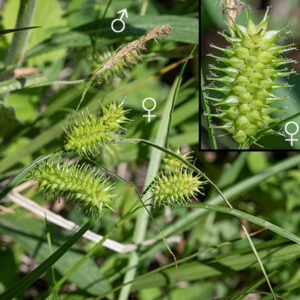
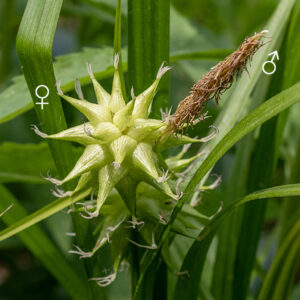
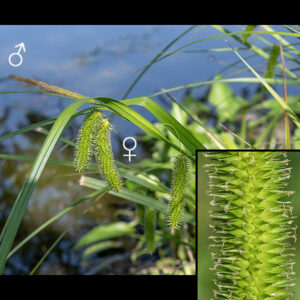
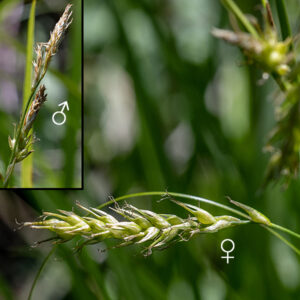
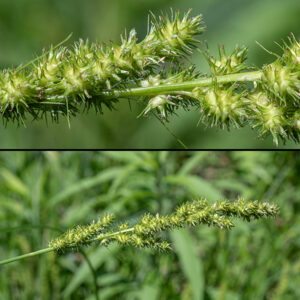
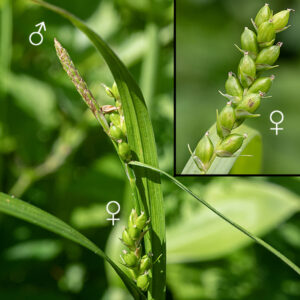
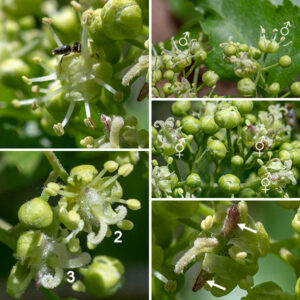
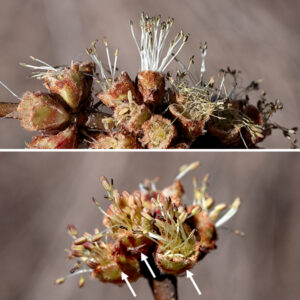
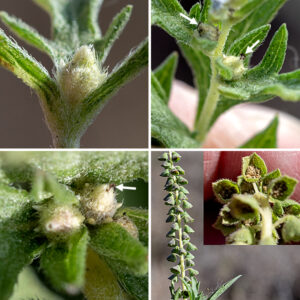
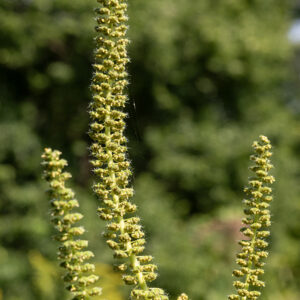
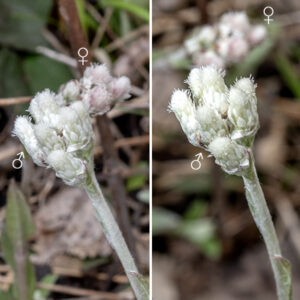
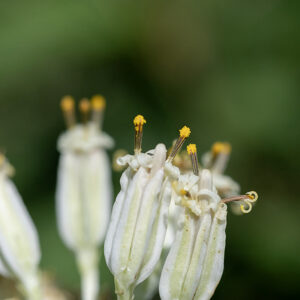
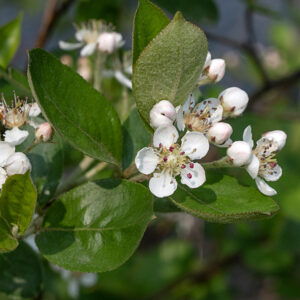
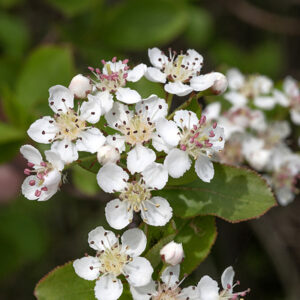
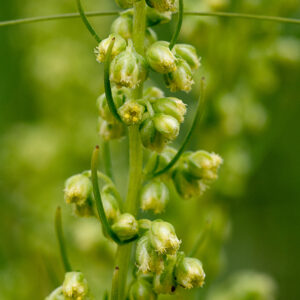
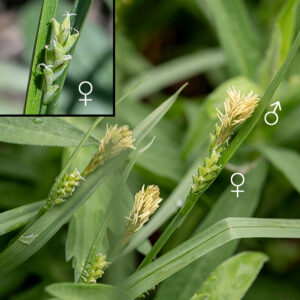
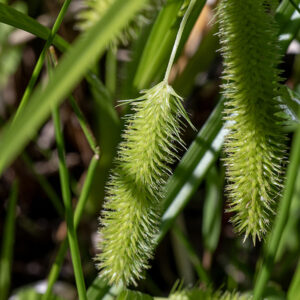
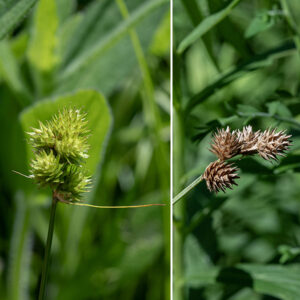
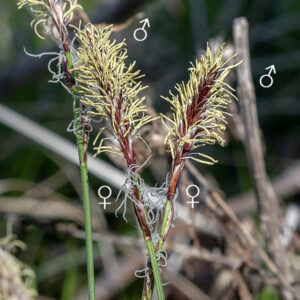
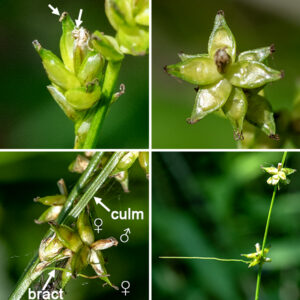
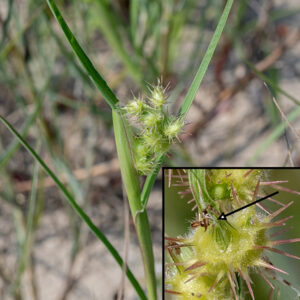
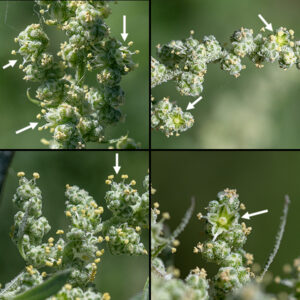
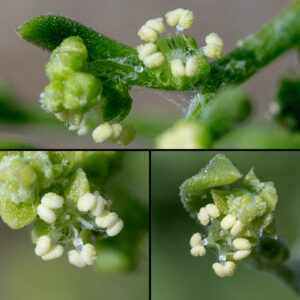
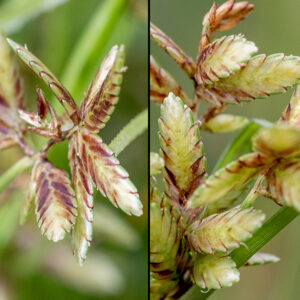
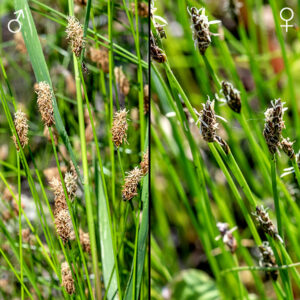
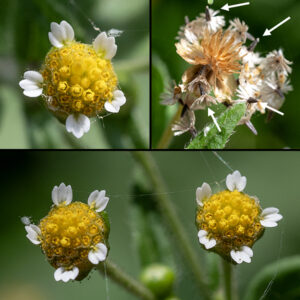
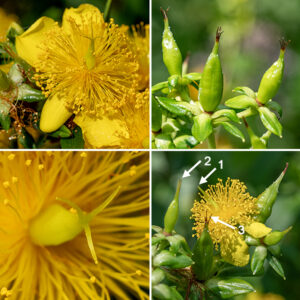
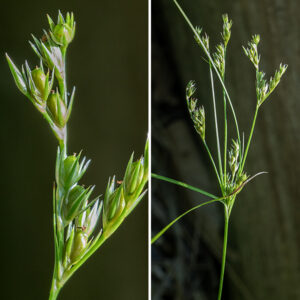
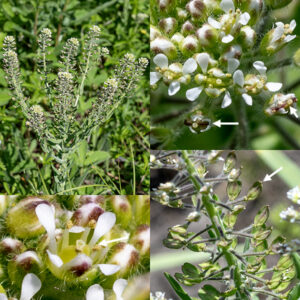
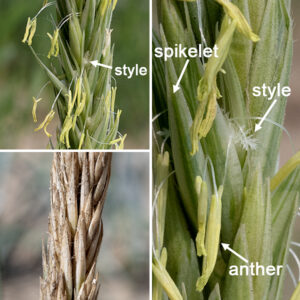
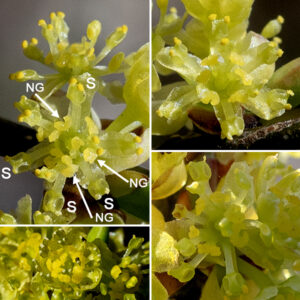
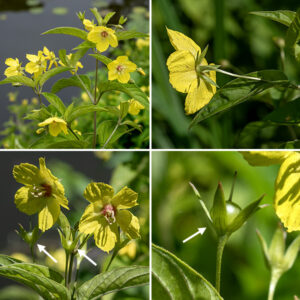
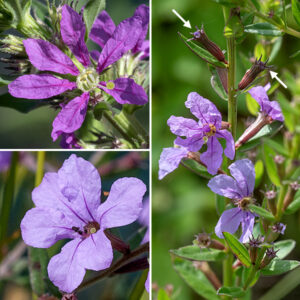
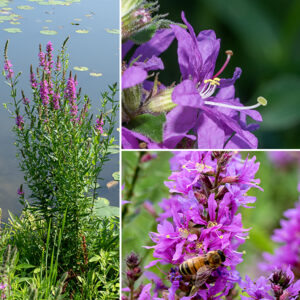
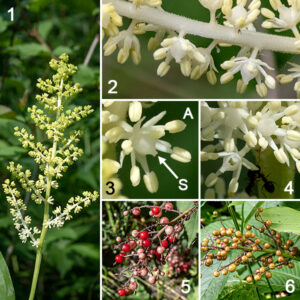
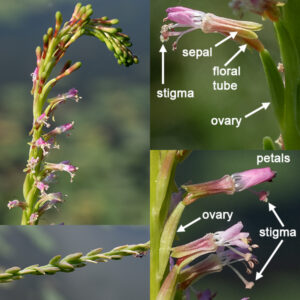
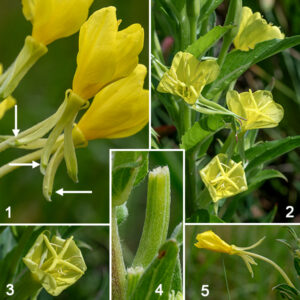
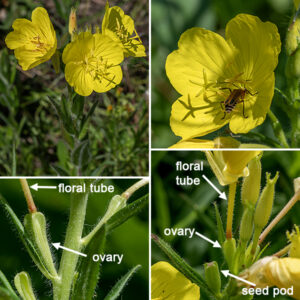
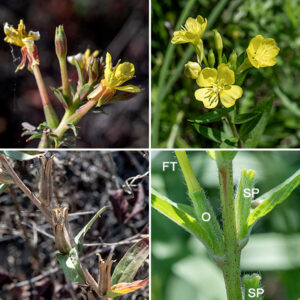
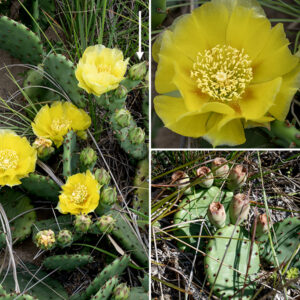
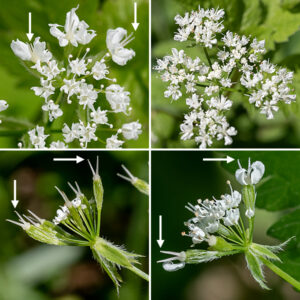
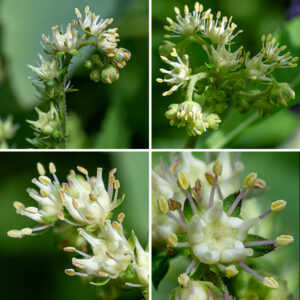
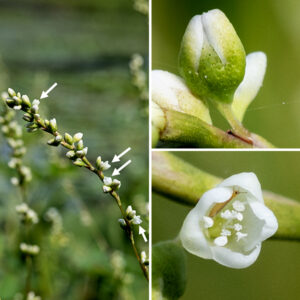
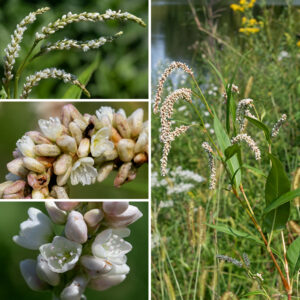
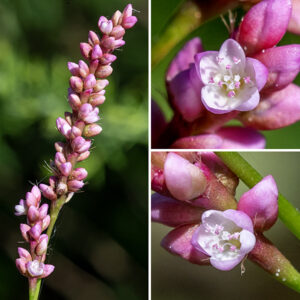
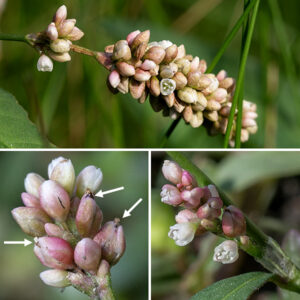
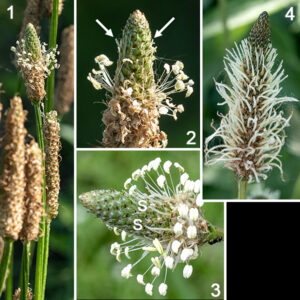
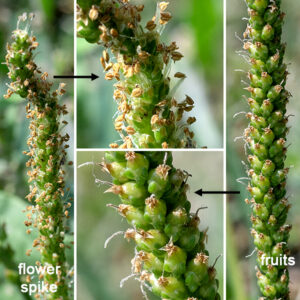
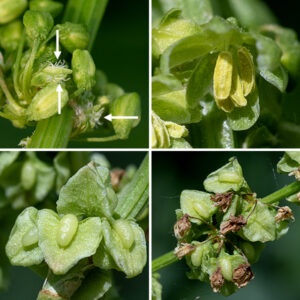
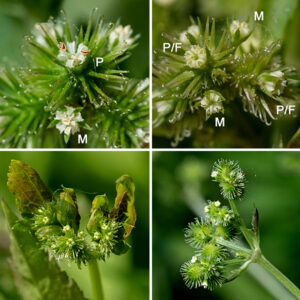
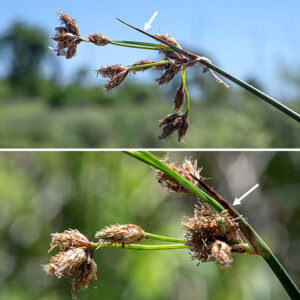
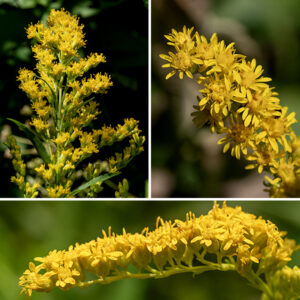
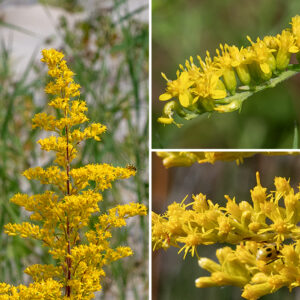
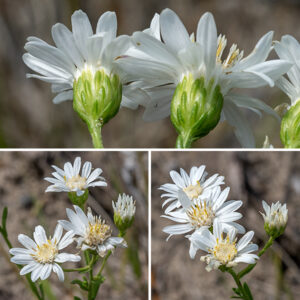
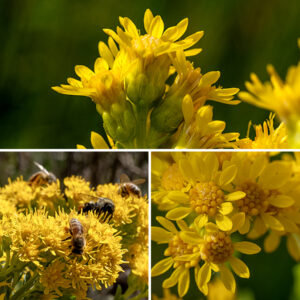
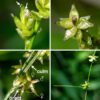
Sand sedge (Carex muehlenbergii) flowers. Bottom: the inflorescence at the tip of a culm of sand sedge. Male (staminate) florets tend to occur at the tip of each spikelet while the female (pistillate) florets occur towards the base of the spikelet. The stigmas of the female flowers are reddish-brown and protrude from the tips of the female perigynia. Top right: another inflorescence of sand sedge. Each spikelet has a needle-like bract at its base, but the bracts are highly variable in length; two are indicated here. Top left: a spikelet at the tip of an inflorescence. The stigmas of a female floret are particularly well shown here.
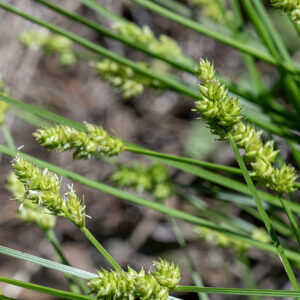
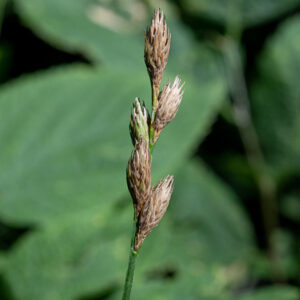
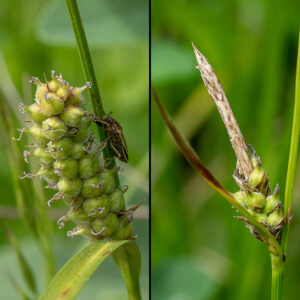
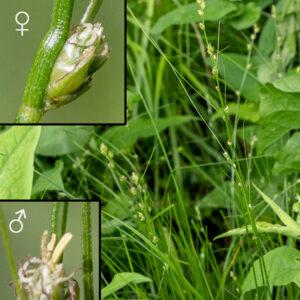
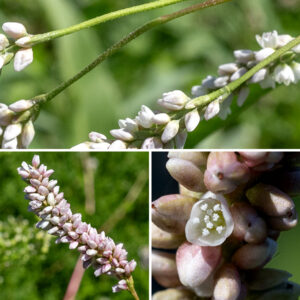
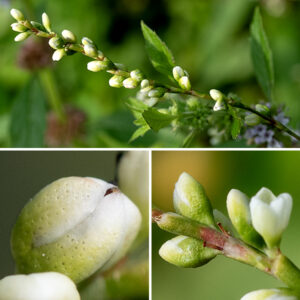
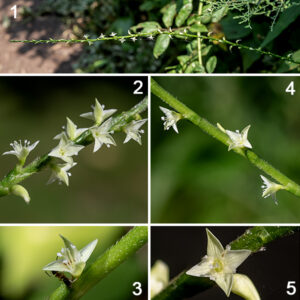
The apex of the culms in sand sedge supports an inflorescence 1/2-1.5″ long and about 1/2″ across consisting of 4-10 overlapping or slightly separated spikelets; at the base of the inflorescence is a 3/4-1″ long, slender leafy bract. A spikelet may have either a few male florets at its apex and the perigynia of both male and female florets below or it may consist entirely of female perigynia. Each spikelet is a cluster of 6-16 ascending or widely spreading light green to yellowish brown perigynia, each 3-4 mm long and 2-3 mm wide. The perigynia are oval in profile but flat to convex on one side, tapering to a short beak that ends in two tiny teeth. Each female floret bears a pair of yellowish- to reddish-brown stigmas. The florets are wind pollinated. After fertilization, the perigynia drop off the spikelets and are dispersed by the wind.

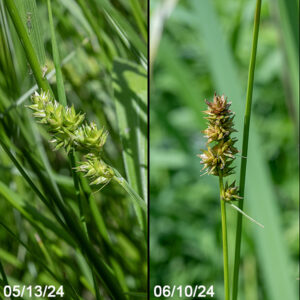
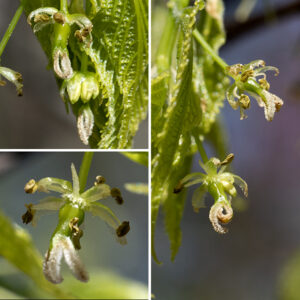
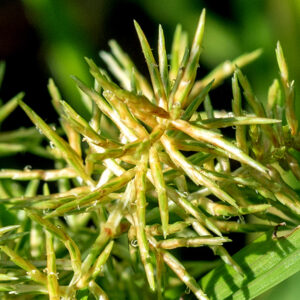
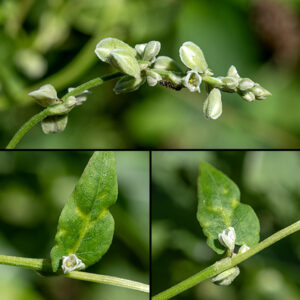
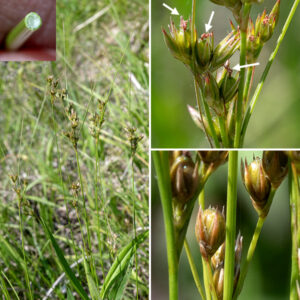
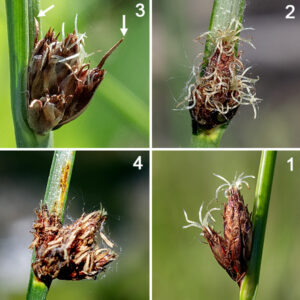
Sand sedge (Carex muehlenbergii) stems and leaves (I). Right: a culm whose base is wrapped by a leaf sheath; the leaf diverges from the leaf sheath about a quarter of the way from the base of the stem. Center: a close-up of a culm. The culm is triangular in cross section, but that is difficult to see from a single viewpoint. Left: a leaf diverging from the leaf sheath and a culm that I am twisting around its long axis. With the twist, it is much easier to see the culm’s triangular cross section.

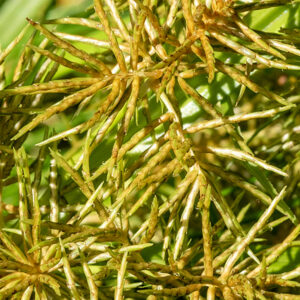
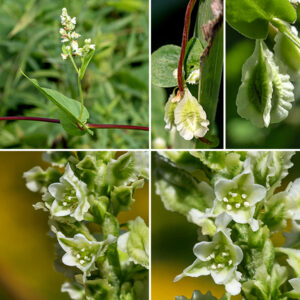
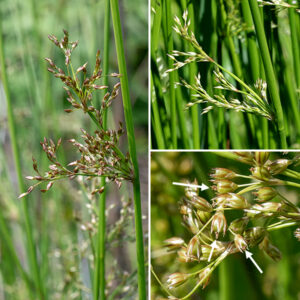
Sand sedge (Carex muehlenbergii) stems and leaves (II). Right: basal leaves of a sand sedge and the leaf sheath rising high on the base of the culm. Left: multiple leaves surrounding a culm with a well-developed inflorescence at its tip. One of the half dozen spikelets is indicted.
Sand sedge leaves are alternate and restricted to the lower quarter to lower third of the culm. The leaf blades are up to 12″ long and 2-4 mm across, widely spreading to arching, distinctly furrowed, and slightly rough along the margins. The leaf sheath is translucent on one face and often with transverse wrinkles; it is light green on the other two sides.

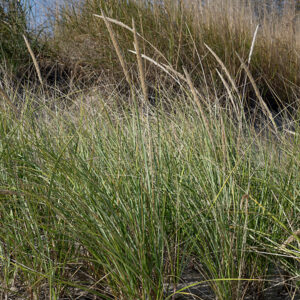
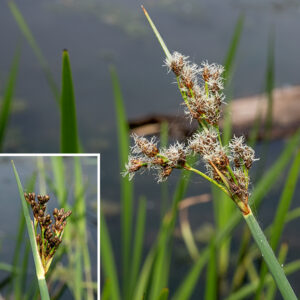
Five sand sedge (Carex muehlenbergii) plants in bloom on the northwest shore of Columbia Basin. The inflorescences, culms, and large leaves are all apparent.
Sand sedge (Carex muehlenbergii) is a native sedge found throughout the eastern U.S. that grows to 1-2.75 feet tall; it is listed as “vulnerable” in Illinois. The plant consists of several low leaves and a light green culm that is triangular in section (“3-angled”). Sand sedge prefers sandy soils (where competition is reduced), but is tolerant of a wide range of light and moisture conditions.
Browse more plants
Want to keep exploring more plants? You can view other plants like this one by selecting a characteristic from the list below, or 'browse more plants' to go back to the Plant Finder.
Related Plants