
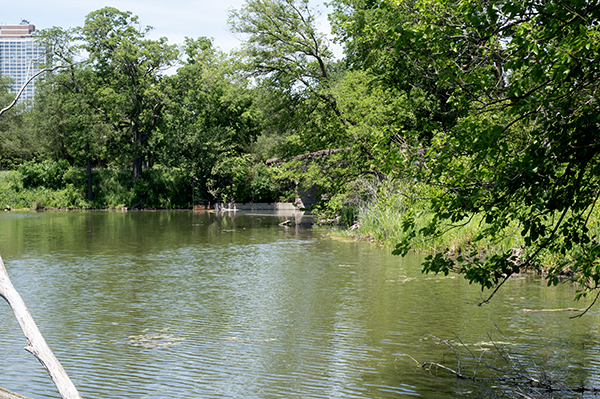
In the glossary entries below, I’ve given examples of plants in Jackson Park that have a given character. Please don’t be misled — these examples are illustrative, not exhaustive. The links WITHIN a glossary entry will take you to another entry within this glossary (for clarification of a term). The links at the END of a glossary entry will open a new tab in your browser and take you to an external website for further clarification. You can return to the Jackson Park Wildflowers website by closing the new tab or by clicking on the tab to the left of the new tab. If you find a botanical term that you’d like to see added to this list, contact me using the form at the bottom of the “About” page. (Links at the top and bottom of this page.)
A-C
alate — see “winged.”
awn — a long, thin, sharply-pointed tip or bristle, usually in a grass or sedge. Wikipedia FLNPS
aments — a slender, often drooping, cylindrical inflorescence, usually with closely crowded unisexual flowers (either male or female) that lack petals (a.k.a., a catkin). Wikipedia MGNV
annual — a plant that completes its life cycle (from seed to reproduction to senescence) in a single year or growing season. Also see biennial, perennial. Wikipedia MGNV
anther — the portion of a stamen (the male parts of a flower) that produces pollen. Anthers are usually two-lobed, hollow, and attached to the receptacle by a stalk called the filament. Wikipedia MGNV
appressed — lying close to and flat on another (similar or different) object but not fused to that object, often referring to hairs on some part of a plant. Appressed is the opposite of spreading. Wikipedia MGNV
areole — a distinct area on a leaf surface that is divided from other such areas by some boundary marker, e.g. a vein. Also bumps on cacti that host clusters of spines. Wikipedia
aril — an extra seed envelope, often colored and fleshy; e.g, the red fleshy structure around yew (Taxus baccata) seeds or the red structure around nutmeg seeds that is used to produce the spice called mace. In Jackson Park, Hamilton’s spindletree (Euonymus hamiltonianus), European spindletree (Euonymus europaeus), and American bittersweet (Celastrus scandens) all produce seeds with arils. Wikipedia MGNV
ascending — (1) curved upward or (2) growing upwards or (3) spreading laterally, then growing upward. Wikipedia
auricle — a small ear-like projection from a petal or leaf; an ear-like lobe. In Jackson Park, multiflora rose (Rosa multiflora) has an auricle on its stipules; narrow-leaf hawksbeard (Crepis tectorum) has auricles on its leaves.Wikipedia
autogamous — fertilization of the ovule of a plant by its own pollen; “selfing.” Wikipedia
axil — the angle between a stem and a leaf; the point where the upper surface of a leaf base or petiole joins the stem; the leaf’s “armpit”. Buds of new branches and flowers commonly arise from leaf axils. Wikipedia MGNV
biennial — a plant that completes its life cycle (from seed to reproduction to senescence) in two years or two growing seasons. Also see annual, perennial. Wikipedia MGNV
bifid — a structure that is divided at its tip into two (usually equal) parts. Wikipedia
bifurcated — forked or divided into two discrete branches. Wikipedia
bipinnate — (= 2-pinnate or doubly pinnate) In a simple compound leaf, the central stem (= the rachis) of the leaf is attached directly to the leaflets. In a bipinnate compound leaf, the rachis is attached to sub-branches that are themselves directly attached to the leaflets (e.g., Illinois bundleflower, Desmanthus illinoensis). I.e., a pinnate leaf in which the primary divisions are themselves pinnate. Also see pinnate. Wikipedia MGNV
bract — a modified, specialized leaf or scale in an inflorescence that is attached below (partial) peduncles, pedicels, or flowers. Bracts are usually clearly distinguishable from cauline leaves in size, shape, color, or texture. Wikipedia MGNV
calyx —The outermost whorl of a flower (composed of the sepals). The inner whorl of a flower (composed of the petals) that protects the reproductive structures is called the corolla. Wikipedia MGNV
catkin — a spike-like compound flower bearing either male or female florets that falls as a unit from the plant after fruiting. Also see aments. MGNV
cauline — A structure arising from or inserting on the stem; e.g, stem leaves = cauline leaves. Wikipedia
circumboreal — a plant or animal whose range circles the Earth’s north pole. Wiktionary Wikipedia
clasping — the base of a leaf that almost surrounds a stem, contacting the stem closely on three sides. Also see perfoliate. MGNV
cleistogamous — self-fertilization that occurs within a flower while it remains closed, a reproductive strategy rare in flowering plants that usually occurs when a plant is stressed due to, e.g., overgrazing or low nutrient levels. Wikipedia
cordate — “heart-shaped.” The adjective “cordate” may refer to the base of a leaf or petal (notched with rounded lobes on either side) or to the whole leaf or petal (ovate with a notched base and pointed tip). Wikipedia FLNPS
corolla — the inner whorl of a flower (composed of the petals) that protects the reproductive structures (and attracts and guides pollinators), those parts of a flower between the sepals and the stamens. The outer whorl of the flower (composed of the sepals) is called the calyx. Wikipedia MGNV
corymb — a raceme whose lower stems are longer than the higher stems are, so all the stems terminate at the same level; a corymb has a flat top. (A corymb in profile is shaped like an inverted pyramid or right cone.) Wikipedia TheSeedSite
crenate — a margin of a leaf with regular, rounded, symmetrical teeth. Wikipedia
culm — the stem of a grass or a sedge. Wikipedia MGNV
cyathium (pl: cyathia) — a structure found only in Euphorbiaceae (e.g, flowering spurge, seaside sandmat, poinsettias) in which a series of modified bracts (phyllaries) form a cup with a number of unisexual flowers inserted on it; the entire structure may be mistaken for a single flower. Wikipedia UofI YouTube
cyme — an inflorescence in which the central or uppermost flower blooms first, with lower flowers opening sequentially (e.g., common comfrey, Symphytum officinale). Growth of a cyme is determinate through axillary buds that arise below the central flower. Cymes are often flat-topped or convex. Wikipedia TheSeedSite MGNV
cypsela — a dry, one-fruited seed with longitudinally oriented awns or bristles; the calyx is often fused to the seed and becomes a pappus to aid in seed dispersal. Dandelions, sunflowers, and daisies (i.e., Asteraceae) all produce cypselae. MGNV
D-H
dentate — a leaf margin with prominent acute, symmetrical teeth that point outward. Wikipedia
dioecious — A plant in which only a single sex of flower (either male or female) is produced on any given plant. For example, in Jackson Park boxelder (Acer negundo), buckthorn (Rhamnus cathartica), and Eastern cottonwood (Populus deltoides) are doiecious. Also see monoecious. MGNV
distylous, distyly — a breeding system in a population of plants in which each plant produces one of two possible flower forms — a flower with long styles (the female portion of the flower) and short stamens (the male portion) or a flower with short styles and long stamens. This arrangement is thought to minimize self-fertilization in the flowers. Also see tristylous, heterostylous. Wikipedia
double-serrate (also doubly-serrate) — a leaf margin with large, asymmetrical teeth, each of which bears smaller teeth. Wikipedia
drupe — a stone fruit like a plum, cherry, or peach. The seed is encased in a hard (“stony”) covering that is the innermost layer of a multilayered fruit wall; the middle layer of the fruit wall is usually fleshy. Wikipedia MGNV
elaiosome — a fleshy structure rich in lipids and proteins, often brightly colored or white, that is attached to a seed. Ants carry the seed plus elaiosome to their nest where the elaiosome is directly consumed or fed to the ant larvae and the seed is discarded in the nest’s waste area. The seeds are thus dispersed by the ants and discarded in an area rich with nutrients where they germinate. Elaiosomes have evolved independently numerous times in a wide variety of plants. In Jackson Park, bloodroot (Sanguinaria canadensis) and large-flowered trillium (Trillium grandiflorum) (among others) produce seeds with elaiosomes. Wikipedia TorontoBotanicalGarden
elliptic — a shape broadest in the middle with two (nearly) equally rounded ends; often considered equivalent to “oval.” Wikipedia MGNV
even-pinnate — a compound leaf with equal numbers of leaflets on each side of the rachis; a terminal leaflet is absent. Also see odd-pinnate, pinnate. Wikipedia
exerted — usually used as an adjective referring to reproductive structures in flowers. “Exerted stamens” extend well beyond the distal edges of the petals; “exerted styles” similarly extend well beyond the distal edges of the petals. MGNV
exotic — a plant (or animal) that is not native (indigenous) to the ecosystem where it is currently found. The term is NOT equivalent to “invasive”, nor does it imply whether the new distribution occurred deliberately or by accident. Wikipedia
extra-floral — literally “outside the flower.” The term is most often used as an adjective as in “extra-floral nectary,” a nectary that occurs outside a flower, usually located on a leaf petiole or leaf blade. The nectar glands typically secrete a sugary solution that attracts ants, encouraging them to patrol the plant and carry off insect eggs or larvae (good sources of protein). Plants with extra-floral nectaries in Jackson Park include American cranberry (Viburnum opulus) and partridge pea (Chamaecrista fasciculata). ExtrafloralNectaries.org
floret — in asters and composites, a floret is a single true flower (petals, sepals, stamens and/or styles) within a larger flowerhead, usually as distinct ray florets and disk florets; in grasses and sedges, a floret is a single true flower plus its bracts (palea and lemma) within a spikelet. Wikipedia MGNV
flowerhead — a flower-like construction composed of numerous small florets; a.k.a., capitulum. In most composites and asters, the “flower” is actually a flowerhead. Wikipedia MGNV FLNPS
follicle — a fruit that is a pod which arises from a single ovary; when it ripens and dries, the follicle splits open only along a single suture (the adaxial suture). (Unlike legume pods, that open along both sutures.) The seeds are attached along that same (adaxial) suture. The fruit of all the milkweeds, wild-indigos, dogbane, and columbine are follicles. Wikipedia MGNV
four-angled (“square”) — In cross section, stems may have a variety of shapes — round (a.k.a., “terete”) is the most common, but triangular and rectangular/square (“four-angled”) also occur. (Triangular: three-square bulrush (Schoenoplectus pungens); four-angled: numerous plants in the mint (Lamiaceae) family.) Because three- and four-angled stems are less common, those characters become useful in recognizing plant species. Recent work suggests that four-angled stems may be mechanically more resistant to bending than circular stems (Proc. R. Soc. A (2025) 481 (2305): 20240445). WildflowerFinder
glabrous — lacking hairs (may refer to leaves, stems, fruits, etc.). MGNV
glandular — covered with glands; a tissue that produces secretions. Wikipedia1 Wikipedia2
glume — in grasses and sedges, the bracts that lie below a spikelet are called “glumes.” They usually occur in pairs. Also see lemma. Wikipedia MGNV
hemiparasite — a plant that is partially dependent on another plant for its some of its metabolic needs (e.g., water, minerals, nutrients) but still uses photosynthesis for at least some of its needs. In Jackson Park, wood betony (Pedicularis canadensis) and mullein foxglove (Dasistoma macrophylla) are hemiparasites. Wikipedia PubMed
heterostylous — A plant species in which there are flower morphs with different but specific proportions among the reproductive organs (pistils and stamens); i.e., some flowers may have short pistils and long stamens while other flowers of the same population have long pistils and short stamens. It is usually assumed that heterostyly is a way to foster outcrossing. Also see distylous, tristylous. Wikipedia
hypanthium — in some flowering plants, the basal portions of the calyx, corolla, and the stamens fuse to form a cup-shaped tube, the hypanthium. The hypanthium often contains the nectaries and surrounds the ovaries. Wikipedia MGNV
I-O
imperfect — A flower in which one of the reproductive organs (the stamens or pistil) is missing; a unisexual flower. In some plants, both sexes of imperfect flowers occur on the same plant (e.g., buckthorn, Rhamnus cathartica); in others, each plant only produces a single sex of flower (e.g., American bittersweet, Celastrus scandens). Also see perfect. MGNV
inflorescence — that portion of a plant that bears the flowers, including all the associated bracts, branches, and flowers but not including unmodified leaves. Wikipedia TheSeedSite MGNV
involucre — a series of bracts (phyllaries) below or around a compact head of flowers (as in composites, asters). The bracts are usually closely spaced and appressed. FLNPS Wikipedia TorontoBotanicalGarden
involute — a term usually applied to leaves. An involute leaf has its edges rolled upward and inward towards the midline of the leaf. The opposite of involute is “revolute“. UofI Wiktionary PlantNet NorthernOntarioFlora
lamina — the more-or-less flat, two-dimensional part of a leaf (i.e., the blade), or a bract, or a petal. Wikipedia
lemma — the outermost (and usually larger) of two bracts enclosing a grass or sedge floret; the lemma usually bears a spike-like awn. Wikipedia
lenticel — corky pores on a plant’s bark or cuticle that allows gas exchange by the phloem, vascular cambium, and other internal tissues. Wikipedia MGNV
ligule, ligulate — (1) A distal, free projection of a leaf sheath that is common in grasses and sedges; ligules are usually translucent and membranous or are a fringe of fibers. (2) The petal-like corolla of a ray floret in a composite flowerhead (in the Asteraceae) is also called a ligule. FLNPS Wikipedia TorontoBotanicalGarden
loment — a flat, pod-like fruit that is constricted between each seed; it tends to fall apart at the constrictions into single-seed units. Loments are common in members of the pea family (Fabaceae). In Jackson Park, the tick-trefoils (Desmodium sp.) and crown vetch (Securigera varia) produce loments. Wikipedia MGNV
monoecious — a plant that produces only perfect flowers (bisexual, with both functional stamens and pistils) or one that produces both male and female flowers on the same plant. (I.e., most plants in Jackson Park.) Also see dioecious. MGNV
naturalized — non-native (introduced) species that have become established and reproduce freely without human assistance. HRWC EspacePourlavie
nectary — organs on a plant where nectar is produced. Nectar is a fluid containing sugars and amino acids to nourish and reward animal mutualists, most commonly pollinators, but also defensive mutualists. Wikipedia GKH
nutlet — an individual carpel or half-carpel of a fruit derived from the female elements of a flower; a small nut. In Jackson Park, the fruits of American germander (Teucrium canadense), gypsywort (Lycopus europaeus), and heal-all (Prunella vulgaris), among many others, are nutlets. MGNV Wikipedia
ocrea, -ae — a tubular stipule sheathing a stem. In Jackson Park, ocrea are found in jumpseed (Persicaria virginiana), lady’s-thumb (Persicaria maculosa) and the other smartweeds, and climbing false-buckwheat (Fallopia scandens), among others. Wikipedia
odd-pinnate — a compound leaf with an odd number of leaflets; all leaflets are paired except for a single terminal leaflet. Also see even-pinnate, pinnate. Wikipedia
P-R
palea, paleae — either: (1) a chaffy scale or thin bract interspersed among the florets of composite and aster flowerheads, or (2) the inner of the two bracts enclosing the floret in grasses and sedges. Wikipedia1 Wikipedia2 ScienceDirect
palmate — either: (1) a compound leaf in which the leaflets all originate from a single central point (like fingers on a hand), or (2) lobes on a simple leaf that originate from a central region. In Jackson Park, flower-of-an-hour (Hibiscus trionum), wild lupine (Lupinus perennis), and all the clovers have palmately-compound leaves; Missouri gooseberry (Ribes missouriense), riverbank grape (Vitis riparia), and glade mallow (Napaea dioica) all have palmately-lobed simple leaves. MGNV TylerArboretum Wikipedia
palmately-compound — see palmate.
pappus — in asters and composites, a series of scales, hairs, or bristles around the base of the corolla; after fertilization, these become a radiating series of structures around the apex of the fruit that aid in wind dispersal. In Jackson Park, a pappus is present in the fruits of all goldenrods, asters, Joe-Pye weeds, and even (in modified form) in devil’s beggar-tick (Bidens frondosa). Wikipedia MGNV
pedicel — the stalk of an individual flower (or later, the fruit) in an inflorescence; the calyx of the flower is attached to the apex of the pedicel. Compare with peduncle. Wikipedia MGNV
peduncle — the peduncle is an unbranched stalk supporting either an inflorescence or a solitary flower (or fruit). Compare with pedicel. Wikipedia MGNV
perennial — a plant that persists for multiple (over two) years, reproducing annually or on a longer yearly cycle. Also see annual, biennial.
perfect — a flower that includes both male (stamens) and female (pistils) parts. Also see imperfect. Wikipedia
perfoliate — a leaf blade that is or apparently is penetrated by a stem, often because the bases of two opposite leaves have fused around the stem. In Jackson Park, yellow bellwort (Uvularia grandiflora), common boneset (Eupatorium perfoliatum), and grape honeysuckle (Lonicera reticulata) all have perfoliate leaves. Also see clasping. LaidBackGardener Wikipedia MGNV
perigynium, perigynia — in the genus Carex (sedges), a sac that surrounds the female florets and, later, the fruits. In Jackson Park, capitate sedges (Carex cephalophora), longbeaked sedges (Carex sprengelii), and woodland sedges (Carex blanda) all have prominent perigynia. Wikipedia FLNPS
petiole — the basal, usually cylindrical, part of a leaf that contains vascular bundles that connect the vascular bundles of the stem to those in the leaf blade; the petiole lies between the leaf blade and the stem. Petioles permit the plant to reposition the leaf in response to light levels, high winds, and water (osmotic) and thermal stress. MGNV Wikipedia
petiolule — the stalk of individual leaflets in a compound leaf. The leaflets are attached to petiolules which are attached to the rachis (central stem) which attaches to the petiole of the entire compound leaf. MGNV NYBotanicGarden OregonState
phyllary, phyllaries — the bracts forming the involucre in composite and asters. Each of the Plant Finder pages for asters (genus Symphyotrichum) has a page devoted to the phyllaries of these flowers. Wikipedia PlantID AwkwardBotany
pinnate — feather-like; a compound leaf with a central stem (rachis) with several lateral leaflets. Wikipedia MGNV
pistil — the female component of a flower, typically composed of an ovary, style, and stigma. Wikipedia MGNV
pistillate — having a pistil; a flower with only the female organs. See also imperfect. Wikipedia
plicate — with parallel folds; pleated. In Jackson Park, jetbead (Rhodotypos scandens) has plicate leaves. TorontoBontanicGarden
prickle — a sharply pointed outgrowth from a plant’s epidermis that is detachable without tearing the organ. Although the terms thorns, spines, and prickles are often used interchangeably, strictly speaking, thorns are derived from shoots, spines are derived from leaves (either the whole leaf or the vascular bundles), and prickles are derived from epidermal tissues. Roses, blackberries, and raspberries have prickles. In Jackson Park, cockspur hawthorn (Crataegus crus-galli) has thorns, Eastern prickly-pear (Opuntia humifusa) has spines, and common blackberry (Rubus allegheniensis) has prickles. Wikipedia FLNPS
pulvinus — a swelling on a leaf petiole (either on the base where the petiole attaches to the stem, on the tip where the petiole attaches to the leaf blade, or both) that functions to actively move and reposition the leaf blade. In Jackson Park, Maryland senna (Senna marilandica) has a pulvinus. Wikipedia PubMed
raceme — a single-axis inflorescence with indeterminate growth where all the flowers are attached to the rachis (see below) by pedicels and the terminal flower (or bud) is the youngest and last to open. Numerous plants in Jackson Park produce racemes including American wisteria (Wisteria frutescens), common arrowhead (Sagittaria latifolia), and cardinal flower (Lobelia cardinalis). Wikipedia MGNV
rachilla — in grasses and sedges, the axis within a spikelet to which the florets are attached. Wikipedia NYBotanicGarden
rachis — in compound leaves or in an inflorescence, that portion of the central axis that lies distal to the petiole; the leaflets (compound leaves) or flowers (inflorescences) attach to the rachis. MGNV
receptacle — an enlarged region at the tip of a flower stalk where the sepals, petals, stamens, and carpels are inserted. Wikipedia MGNV
reflexed, reflected — curved downward or backward at a sharp angle (more than 90°). In Jackson Park, the flowers of common hawthorn (Crataegus monogyna) and prairie trillium (Trillium recurvatum) have reflexed sepals bent over the receptacle/flower stalk; all the milkweeds have their petals reflexed, reflected back over the receptacle/flower stalk. Wikipedia
reticulate, -ed — having a net-like pattern as in reticulated veins in a leaf. Wikipedia
revolute — a term usually applied to leaves. A revolute leaf has its edges rolled under and inward towards the midline of the leaf. The opposite of revolute is “involute“. Wikipedia
S-Z
scape — a flower stalk or inflorescence stalk arising from ground level that lacks leaves. In Jackson Park, plants with scapes include summer snowflake (Leucojum aestivum), striped squill (Puschkinia scilloides), and grape hyacinth (Muscari botryoides). Wikipedia TorontoBotanicGarden
serrate — a leaf margin bearing regular teeth that are angled towards the leaf apex (like the teeth on a circular saw blade). In Jackson Park, the leaves of wild hydrangea (Hydrangea arborescens), smooth ironweed (Vernonia fasciculata), and sweet Joe-Pye weed (Eutrochium purpureum) are all serrate. Wikipedia
sessile — attached directly to another part of the plant, usually the stem; i.e., flowers or leaves without a stalk. Wikipedia MGNV
silique (sometimes “siliqua”) — a cylindrical fruit more than three times longer than wide that is divided into two compartments by a thin partition. Siliques are common fruit forms in mustards. Wikipedia WaynesWord
spadix — an unbranched inflorescence with a thickened or fleshy axis; the flowers are at least partly sunken into the axis. In Jackson Park, Jack-in-the-pulpit (Arisaema triphyllum) has a spadix (“Jack”). Also see spathe. Wikipedia GardeningKnowHow
spathe — a large bract that partially sheaths an entire inflorescence (typically a spadix). In Jackson Park, asiatic dayflower (Commelina communis), Jack-in-the-pulpit (Arisaema triphyllum), and blue flag iris (Iris virginica) all have spathes. Also see spadix. Wikipedia MGNV GardeningKnowHow
spike — a raceme-like inflorescence with flowers that are sessile and alternate their attachments to the unbranched axis. In Jackson Park, the inflorescences of blue vervain (Verbena hastata), blue giant hyssop (Agastache foeniculum), and sedges are spikes. Wikipedia MGNV
spikelet — a structure in grasses and sedges consisting of two sterile bracts, a small axis, and some number of florets. Wikipedia PlantID
spreading — loose, not erect, sprawling; diverging from another structure at a large angle. The opposite of appressed. Cactus-Art FLNPS
stamen — the male organ of a flower. Stamens consist of two structures, the anther that produces the pollen and a long stalk (the filament) that positions the anther relative to other parts of the flower. Wikipedia MGNV
staminal column — a central stalk in a flower formed by the fusion of part or all the filaments of the stamens. In Jackson Park, a staminal column is found in the flowers of flower-of-an-hour (Hibiscus trionum), both species of rose-mallow (Hibiscus sp.), glade mallow (Napaea dioica), and common mallow (Napaea dioica). BackYardNature Microscopy-UK
staminate — having a stamen or stamens, male, a unisexual flower containing only stamens. MGNV
staminode — a sterile or abortive stamen; staminoides are usually considerably smaller than the pollen-producing stamens (and do not produce pollen). All penstemons such as hairy beardstongue (Penstemon digitalis) have a staminode; it looks like a filament of a stamen devoid of anthers. Early and late figwort (Scrophularia lanceolata and S. marilandica) also have staminodes; in these species the staminode is large, broad, and distinctively colored. Wikipedia PubMed
stigma — the pollen receptor of the female parts of the flower. The stigma may have a variety of forms from a simple disc to a highly branched structure; it may be borne on a style or be sessile on the ovary. Wikipedia MGNV
stipule — paired leaf-like, spine-like, or scale-like structures flanking the base of a leaf petiole where it attaches to a stem. Wikipedia MGNV BotanicalJLinnSoc
stylar disk (a.k.a., stylopodium) — a disk-like structure in the center of prairie rose (Rosa arkansana) and swamp rose (Rosa palustris) flowers, often brightly colored, consisting of 25-100+ partially fused styles. A stylar disk is also present in poet’s daffodil (Narcissus poeticus) and the two water lilies in Jackson Park — spatterdock (Nuphar advena) and fragrant water lily (Nuphar advena).
teeth — regular protrusions, usually angular, on the margins of leaves. (As an analog, think gears, not jaws.) Wikipedia NorthernOntarioFlora
tepal — a division of the perianth (the corolla plus the calyx) where it is not clear whether a particular element is derived from a petal or from a sepal. Several species in Jackson Park have tepals as their petal-like elements; e.g., yellow bellwort (Uvularia grandiflora), giant bur-reed (Sparganium eurycarpum), and wild hyacinth (Camassia scilloides). Wikipedia MGNV
terete — round in cross section. Wikipedia
ternately compound — a compound leaf in which the tip of the rachis and the tips of all the branches end in a group of three leaflets attached to a common point. In Jackson Park, aniseroot (Osmorhiza longistylis) and purple meadow-rue (Thalictrum dasycarpum) have ternately compound leaves. Wikimedia Wikipedia
three-nerved — in botanical jargon, a “nerve” is a main vein (the preferred term) in a leaf. “three-nerved” often appears in botanical descriptions and some common names; the term means that there are three main veins in the leaf that branch from a common point near the base of the leaf. Of Jackson Park plants, Canada goldenrod (Solidago canadensis), late goldenrod (Solidago gigantea), and showy goldenrod (Solidago speciosa) are all “three-nerved.”
trichome — any epidermal outgrowth (hair, bristle, scale, or prickle) that lacks vascular tissue. Wikipedia UnivFlorida
tristylous — a breeding system in a population of plants in which each plant produces one of three discrete flower forms that differ in the relative lengths of the stamens and (especially) of the style. Each plant bears flowers of only a single morph — (1) pistil short, stamens long and stamens intermediate in length; (2) pistil intermediate in length, stamens short and stamens long; (3) pistil long, stamens short and stamens intermediate in length. Tristyly presumably minimizes self-fertilization. Purple loosestrife (Lythrum salicaria), swamp loosestrife (Decodon verticillatus), and pickerel weed (Pontederia cordata) are the only plants (to my knowledge) in Jackson Park that exhibit tristyly. Also see distylous, heterostylous. Wikipedia MGNV
turion — a detachable, dormant bud; a.k.a., a “winter bud.” The only example in Jackson Park is the turion of curly pondweed (Potamogeton crispus). Wikipedia UnivMaryland
umbel — an inflorescence with all the branches arising from a single point on a common peduncle. The branches may terminate on a flower (simple umbel) or on another, smaller umbel (compound umbel). If the branches are all the same length, their tips form a sphere; if they are different lengths, the tips may define a flat or a domed surface. Wikipedia MGNV
whorled — three or more elements radiating out from a central axis that are arranged in a circle (e.g., leaves around a stem). Note: a pair of opposite leaves is not considered a “whorl.” Wikipedia MGNV
wing, winged — a wing is a lateral, flattened extension to any plant part (stem, petiole, etc.); an alternative term with the same meaning is “alate“. In Jackson Park, ox-eye sunflower (Heliopsis helianthoides) and western sunflower (Helianthus occidentalis) have winged petioles; wingstem (Verbesina alternifolia) and yellow giant hyssop (Agastache nepetoides) have winged stems. Wikipedia MGNV FLNPS