Skip to content
Jackson Park WildflowersJackson Park Wildflowers
  • Home
  • Discover
    • Get Started
    • Plant Finder
    • Glossary
    • Browse by Genera
    • Other Biota — lower plants and Fungi
    • Other Biota — animals
  • Explore
    • Jackson Park — Scoreboard
  • About
  • Glossary
  • Plant Finder
  • 0
    Cart

    No products in the cart.

    Return to shop

Home / Plant Finder / Symphytum
Filter

Showing the single result

Sorting
Filtered (1)
Filter Plants
  • Reset all×
  • White×
  • Alternate×
Filter Plants

1 product found

Show (1)
Cancel
  • Reset all×
  • White×
  • Alternate×
Filtered (1)
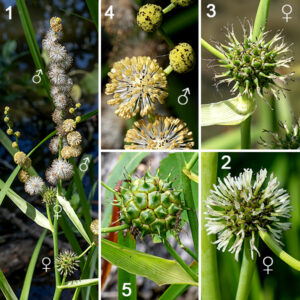
The central stem of giant bur-reed produces an inflorescence at its tip with 1-6 female flowers in the lower parts of each branch of the inflorescence and up to 20 male flowers in the upper parts. (Male and female flowers are separate and distinct.) Male (staminate) flowerheads look like a fireworks-burst of white filaments and yellow-brown anthers; individual florets are densely packed, each with five stamens with white filaments and a yellow to brown anther. The female flowerheads are greenish and "prickly" with prominent green cones (the female florets) covering the surface; each pistillate floret has a basal green ovary covered with scale-like tepals with dark tips and an apical white style bearing two white stigmas. Giant bur-reed is wind pollinated. In fruiting flowerheads, the stigmas turn dark and wither but do not drop off; the florets elongate and widen, turning brown as the fruits on the seedhead ripen. The fruit is a brown seed 5-10 mm long and nearly as wide, shaped like an inverted pyramid that abruptly narrows to a 2-4 mm long apical beak (the style remnant). Giant bur-reed is superficially sedge-like but instead is more closely related to cattails. Giant bur-reed prefers wet conditions (up to a foot of water) with minimal waves and gentle currents.
Quick View

Symphytum

Sparganium eurycarpum

giant bur-reed [Blooms: May-Jul]
Plant Finder Glossary
Discover
Explore
About

I want to acknowledge the work of a friend and colleague, Dr. Fred Donner. We both share a passion for the flowers in Jackson Park. Fred's website (jacksonparkwildflowers.org) inspired me to build my own website and database; use and enjoy them both.

I am also pleased to thank my ninja web gurus and coders, Lindsey Young and Stefanie Engstrom. This site would not exist without their herculean labors.

Copyright 2026 © Michael LaBarbera

  • Home
  • Discover
    • Get Started
    • Plant Finder
    • Glossary
    • Browse by Genera
    • Other Biota — lower plants and Fungi
    • Other Biota — animals
  • Explore
    • Jackson Park — Scoreboard
  • About
  • Login
  • Newsletter
  • Plant Finder