Skip to content
Jackson Park WildflowersJackson Park Wildflowers
  • Home
  • Discover
    • Get Started
    • Plant Finder
    • Glossary
    • Browse by Genera
    • Other Biota — lower plants and Fungi
    • Other Biota — animals
  • Explore
    • Jackson Park — Scoreboard
  • About
  • Glossary
  • Plant Finder
  • 0
    Cart

    No products in the cart.

    Return to shop

Home / Plant Finder / Tephrosia
Filter

Showing the single result

Sorting
Filtered (1)
Filter Plants
  • Reset all×
  • White×
  • Alternate×
Filter Plants

1 product found

Show (1)
Cancel
  • Reset all×
  • White×
  • Alternate×
Filtered (1)
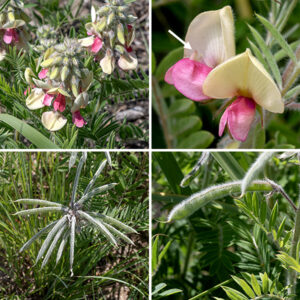
The tips of the stems of goat's-rue give rise to 2-3" long racemes of buds and flowers. The unmistakable, bicolored pea-like flowers are about 1/2-3/4" wide and long, creamy white or yellowish on the vertical petal (the "standard") and rosy-pink on the lateral wings and the keel. (A total of five petals.) The flowers consist of a short, tubular calyx with five teeth, five petals in a pea-like configuration, 10 stamens (nine with fused filaments, one free from its midpoint) with small yellow anthers, and a single pistil with a tiny terminal stigma. Both stamens and pistil are enclosed by the keel. The seedpods are 1.5-3" long, cylindrical, slightly flattened beans spreading laterally from the flower spike; these, too, are (densely) silky-hairy. The seedpods are initially light green but turn brown with maturity. They split along the symmetry plane of the seedpod and the valves develop a spiral curl to release the seeds. Goat's-rue prefers sandy habitats. The long, woody roots contain rotenone, a compound that is toxic to fish and insects; it inhibits ATP production and disrupts mitochondrial function by blocking the electron transport chain. It would not be a good idea to suck on or ingest the roots of goat's-rue.
Quick View

Tephrosia

Tephrosia virginiana

goat's-rue [Blooms: Jun-Jul]
Plant Finder Glossary
Discover
Explore
About

I want to acknowledge the work of a friend and colleague, Dr. Fred Donner. We both share a passion for the flowers in Jackson Park. Fred's website (jacksonparkwildflowers.org) inspired me to build my own website and database; use and enjoy them both.

I am also pleased to thank my ninja web gurus and coders, Lindsey Young and Stefanie Engstrom. This site would not exist without their herculean labors.

Copyright 2026 © Michael LaBarbera

  • Home
  • Discover
    • Get Started
    • Plant Finder
    • Glossary
    • Browse by Genera
    • Other Biota — lower plants and Fungi
    • Other Biota — animals
  • Explore
    • Jackson Park — Scoreboard
  • About
  • Login
  • Newsletter
  • Plant Finder