Alnus glutinosa
black alder [Blooms: Mar-Apr]
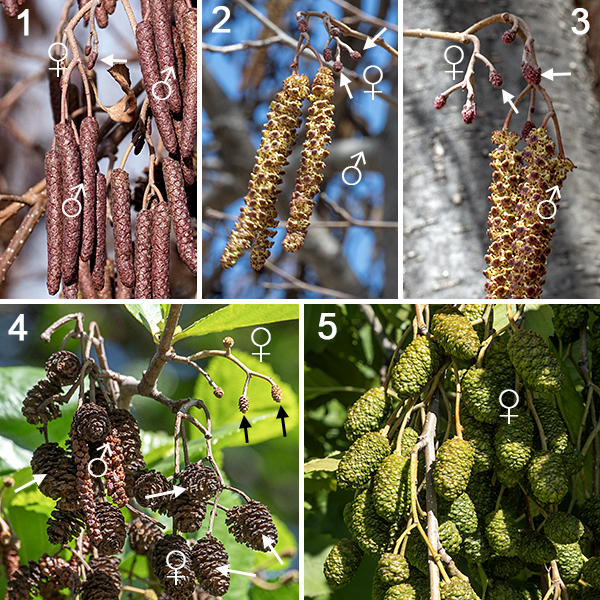
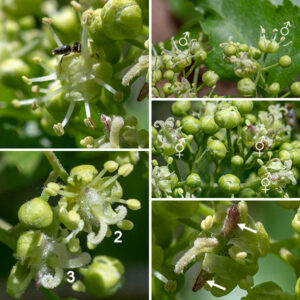
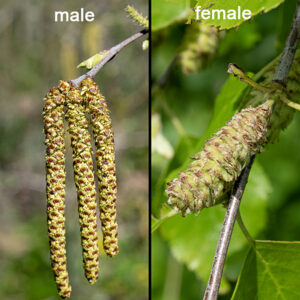
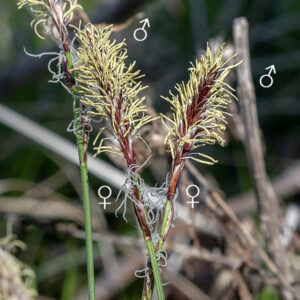
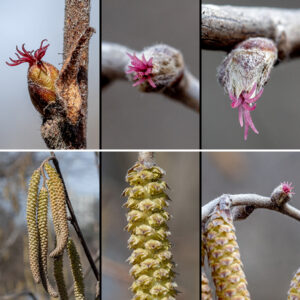
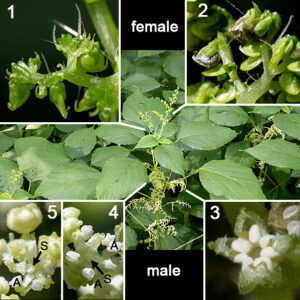
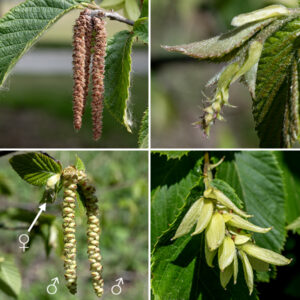
Black alder (Alnus glutinosa) male and female inflorescences. (1) Immature male catkins (♂︎) and female cones (♀︎- white arrow) in February. (2, 3) Mature male catkins (♂︎) and immature female cones (♀︎- white arrows) in late March. (4) Senescing male catkins (♂︎); developing, fertilized female cones (♀︎- black arrows), and mature, spent female cones from the previous year (♀︎- white arrows) in mid-May. (5) Mature, fertilized female cones (♀︎) in October.
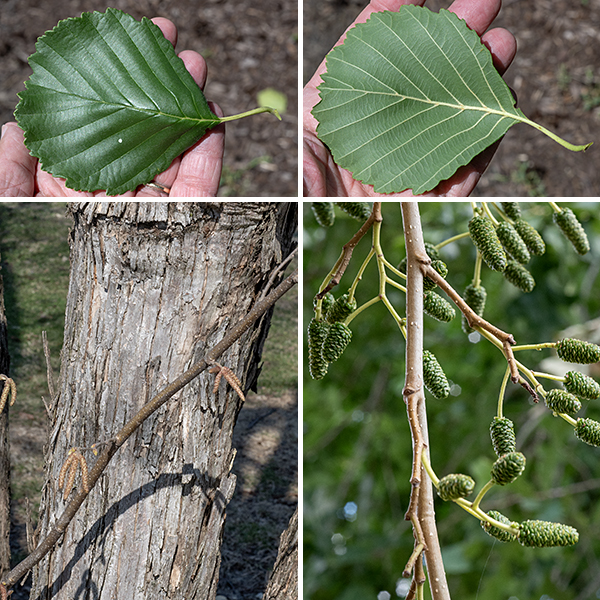
Black alder (Alnus glutinosa) stems and leaves. Top: the upper surface (left) and the underside (right) of the same black alder leaf. Note the wedge-shaped base and the distinctive pattern of parallel secondary veins. Bottom left: a young branch bearing fertile male catkins is present in the foreground of the image while a mature trunk of black alder is present in the background. Note that the bark on the trunk is light gray and divided into distinct, narrow plates; the bark on the branch is greenish gray and smooth. Bottom right: a young branch runs vertically through the center of this image. Both the branch and last year’s twigs are covered with greenish gray bark with scattered white lenticels. This year’s twigs are pale green and here bear developing female cones (green) which have recently been fertilized.
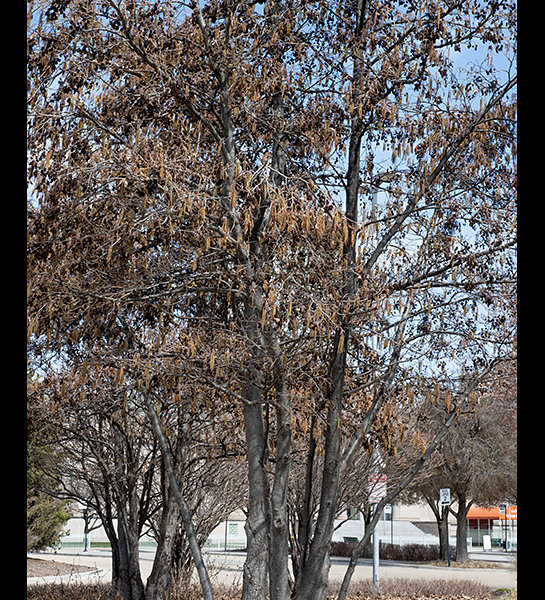
A black alder (Alnus glutinosa) growing on the edge of the Griffin Museum of Science and Industry’s west parking lot at the end of March, 2025. The leaves have yet to emerge, but the tree is covered with dangling male catkins that are actively producing pollen.
Browse more plants
Want to keep exploring more plants? You can view other plants like this one by selecting a characteristic from the list below, or 'browse more plants' to go back to the Plant Finder.