Arctostaphylos uva-ursi
bearberry [Blooms: April]
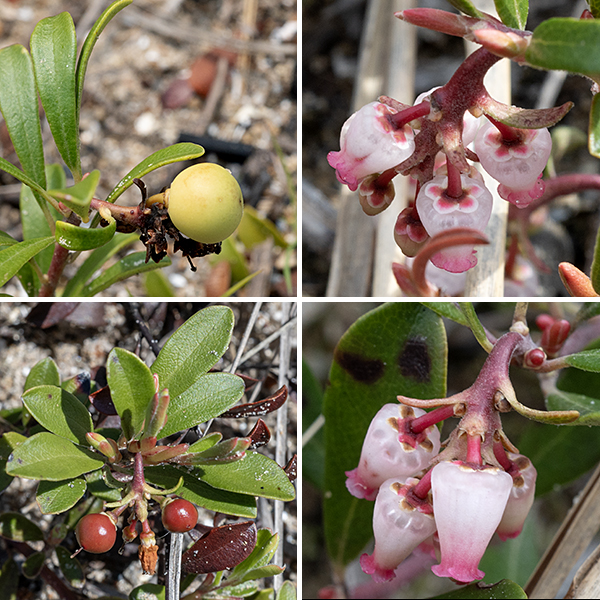
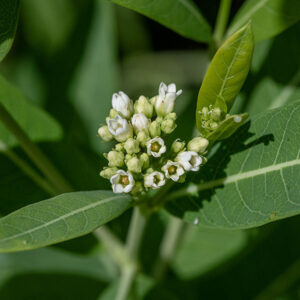
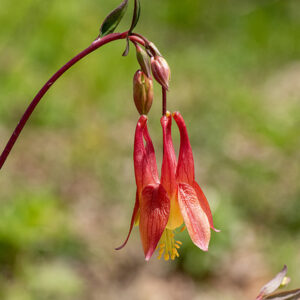
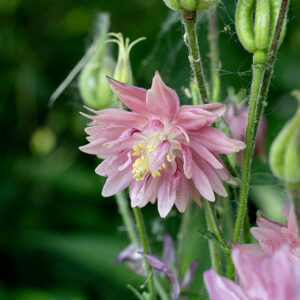
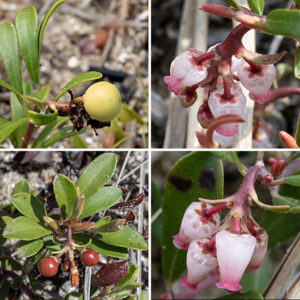
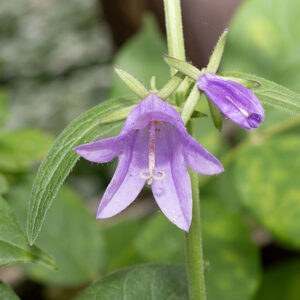
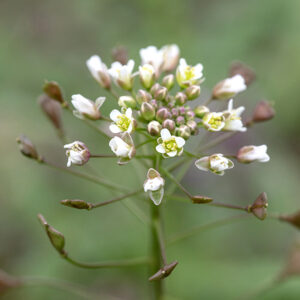
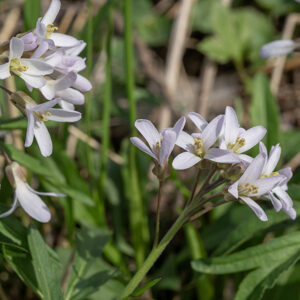
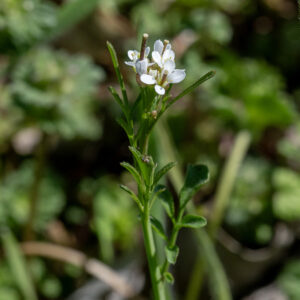
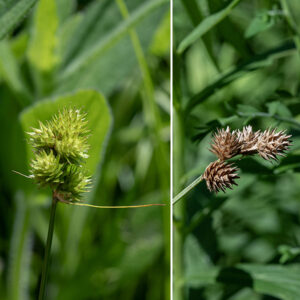
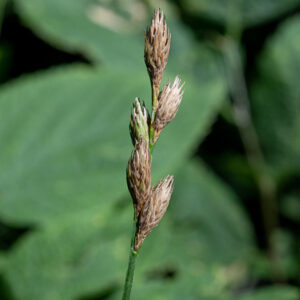
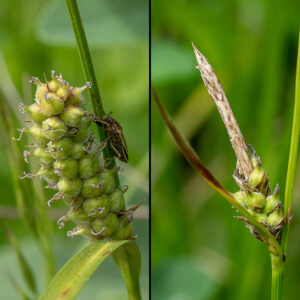
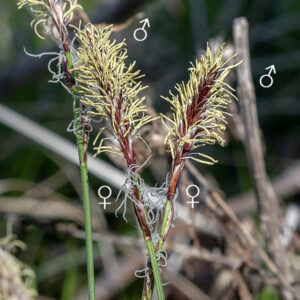
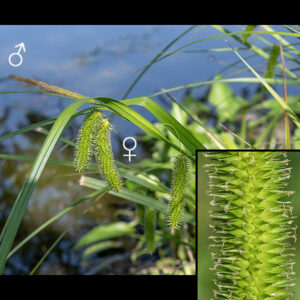
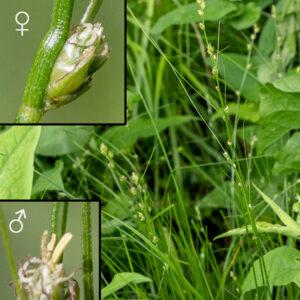
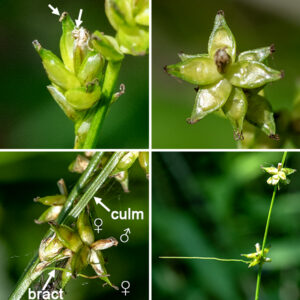
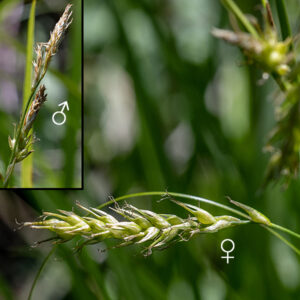
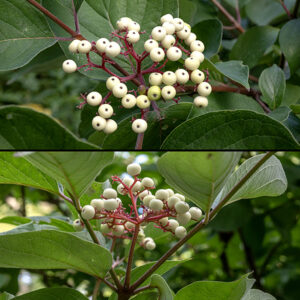
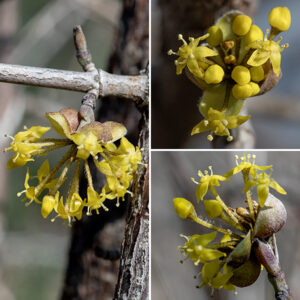
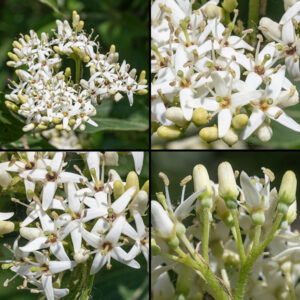
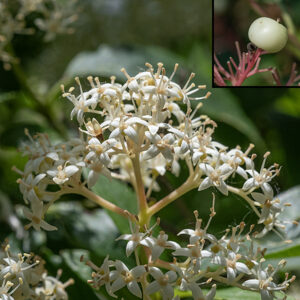
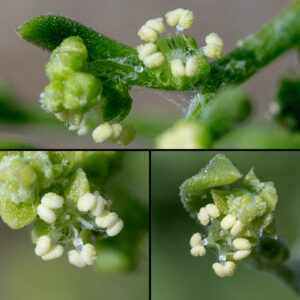
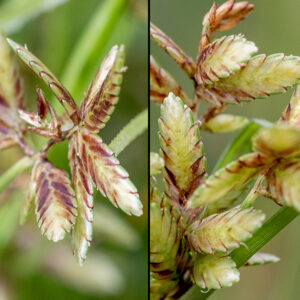
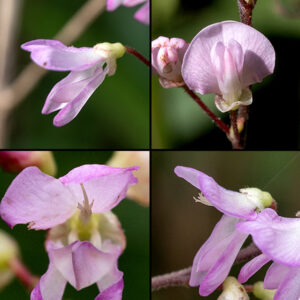
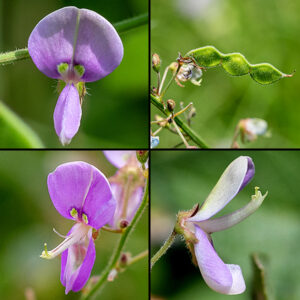
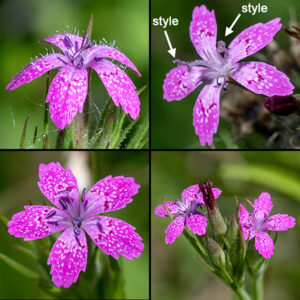
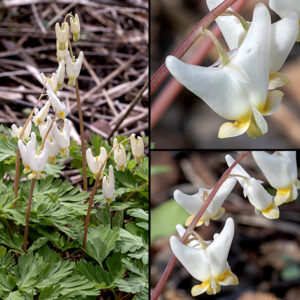
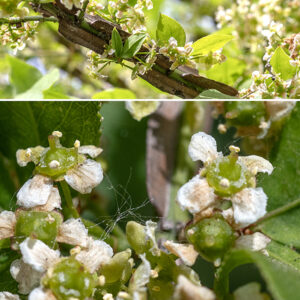
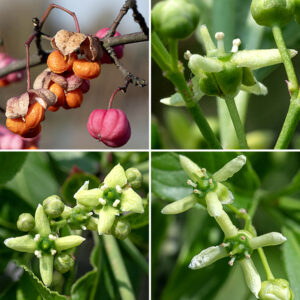
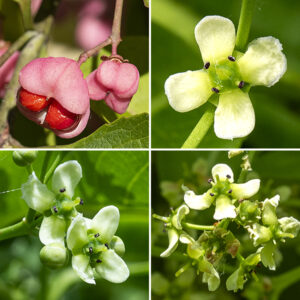
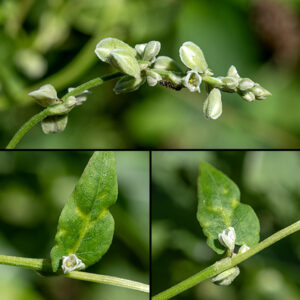
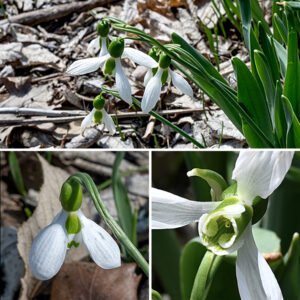
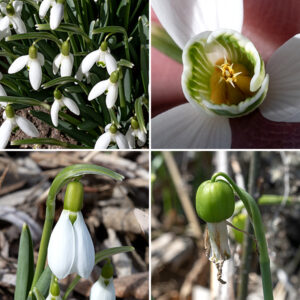
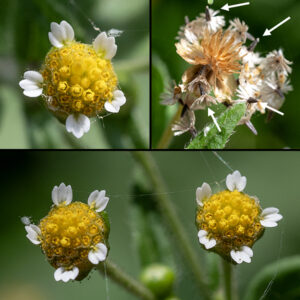
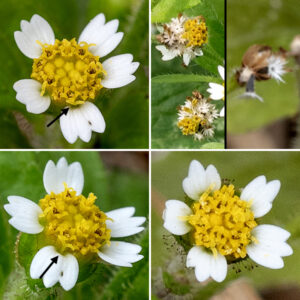
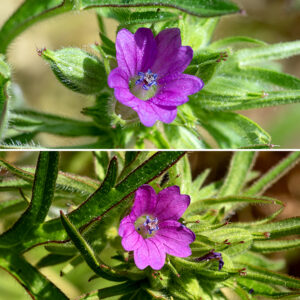
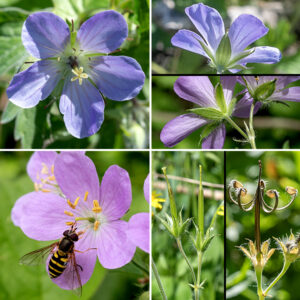
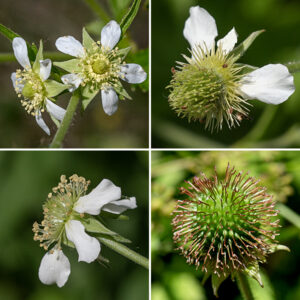
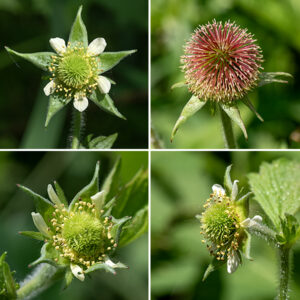
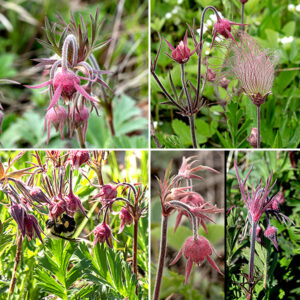
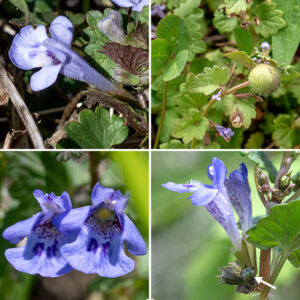
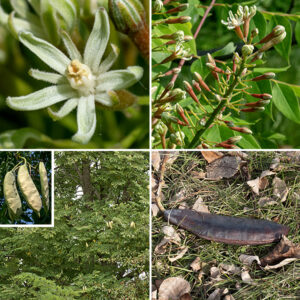
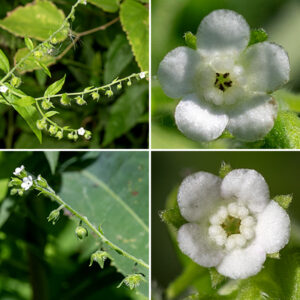
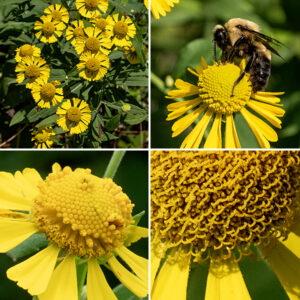
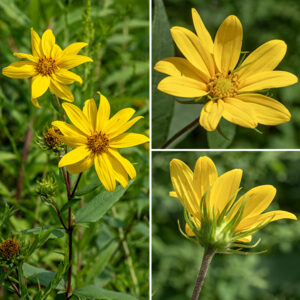
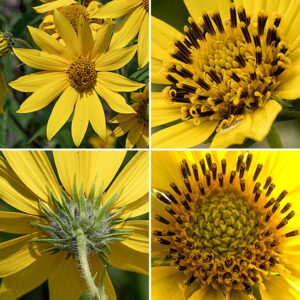
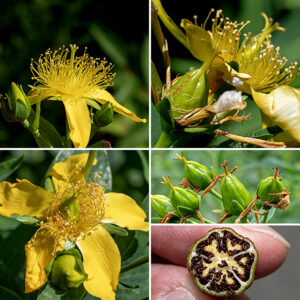
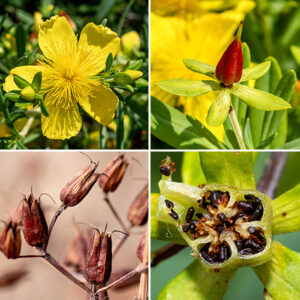
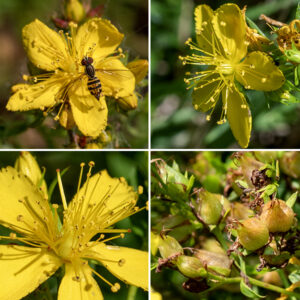
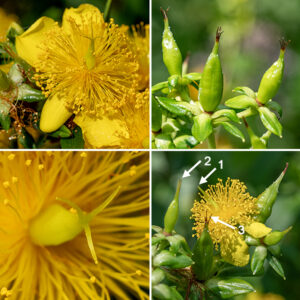
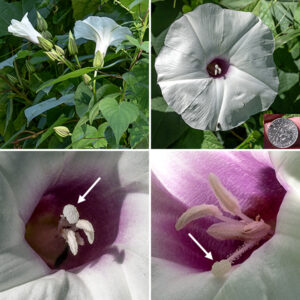
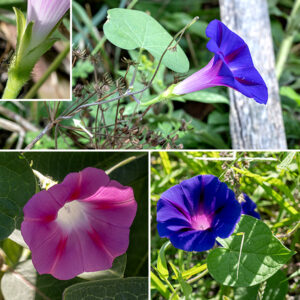
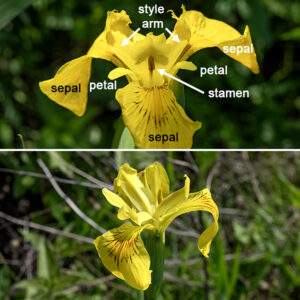
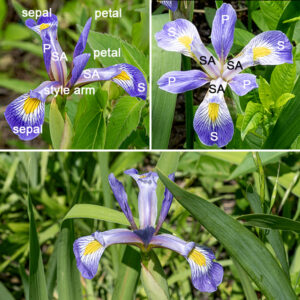
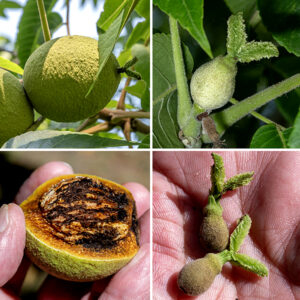
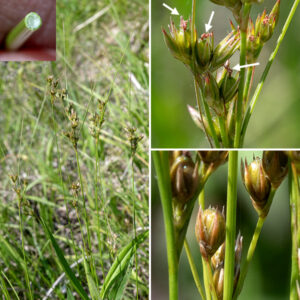
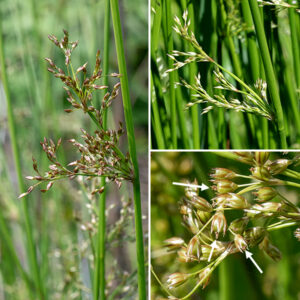
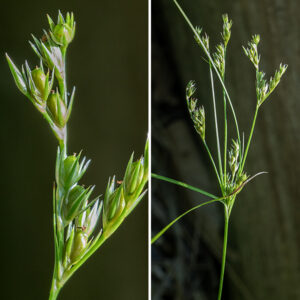
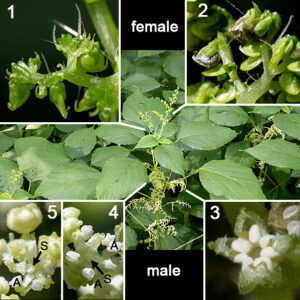
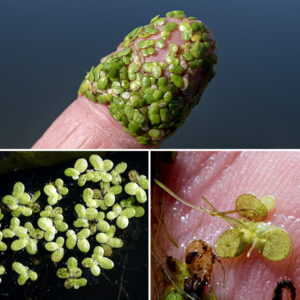
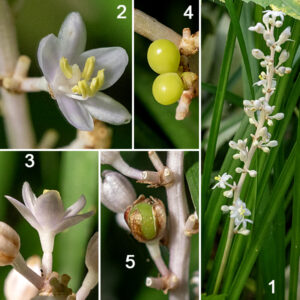
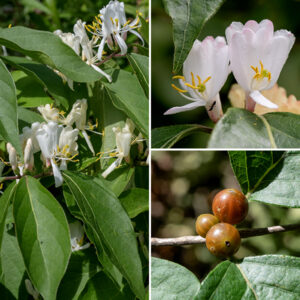
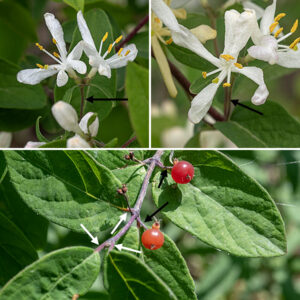
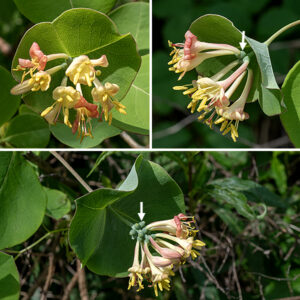
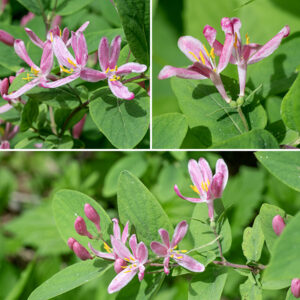
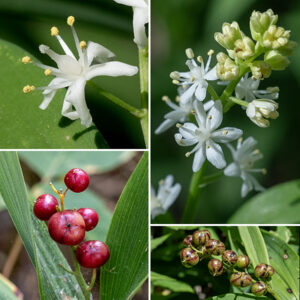
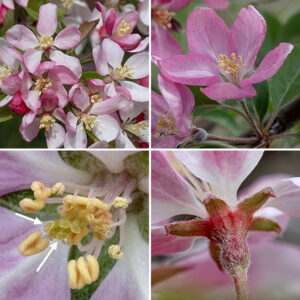
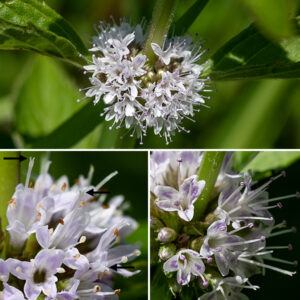
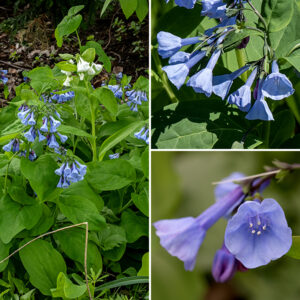
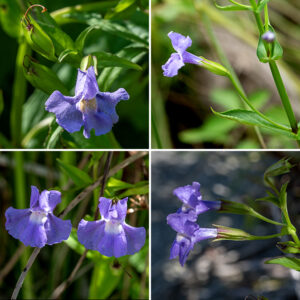
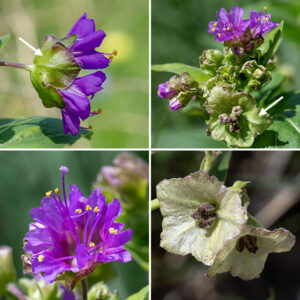
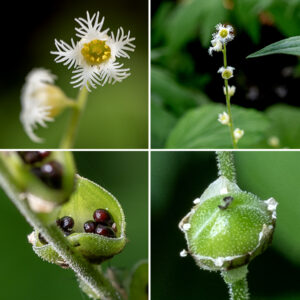
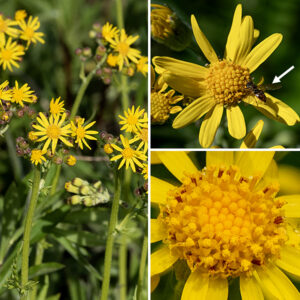
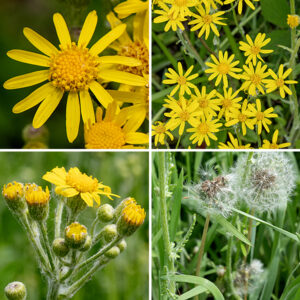
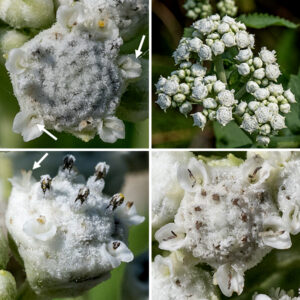
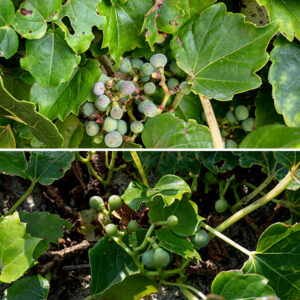
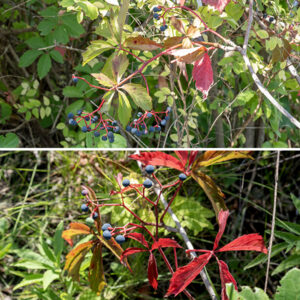
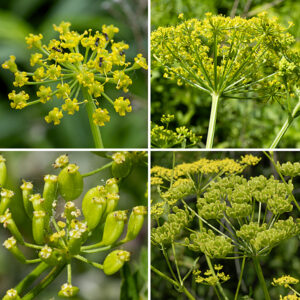
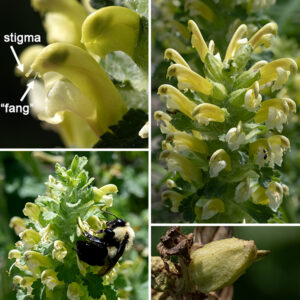
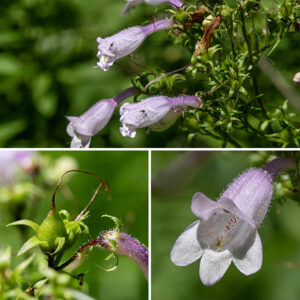
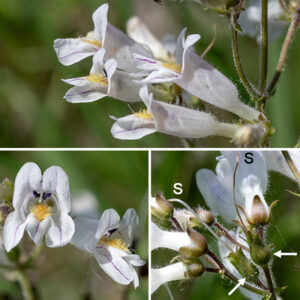
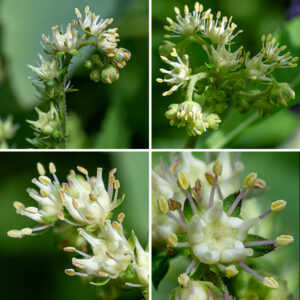
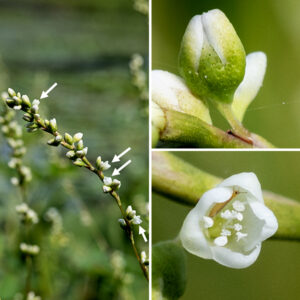
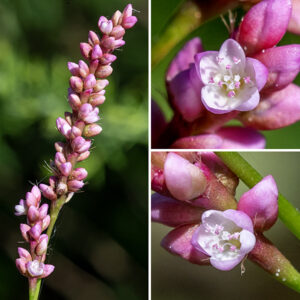
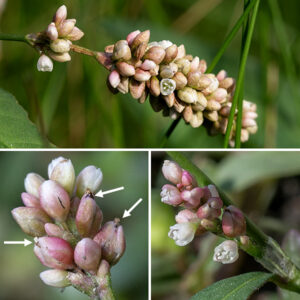
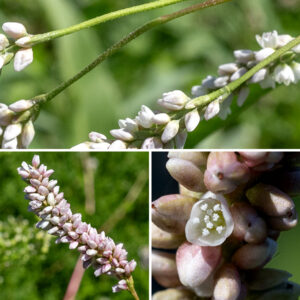
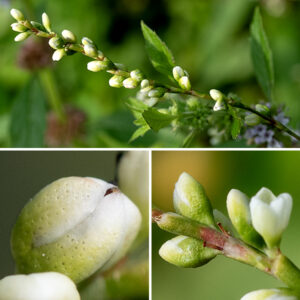
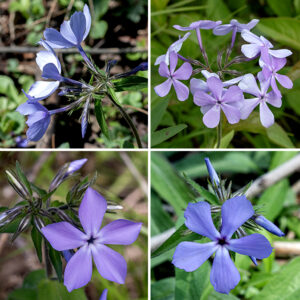
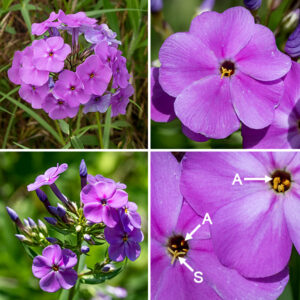
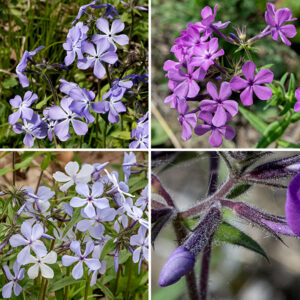
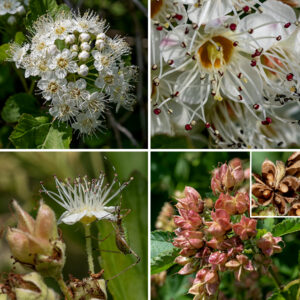
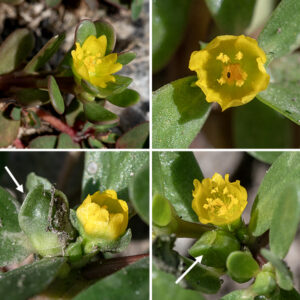
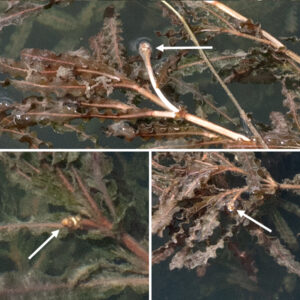
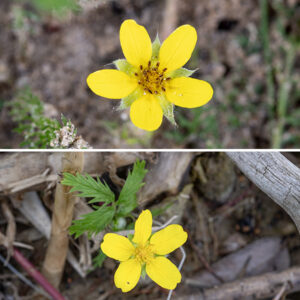
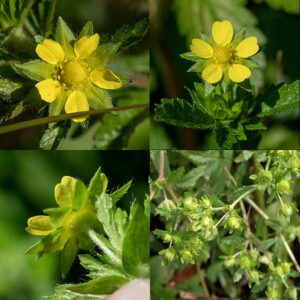
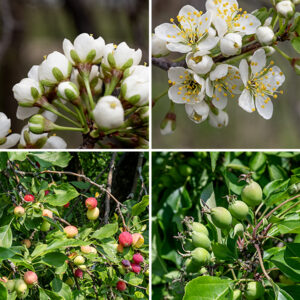
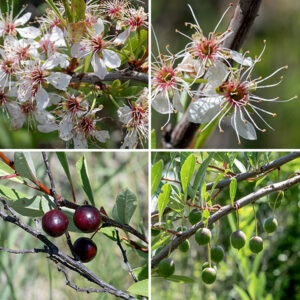
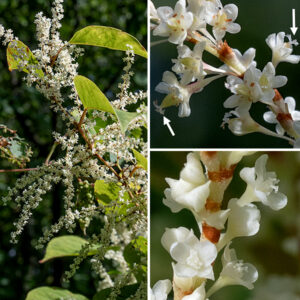
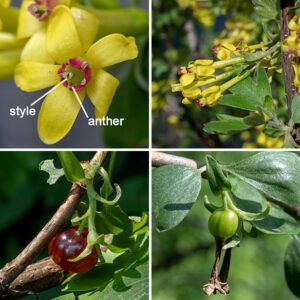
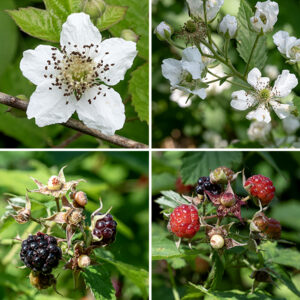
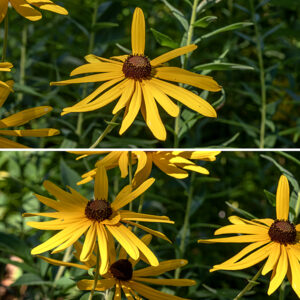
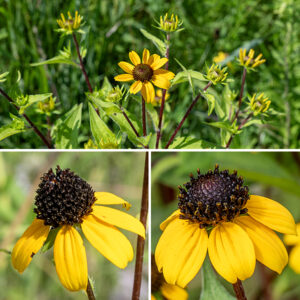
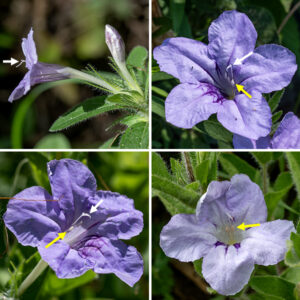
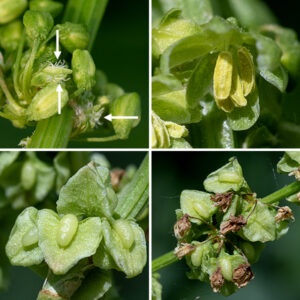
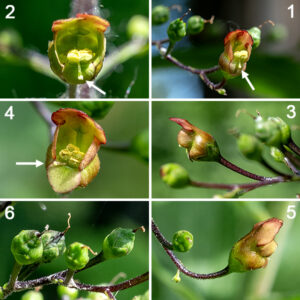
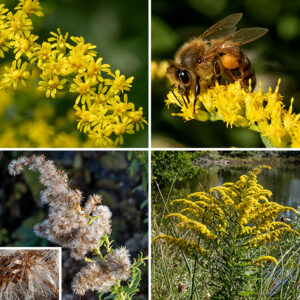
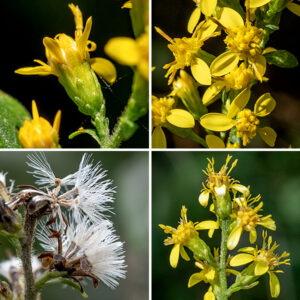
Bearberry (Arctostaphylos uva-ursi) flowers and fruit. Bottom right: a cluster of bearberry flowers at the tip of a shoot. Note the narrow, thick bract at the base of each reddish flower pedicle and the white bell-shaped corolla with recurved pink apical lobes. The two flowers in the background have water droplets just below the calyx in the interior of the flower; they condensed after a heavy rain the day before this photo was taken. Top right: a cluster of bearberry flowers viewed from above showing the flattened calyx, a pink flower-like shape with white margins surrounding the tip of the pedicel. Top left: an immature bearberry drupe. Bottom left: the tip of a bearberry shoot showing two ripening berries (drupes) flanking the shriveled remains of an (originally bell-shaped) flower.
Bearberry produces small clusters of 2-15 flowers droop from the tips of the previous year’s twigs. Individual flowers are urn- or bell-shaped with a constricted opening ringed by five short lobes, 1/2″ long and wide; they have a five-lobed flattened calyx, a white or pink corolla, 10 stamens, and a single style, none of which protrude outside the corolla. The flower pedicels are about 1/4″ long, red and have a narrow bract at their base. The fruit is a spherical drupe 1/4-1/2″ across, initially whitish green but red at maturity.
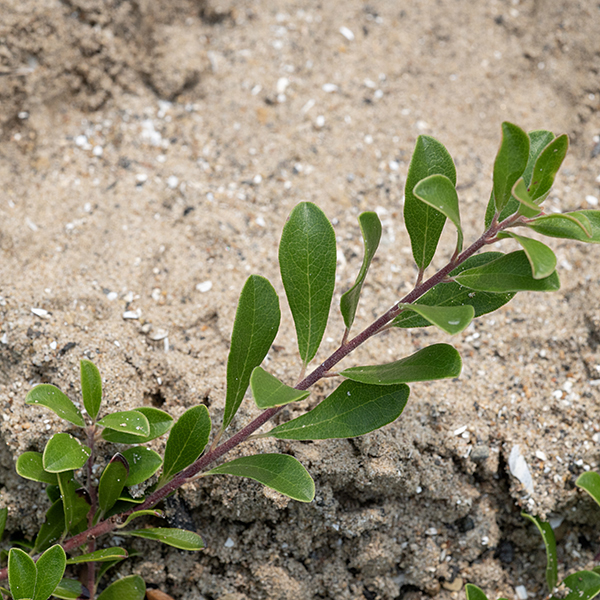
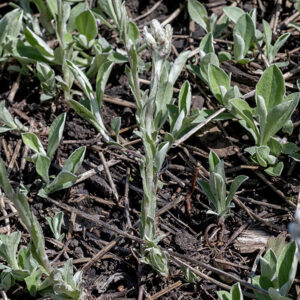
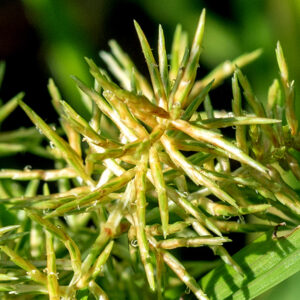
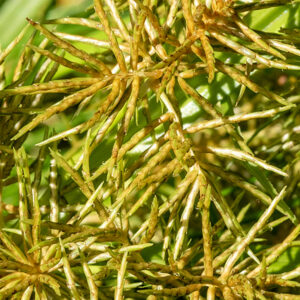
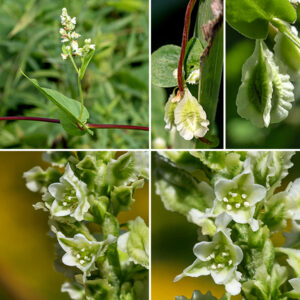
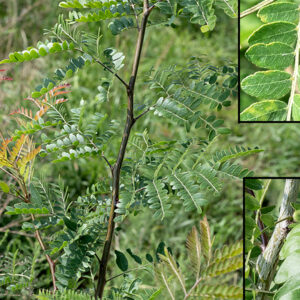
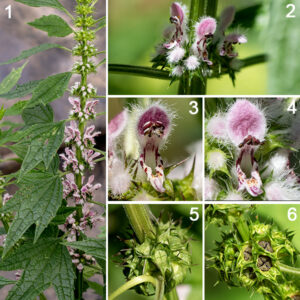
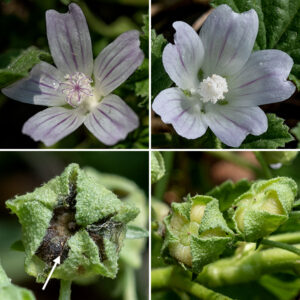
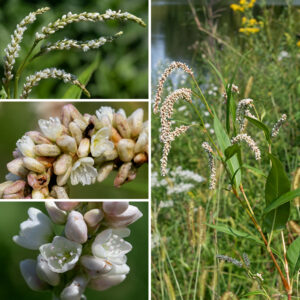
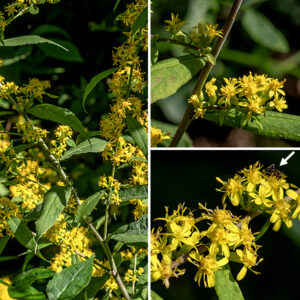
Bearberry (Arctostaphylos uva-ursi) stems and leaves. This image shows a shoot of bearberry with typical obovate leaves (fatter at the tip than near the petiole); the leaves are staggered along the stem (i.e., alternate), each rotated 120 degrees from its neighbors.
Bearberry is a native perennial formally classified as a shrub; it is found in all the provinces of Canada and 32 of the states in the continental U.S. Illinois is at the southern limit of bearberry’s range in the Midwest. Bearberry is a sprawling, prostrate, mat-forming shrub that never gets taller than eight inches (six inches in Jackson Park). The woody root system can extend 3-6 feet into the ground. Most branches are woody with a thin brown bark, but the younger shoots are whitish green to red, sometimes covered with a sparse fuzz of short hairs. The leaves are 1/2-1″ long and 1/4-1/2″ across, an oblong lance shape broadest near the tip with smooth margins, evergreen, hairless, and quite thick (reminiscent of a succulent). The upper surface of the leaf is dark green and shiny; the lower surface is medium green. The petioles are 1/8″ long. The leaves are alternate with each leaf rotated 120 degrees from its nearest neighbors.
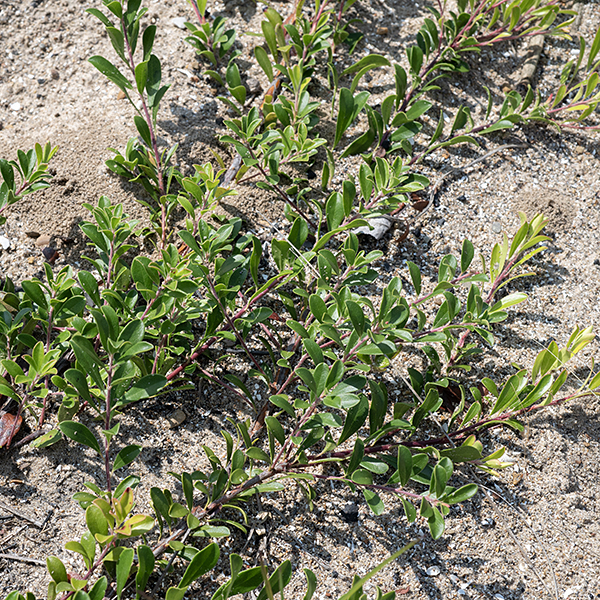
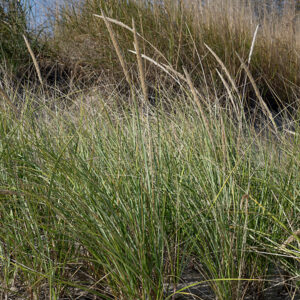
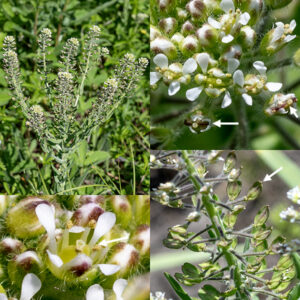
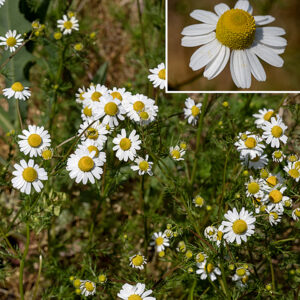
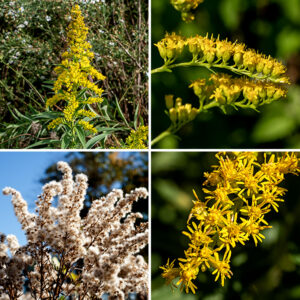
Bearberry (Arctostaphylos uva-ursi) growing as a recumbent plant on a beach within fifty meters of Lake Michigan.
Bearberry is a native perennial formally classified as a shrub; it is found in all the provinces of Canada and 32 of the states in the continental U.S. Illinois is at the southern limit of bearberry’s range in the Midwest. Bearberry is a sprawling, prostrate, mat-forming shrub that never gets taller than eight inches (six inches in Jackson Park). The woody root system can extend 3-6 feet into the ground. Most branches are woody with a thin brown bark, but the younger shoots are whitish green to red, sometimes covered with a sparse fuzz of short hairs. The leaves are 1/2-1″ long and 1/4-1/2″ across, an oblong lance shape broadest near the tip with smooth margins, evergreen, hairless, and quite thick (reminiscent of a succulent). The upper surface of the leaf is dark green and shiny; the lower surface is medium green. The petioles are 1/8″ long. The leaves are alternate with each leaf rotated 120 degrees from its nearest neighbors. Small clusters of 2-15 flowers droop from the tips of the previous year’s twigs. Individual flowers are urn- or bell-shaped with a constricted opening ringed by five short lobes, 1/2″ long and wide; they have a five-lobed flattened calyx, a white or pink corolla, 10 stamens, and a single style, none of which protrude outside the corolla. The flower pedicels are about 1/4″ long, red and have a narrow bract at their base. The fruit is a spherical drupe 1/4-1/2″ across, initially whitish green but red at maturity.
Browse more plants
Want to keep exploring more plants? You can view other plants like this one by selecting a characteristic from the list below, or 'browse more plants' to go back to the Plant Finder.