Quercus ellipsoidalis
Northern pin oak [Blooms: Apr–May]
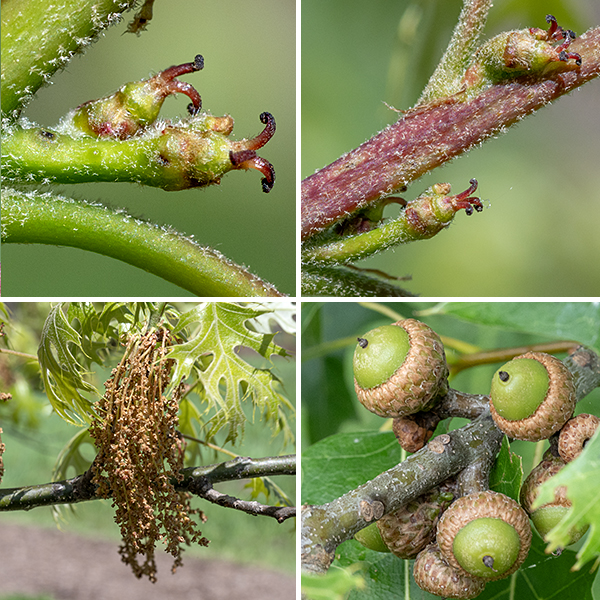
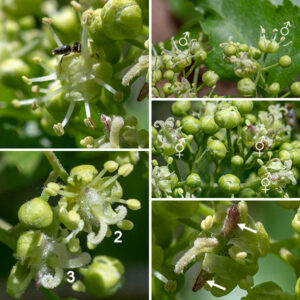
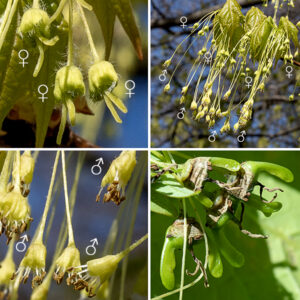
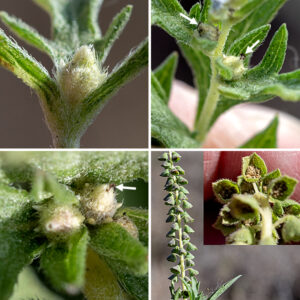
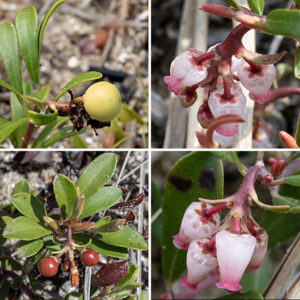
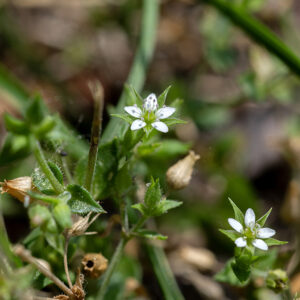
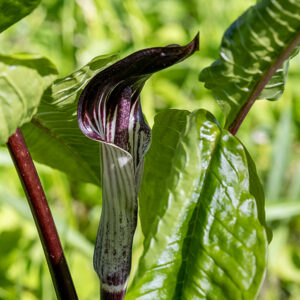
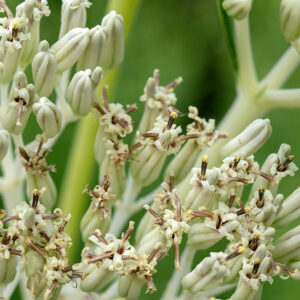
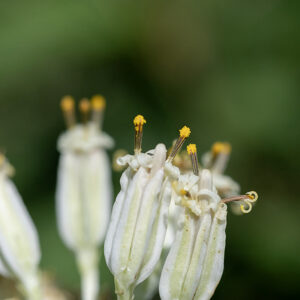
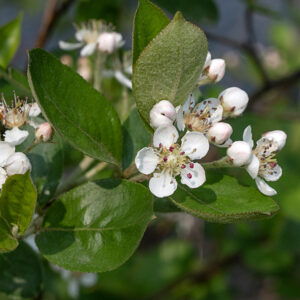
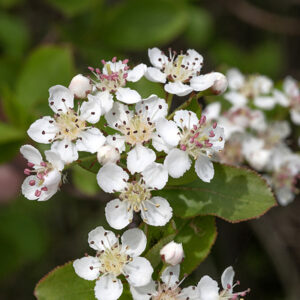
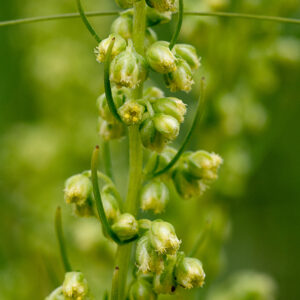
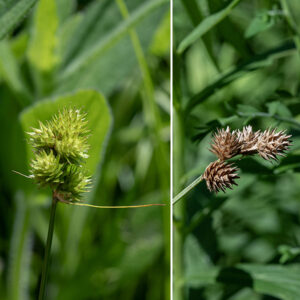
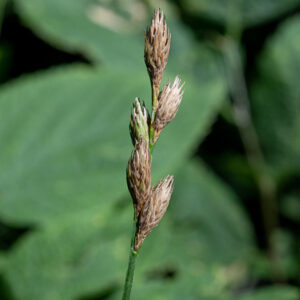
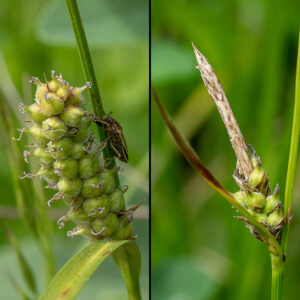
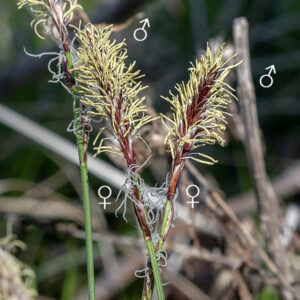
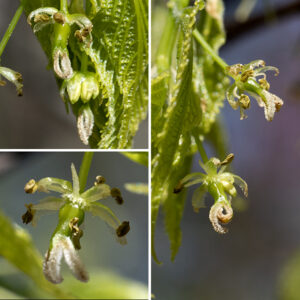
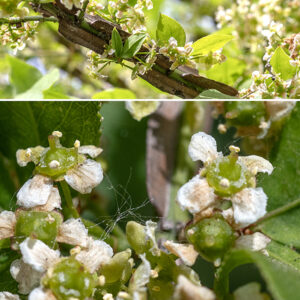
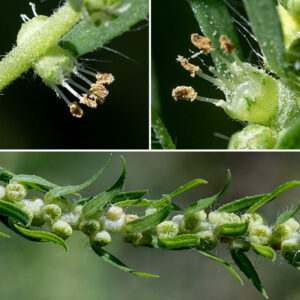
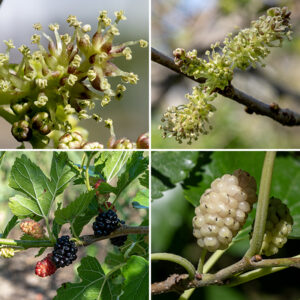
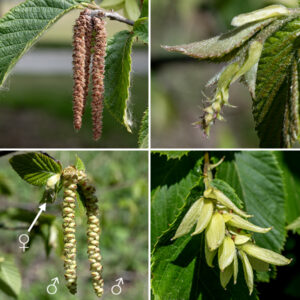
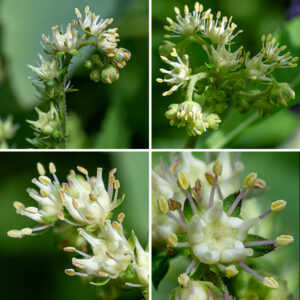
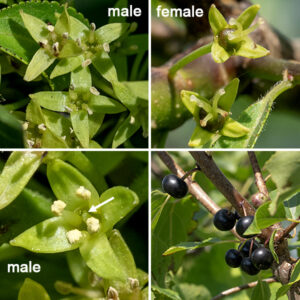
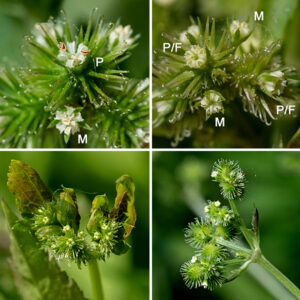
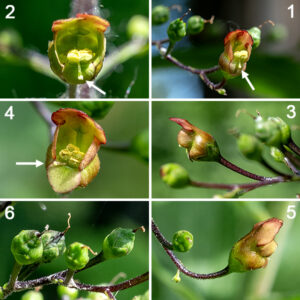
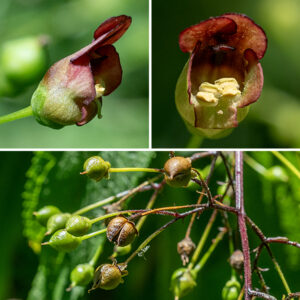
Northern pin oak (Quercus ellipsoidalis) flowers and fruit. Bottom left: somewhat worn pin oak male catkins with some newly unfolded leaves. Top left: two female flowers on their pedicels, nestled in a leaf axil. Both flowers have three red styles but in each one of the styles is hidden by the angle of view. Top right: groups of pin oak female flowers nestled in two successive leaf axils. Note the variance of the length of the pedicels. In both leaf axils, a pair of flowers is present but the flowers further away are hidden by the closer blooms. Bottom right: a quartet of maturing pin oak acorns in mid-July.
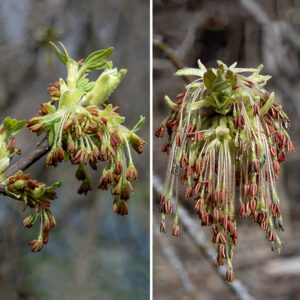
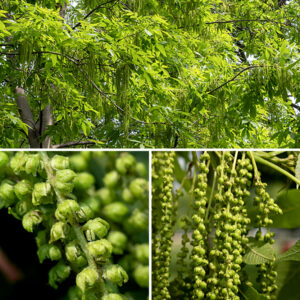
In Northern pin oak, male and female flowers are spatially separated but often occur on the same branch. Female flowers have been reduced to just a short, green spike bearing three bright red styles; the female flowers emerge from leaf axils and may occur in clusters of up to three. The male flowers are borne on 1.5-4″ long green catkins that dangle from bud clusters at the tip of the previous year’s growth. The fruits are egg-shaped or elliptical (hence the species name) acorns 1/2-2/3″ long with a deep reddish cap that covers about half the acorn.
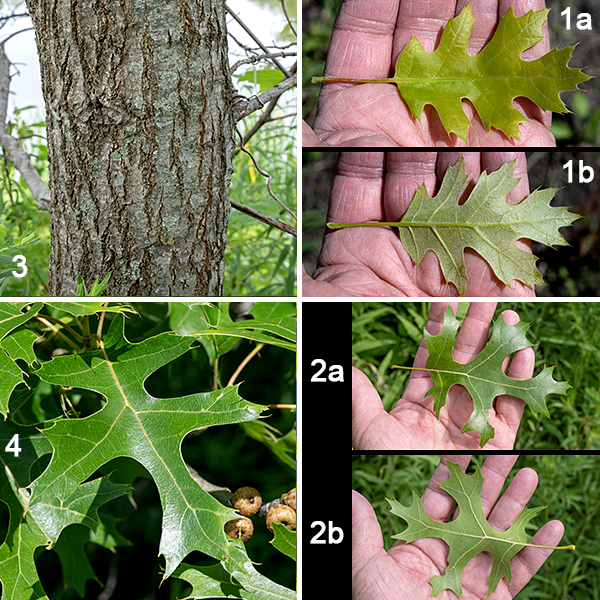
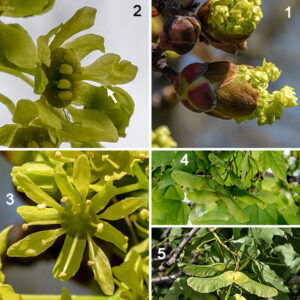
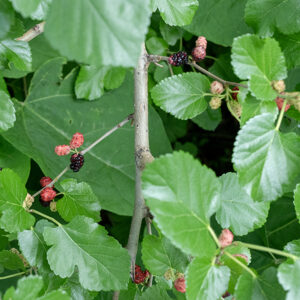
Northern pin oak (Quercus ellipsoidalis) leaves. (1) An early leaf that was emerging while the pin oak tree was in flower (May). The upper surface of the leaf is shown in (1a), the underside of the same leaf in (1b). (2) A mature leaf in July. The upper surface of the leaf is shown in (2a), the underside of the same leaf is shown in (2b). (3) The bark on the trunk of a northern pin oak tree; note the strong vertical furrows. (4) A mature leaf in situ. In both (2) and (4), note the broad, rounded sinuses and bristle-tipped lobes (the “pins” in the common name).
Northern pin oak is native to the Great Lakes region and the upper Mississippi Valley; it prefers dry, sandy soils. It can grow as tall as 60-70 feet tall and is fire-adapted. The bark on the trunk is dark brown to gray in color and deeply furrowed, with flat topped, blocky ridges in the bark. The bark of new twigs is often reddish brown and glossy. The leaves are green, glossy, 3-5″ long and 2-4″ across, and largely hairless, with 5-7 lobes separated by broad, rounded, deep sinuses; each lobe has 3-7 large, bristle-tipped secondary lobes with pointed tips. The underside of the leaves is dull and light green with patches of fine hairs where the lateral veins connect to the central vein. In the autumn, the leaves turn some shade of red (deep maroon to rusty red to scarlet). The leaves often remain attached to the tree through the winter, being shed with the opening of the new buds in the spring.
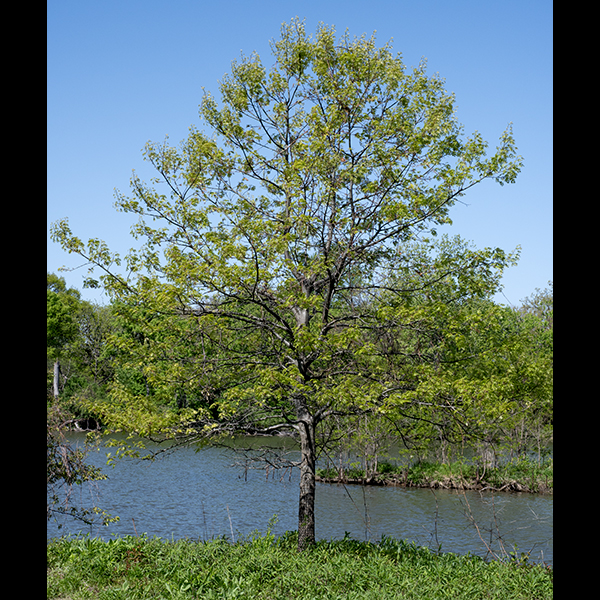
A northern pin oak (Quercus ellipsoidalis) on the western shore of Bobolink Meadow by East Lagoon. This photo was taken fairly in the spring (May) when the male catkins had begun to wane and the leaves were just emerging.
Browse more plants
Want to keep exploring more plants? You can view other plants like this one by selecting a characteristic from the list below, or 'browse more plants' to go back to the Plant Finder.
Related Plants