Carex tribuloides
blunt broom sedge [Blooms: May-Jun]
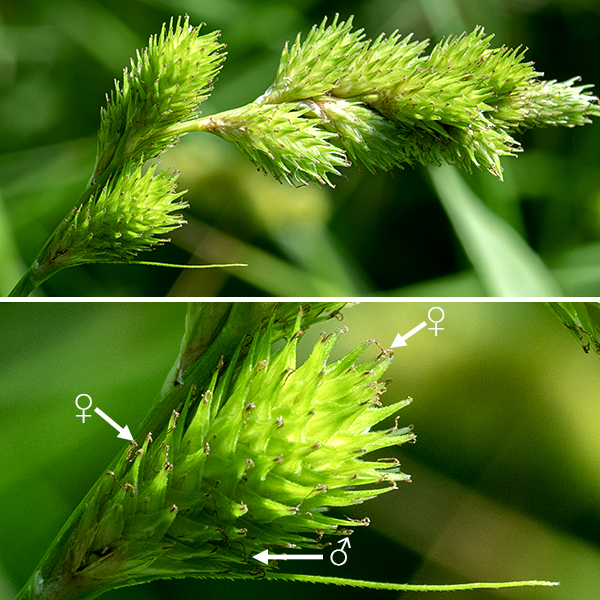
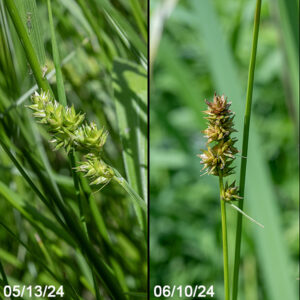
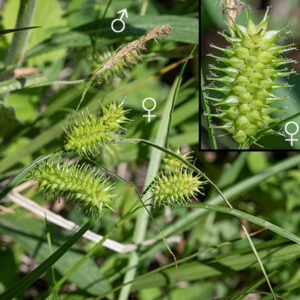
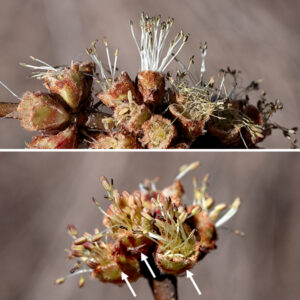
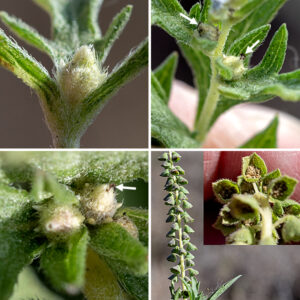
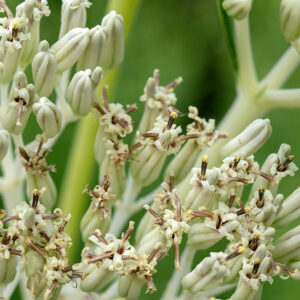
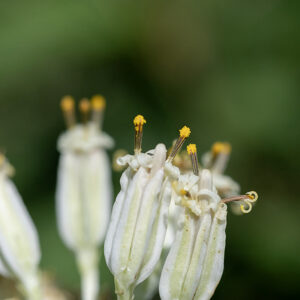
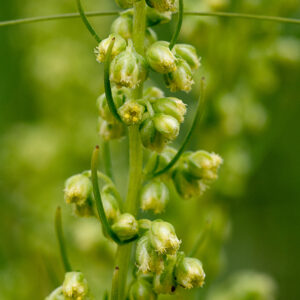
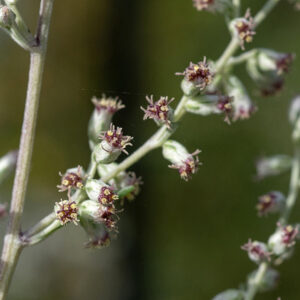
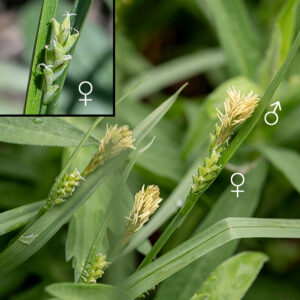
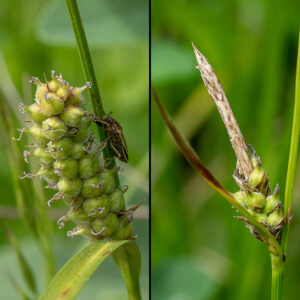
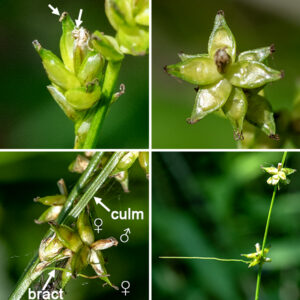
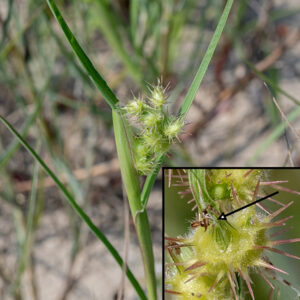
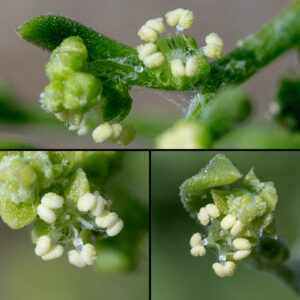
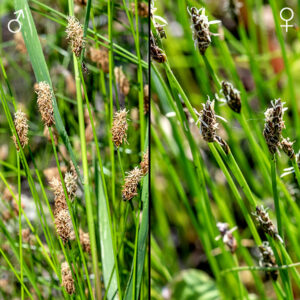
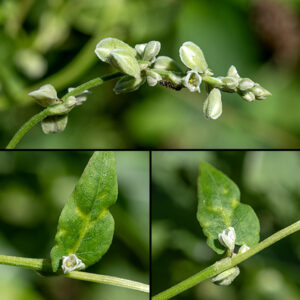
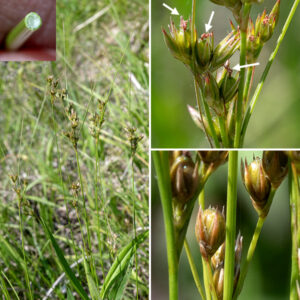
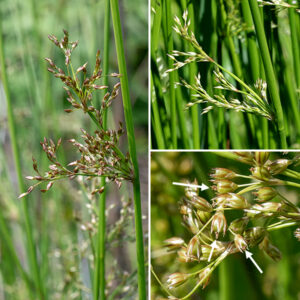
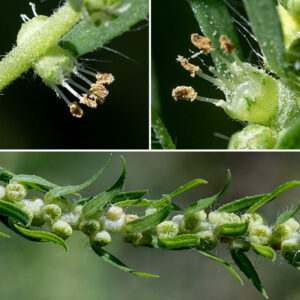
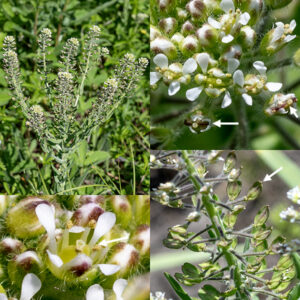
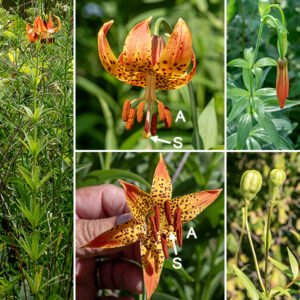
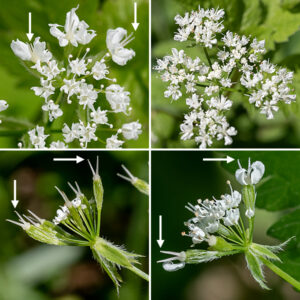
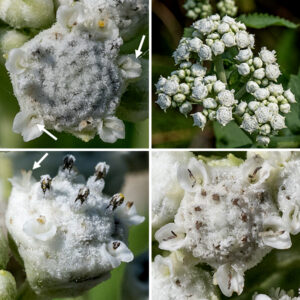
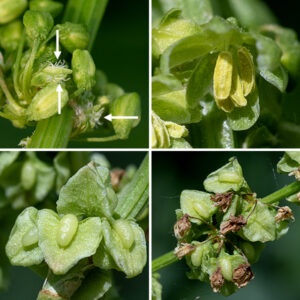
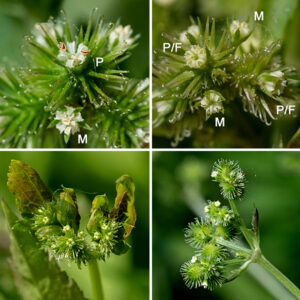
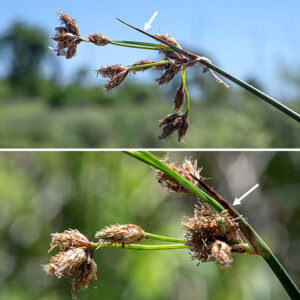
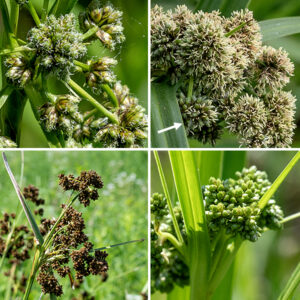
Blunt broom sedge (Carex tribuloides) flowers. Top: the inflorescence of blunt broom sedge. Note that the spikelets are distinctly separated and that the lowest spikelet has a needle-like bract at its base that is longer than the spikelet. Bottom: close-up of the lowest spikelet. The florets have already bloomed, and both the stamens and stigmas are withering, but it is still possible to discern the male florets (arrow, ♂︎) at the base of the spikelet with their long stamen remnants and the female florets (arrow, ♀︎) higher in the spikelet with remnants of the pair of stigmas.
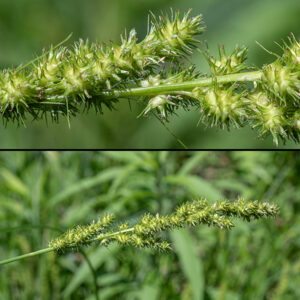
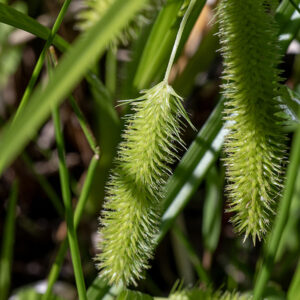
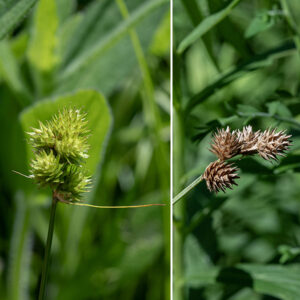
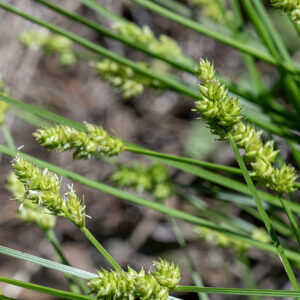
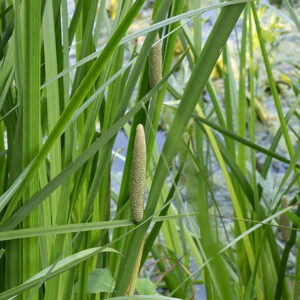
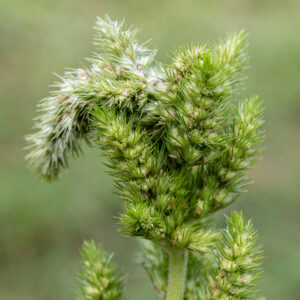
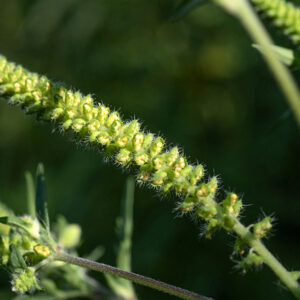
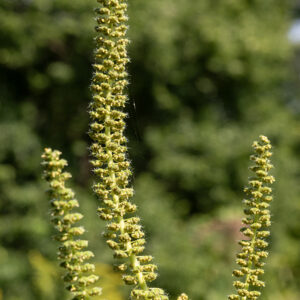
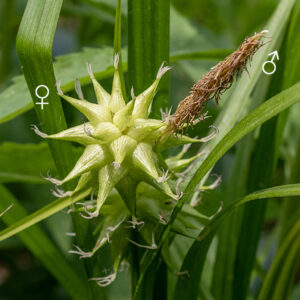
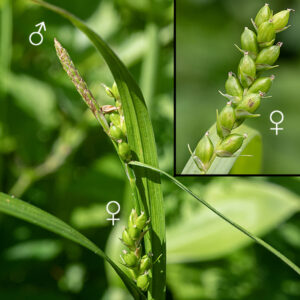
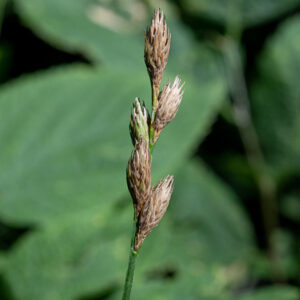
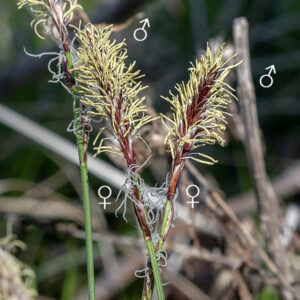
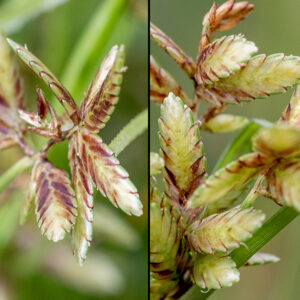
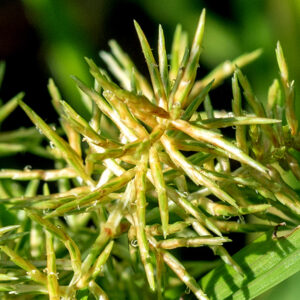
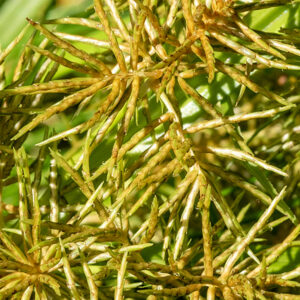
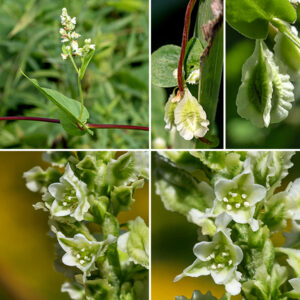
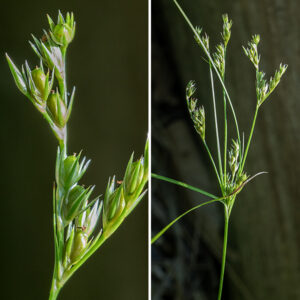
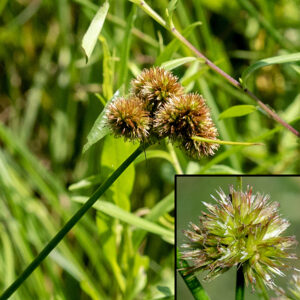
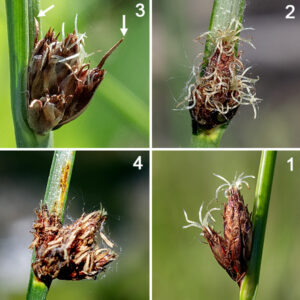
Fertile culms of blunt broom sedge carry a 2.5″ long inflorescence at their tips consisting of 5-15 partly overlapping or slightly separated spikelets. In contrast to the usual pattern in sedges, the spikelets of blunt broom sedges bear male (staminate) florets at their bases and female (pistillate) florets distally, the latter with two protruding stigmas. Individual spikelets are stalkless, 6-12 mm long, ovoid, and markedly prickly due to the long beaks of the ascending perigynia (which are 3-5 mm long and 1.25-1.75 mm across, flattened, and lance-shaped). The spikelets are cone-shaped in outline, tapered at their base and rounded at their tips. Immature spikelets are light green; mature spikelets are light brown. The lowest spikelet in an inflorescence has a 1/2-3/4″ long, needle-like bract at its base; the next higher spikelet may also have a (shorter) bract at its base. The florets are wind pollinated.
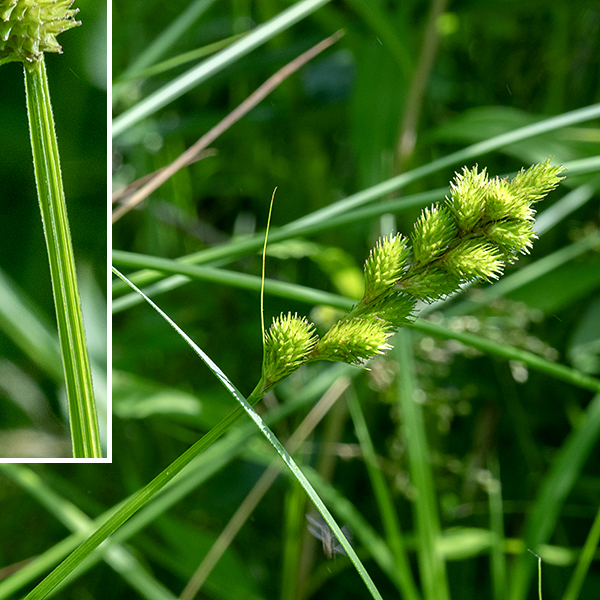
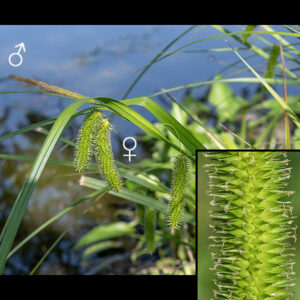
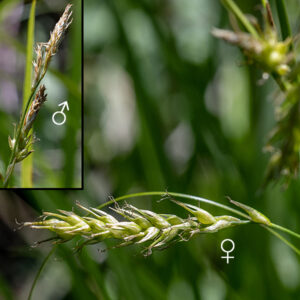
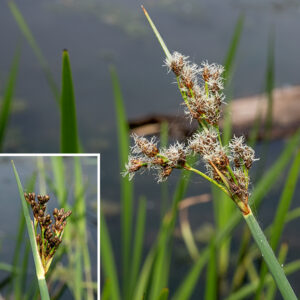
The main image shows a blunt broom sedge (Carex tribuloides) fertile culm (stem) with a typical inflorescence at its tip. The inset on the upper left shows a close-up of a stem, triangular in cross section. Note the very long bract at the base of the lowest spikelet in the inflorescence.
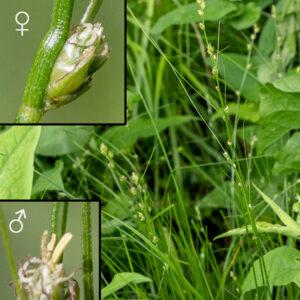
Blunt broom sedge (Carex tribuloides) is a native perennial that ranges across the eastern half of the U.S. It is classified as “Secure” in Illinois although it is not very common in Jackson Park. The culms of blunt broom sedge range from 1.5-3 feet long, erect or (more often) ascending. In tufts of blunt broom sedge, both sterile and fertile culms appear; both are light green, hairless, and triangular (“3-angled”) in cross section. Each culm bears 5-10 alternate, floppy leaves that are 16″ long and 3-7 mm across, all leaves in the lower half of fertile culms, but distributed all along the length of the sterile culms. The leaf sheaths tightly embrace the culms; two sides of the sheath are light green and hairless, with distinct longitudinal veins; the third side of the sheath is translucent. Blunt broom sedge prefers moist to wet conditions in light shade to full sun, favoring habitats like wet meadows, floodplain forests, pond margins, and swamps.
Browse more plants
Want to keep exploring more plants? You can view other plants like this one by selecting a characteristic from the list below, or 'browse more plants' to go back to the Plant Finder.
Related Plants