Luzula multiflora
common wood-rush [Blooms: Apr]

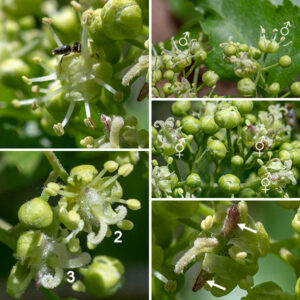
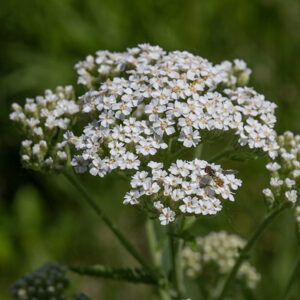
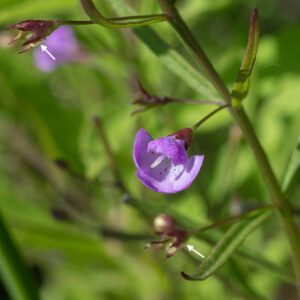
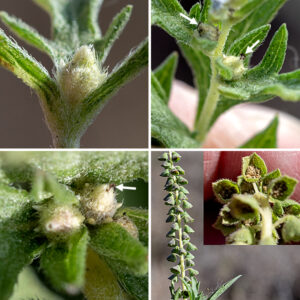
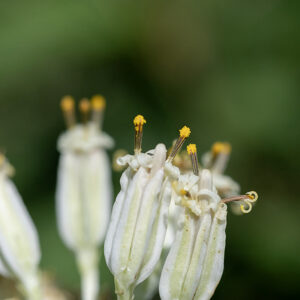
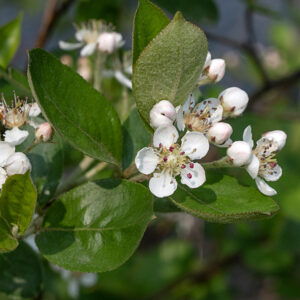
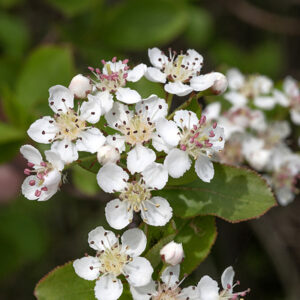
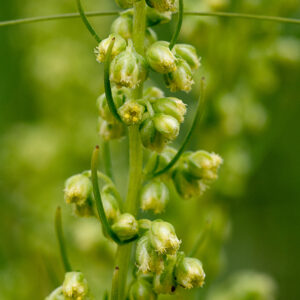
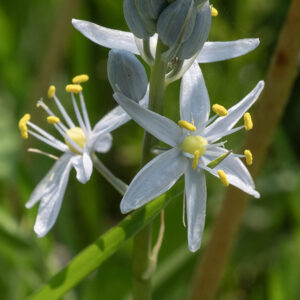
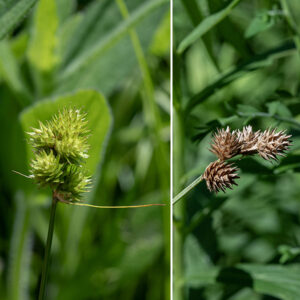
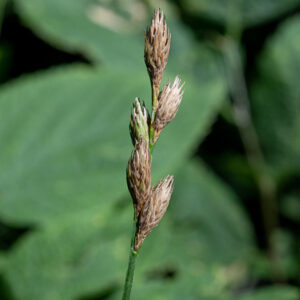
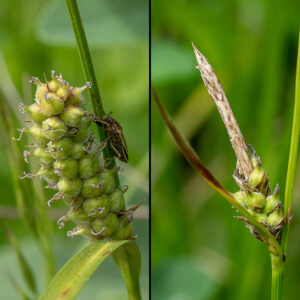
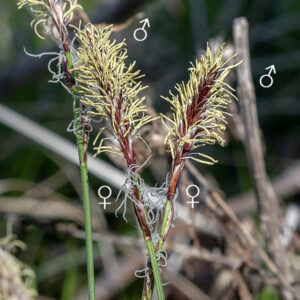
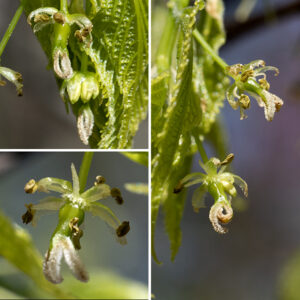
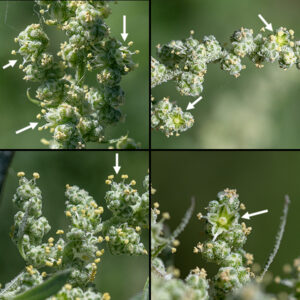
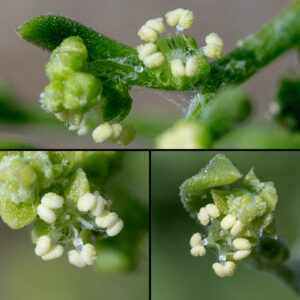
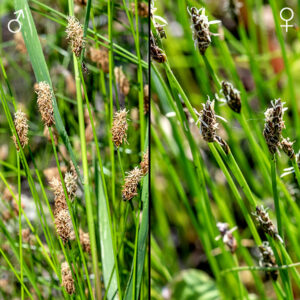
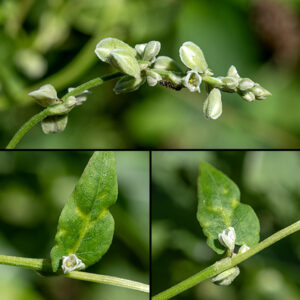
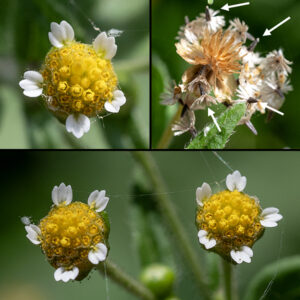
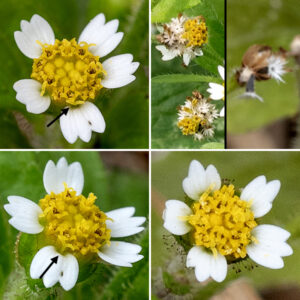
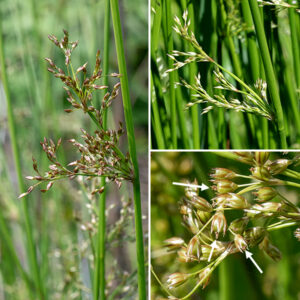
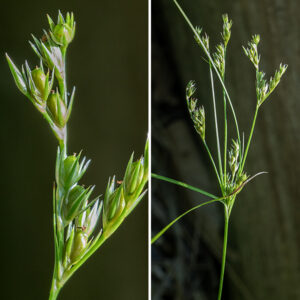
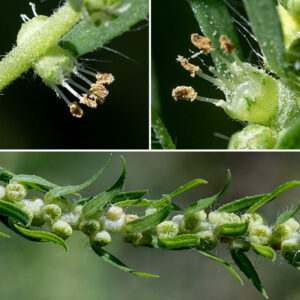
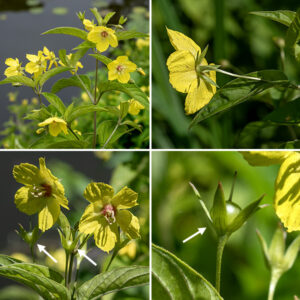
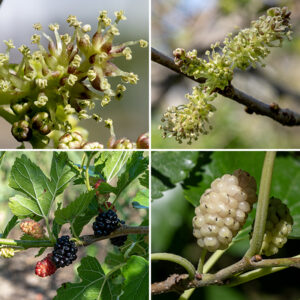
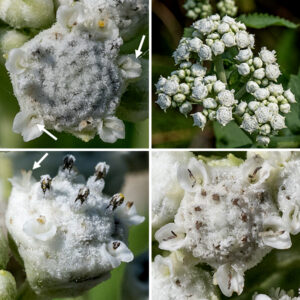
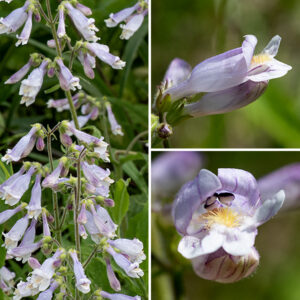
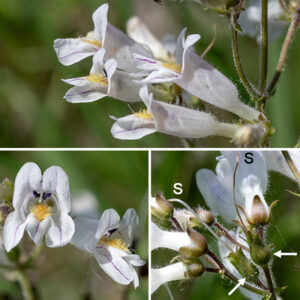
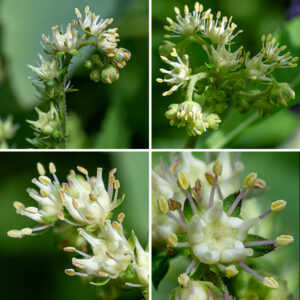
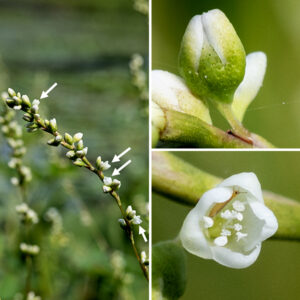
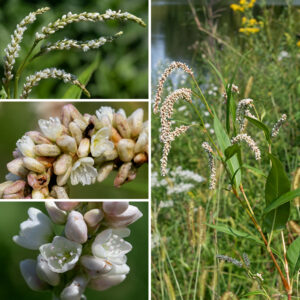
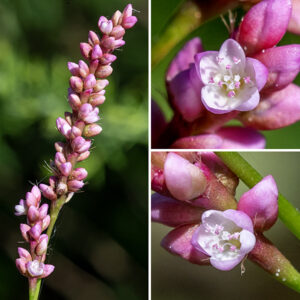
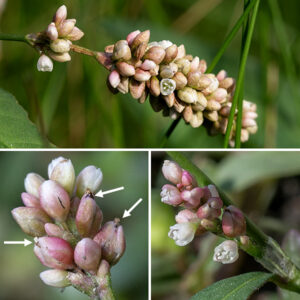
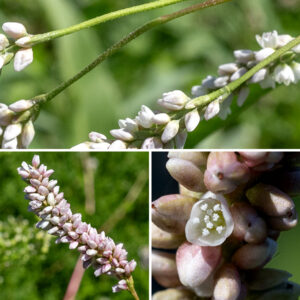
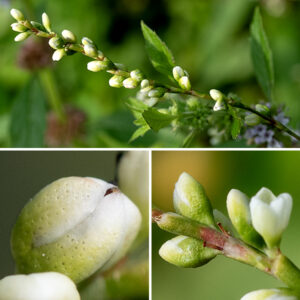
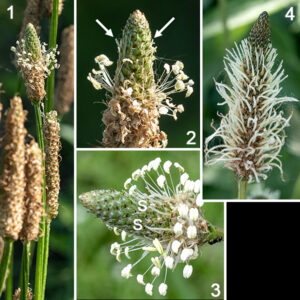
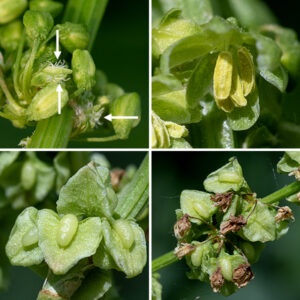
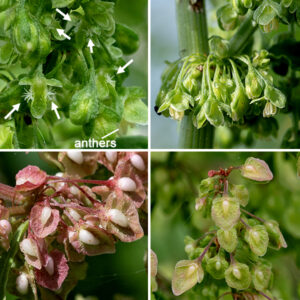
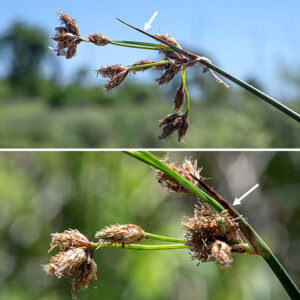
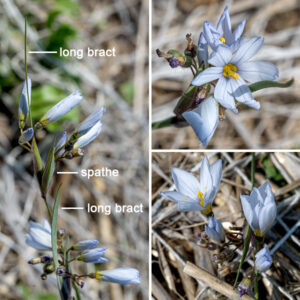
Common wood-rush (Luzula multiflora) flowers. Top left: an umbel of flower clusters of common wood-rush. Top right: A single cluster of common wood-rush flowers. One flower is viewed face-on (1); the six yellow anthers are easily visible against the background of the reddish purple tepals, but the central pistil and trifid stigmas are viewed along their axis and obscure. A second flower is viewed in profile (2). From this perspective, the central pistil and the three stigmas on the pistil are clear. Bottom right, bottom left: two other clusters of common wood-rush flowers. The terminal flowers in both clusters have yet to spread their tepals but the stigmas already protrude from the tips of the flowers. The more basal flowers have spread tepals and have both stamens and pistils visible; in two cases, the green ovary (white arrows) at the base of the pistil can be seen.
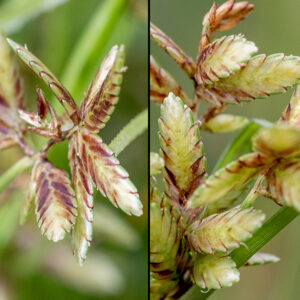
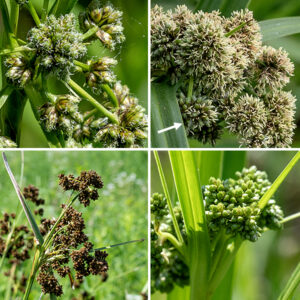
Culms of common wood-rush terminate in umbels of 3-12 distinct flower clusters with green, hairless floral stalks (“rays”) 1/2-3″ long. The rays diverge by less than 60° from each other. (Which distinguishes this species from another Illinois species, hedgehog wood-rush (L. echinata), in which the rays diverge at greater angles.) A single flower cluster is roughly cylindrical, about 1/4″ across and 1/4-1/2″ long containing 6-16 flowers. Individual flowers are about 1/4″ across and consist of six brownish, scaly, lance-shaped tepals 2.5-4 mm long with white, membranous margins; six stamens with bulky, pale-yellow anthers; and a single pistil with three feathery stigmas. The flowers are wind pollinated. Seed capsules are egg-shaped with a short beak and three longitudinal lobes; each lobe contains a single seed. A pair of leaf-like bracts up to 2″ long is present at the base of the inflorescence. Blooms are present for only a week or 10 days in April.

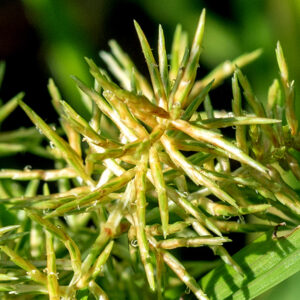
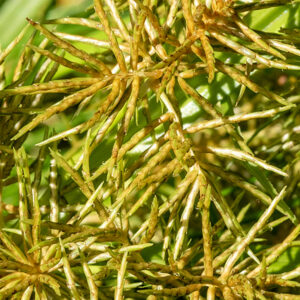
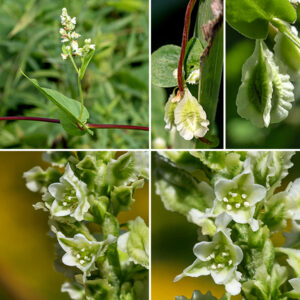
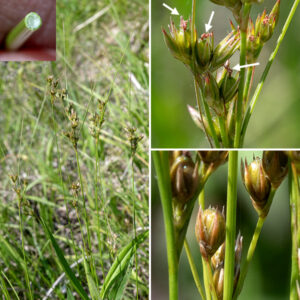
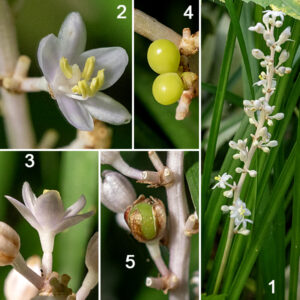
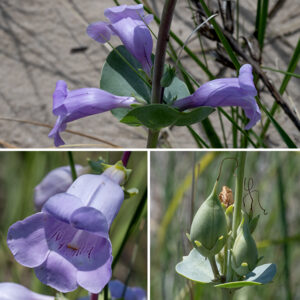
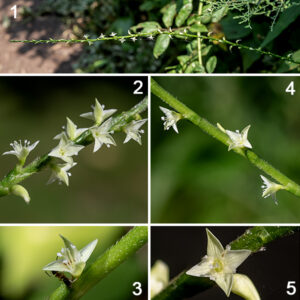
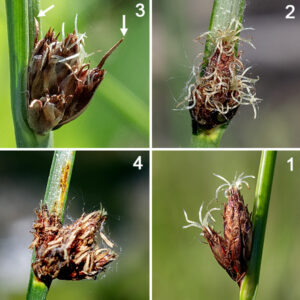
Common wood-rush (Luzula multiflora) stems (culms) and leaves. (1) A fertile culm of common wood-rush with an umbel of flower clusters in the upper right corner of the image. There are two stem leaves partially sheathing the culm; at the point where each leaf detaches from the culm there is a dense tuft of white hairs (arrows). Note that the leaves are alternate on the culm. (2) A closer view of the culm and stem leaves shown in image 1. Again, note the opposite leaves and the tufts of white hairs where the leaf sheath ends and the leaf becomes free. (3) A cluster of common wood-rush plants. The narrow stem leaves fill the lower half of the image, partly hiding a couple flower clusters; a well-developed umbel of flower clusters dominates the upper portion of the image. (4) A particularly hairy common wood-rush. Note the long white hairs present around the base of the bract (arrow) that arises at the base of the umbel of flower clusters and additional hairs attached to the stem leaf rising above the umbel and protruding from the leaf margins.
In common wood-rush, a tuft of basal leaves gives rise to one or more culms that bear the flowers. The basal leaves are medium green, up to 8″ long and about a quarter inch across, with hairy bases and long, soft, white marginal hairs but with otherwise smooth margins. The culms may be 4-16″ long, straight, circular in section, light green, hairless. The stem leaves are alternate, up to 5″ long and 1/4″ across with stiffened tips; the stem leaves sheath the culm. Where each stem leaf joins the culm there is a dense tuft of white hairs and additional long, white hairs may be present on the leaf margins or spanning the width of the leaf.

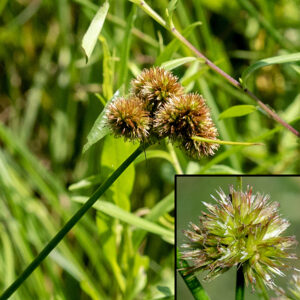
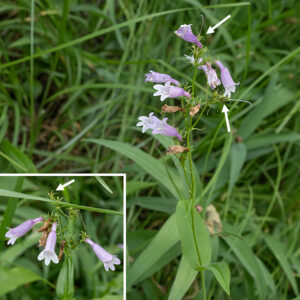
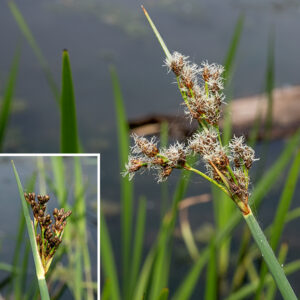
A common wood-rush (Luzula multiflora) plant growing on the edge of the woodland north of West Lagoon. Note the small tuft of the white hairs where the stem leaf separates from the culm (white arrow). The insert on the upper left shows a single flower cluster with immature flowers at the top of the cluster and mature, open flowers below. The trifid stigmas and six robust anthers are the most prominent features of individual flowers.
Common wood-rush (Luzula multiflora) is an inconspicuous perennial, superficially similar to grasses but with scaly flowers and seeds that indicate its affinities with rushes (Juncaceae). It is found in most of the northern states of the U.S. and in all the Canadian provinces but is also found in Europe and Asia; it appears to be a circumboreal species and will be considered here as “native.” Common wood-rush is usually found in shaded upland areas but is present in Jackson Park in the meadow north of West Lagoon.
Browse more plants
Want to keep exploring more plants? You can view other plants like this one by selecting a characteristic from the list below, or 'browse more plants' to go back to the Plant Finder.