Dipsacus fullonum
wild teasel [Blooms: Jul-?]
More information
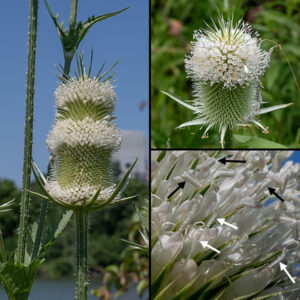
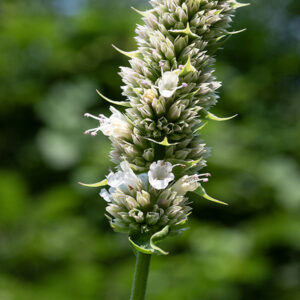
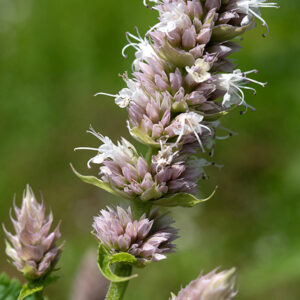
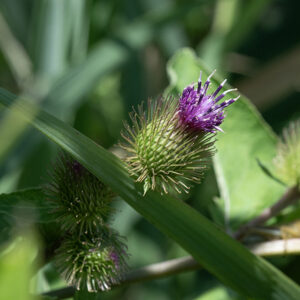
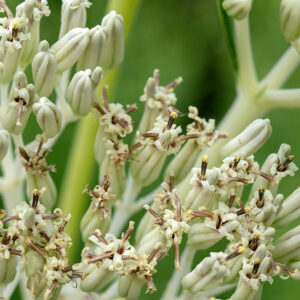
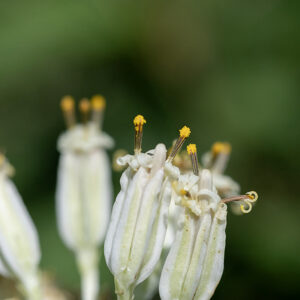
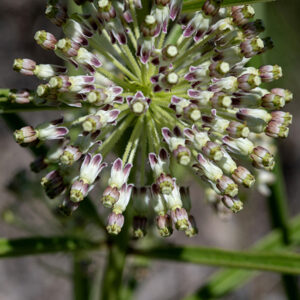
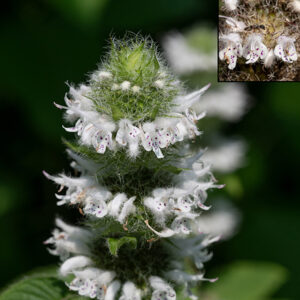
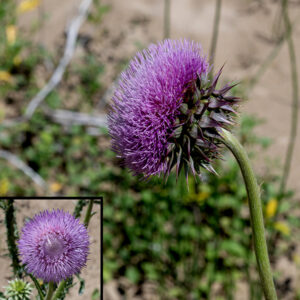
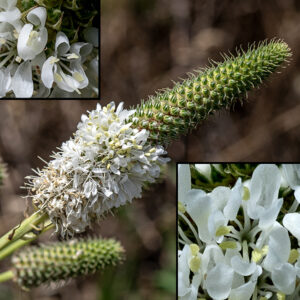
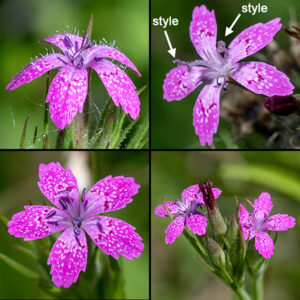
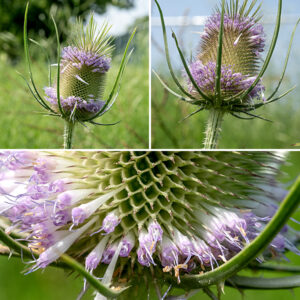
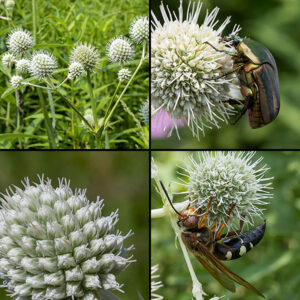
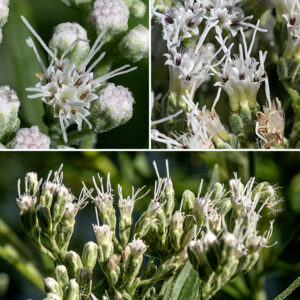
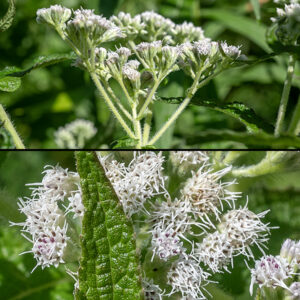
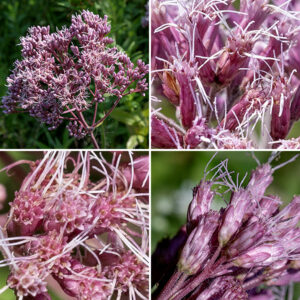
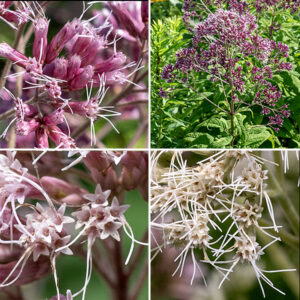
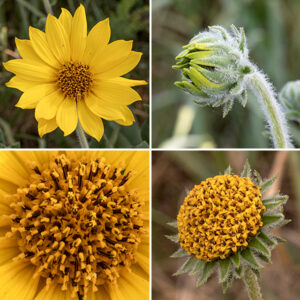
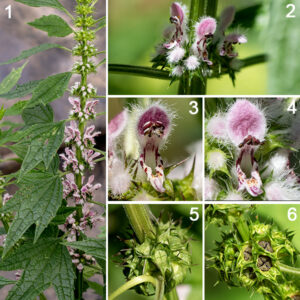
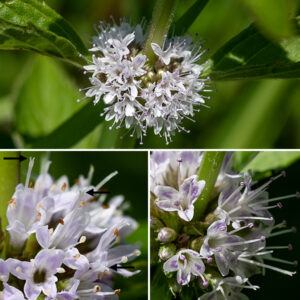
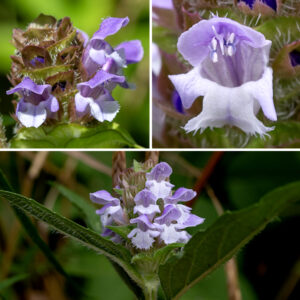
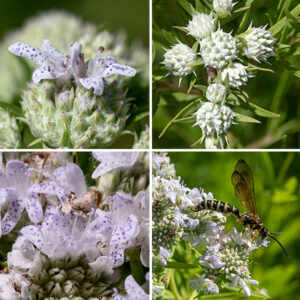
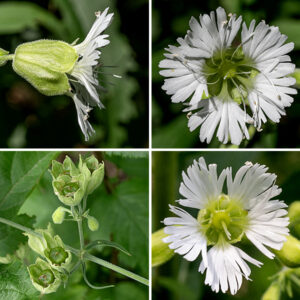
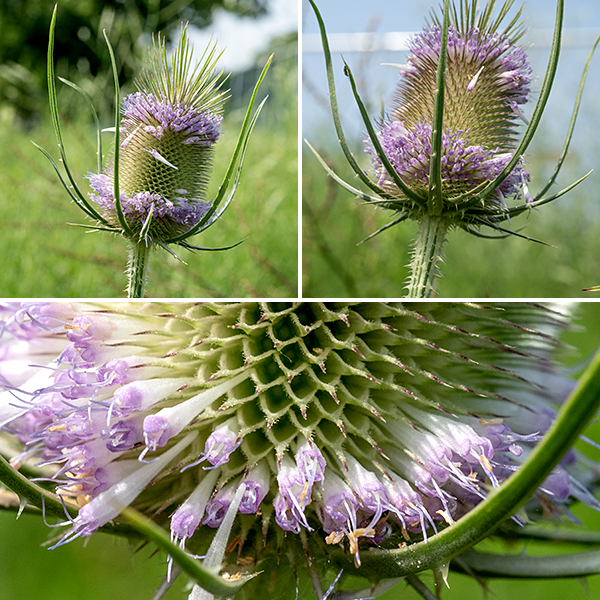
Wild teasel produces one or more flowering stalks 2.5-6 feet tall, reddish- or pale green, with longitudinal ridges and scattered white prickles. The flowerhead is up to 4″ tall and 1.5″ across, initially egg-shaped but elongating as it matures. At the base of the flowerhead are narrow, prickly, sharply-pointed bracts up to 6″ long that arch up to surround the flowerhead. Individual flowers are packed around the flowerhead like cells in a honeycomb, each flower with a 3/4″ long bract that tapers to a sharp point. Individual flowers are white along most of their length, tubular, about 1/2″ long, flaring out to four pale purple or lavender lobes; four stamens with white filaments and purple to lavender anthers and a single white style all protrude well beyond the end of the tube. Flowers bloom initially about halfway up the flowerhead but, later, rings of blooms develop at the base and apex of the flowerhead. I’ve only seen this plant once in Jackson Park (in 2023), but hope it returns. (But not in excessive numbers.)
More information
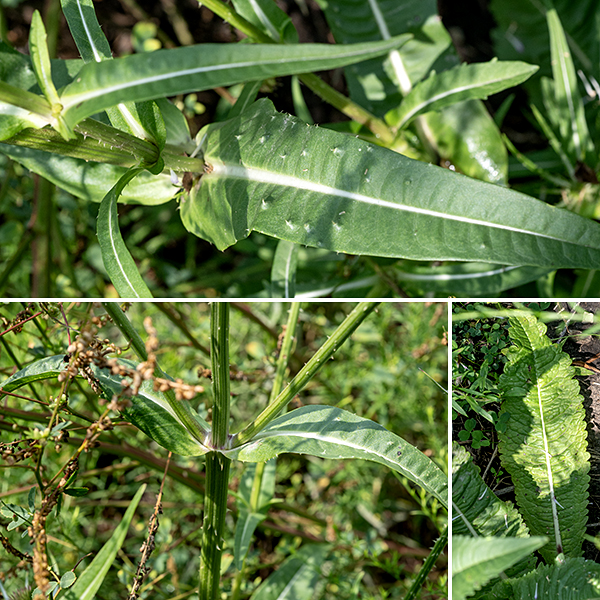
Wild teasel is a biennial — in its first year it consists simply of a whorl of unlobed leaves about two feet in diameter while, in its second year, it produces one or more flowering stalks 2.5-6 feet tall, reddish- or pale green, with longitudinal ridges and scattered white prickles. The basal leaves are up to 12″ long and 3″ across; in the first year, the margins of the leaves are coarsely toothed and the surface of the blade is puckered while, in second-year leaves, the basal leaf margins have regular, rounded, symmetrical teeth and wavy margins (as here). The stem leaves are opposite, also 12″ long and 3″ across with smooth, prickly, or irregularly-toothed margins; the upper surface has a pale central vein which, on the underside, bears stout prickles. Stem leaves are sessile near the base of the stem but increasingly clasp the stem higher up. I’ve only seen this plant once in Jackson Park (in 2023), but hope it returns. (But not in excessive numbers.)
Browse more plants
Want to keep exploring more plants? You can view other plants like this one by selecting a characteristic from the list below, or 'browse more plants' to go back to the Plant Finder.
Related Plants