Malus baccata
Siberian crabapple [Blooms: Apr-May]
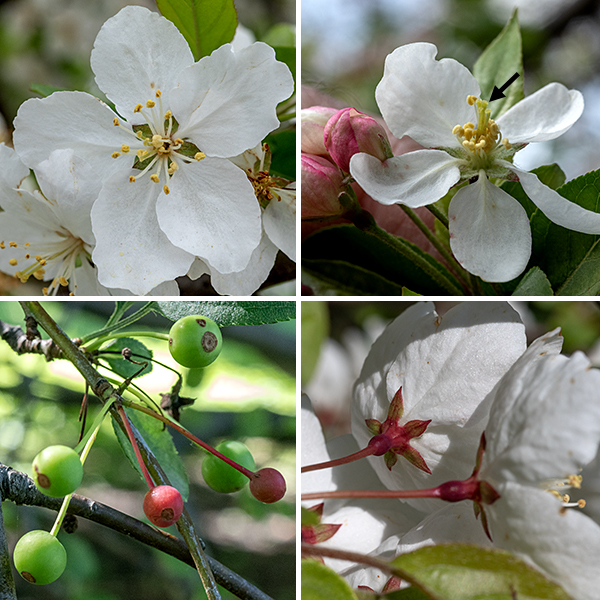
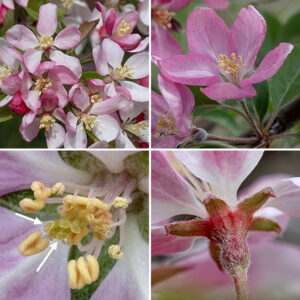
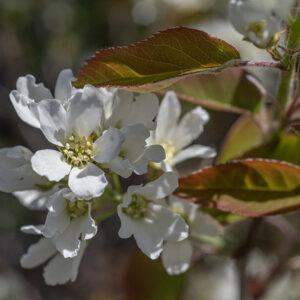
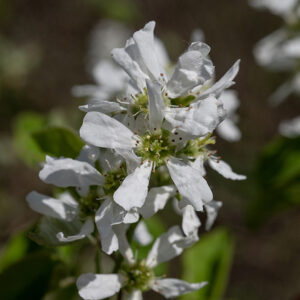
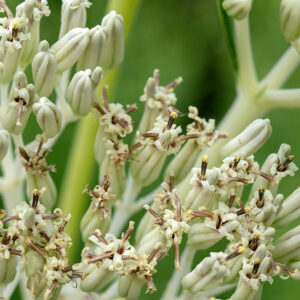
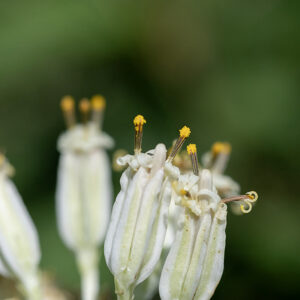
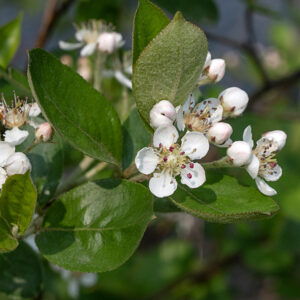
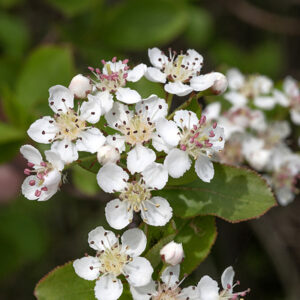
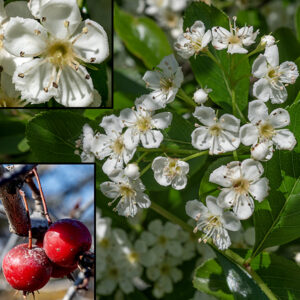
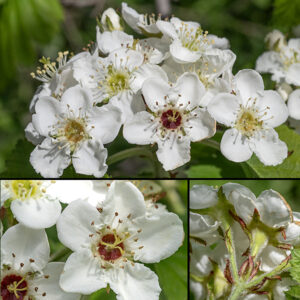
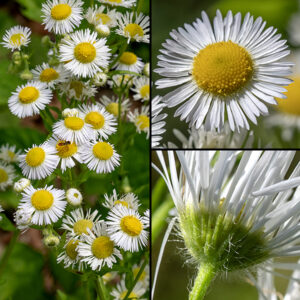
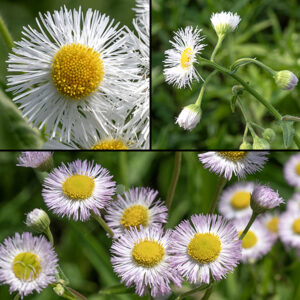
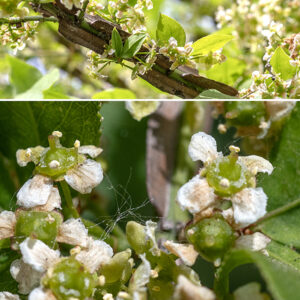
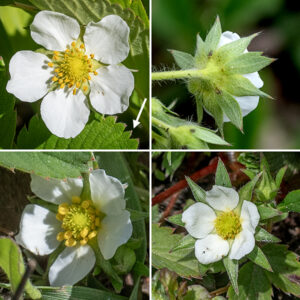
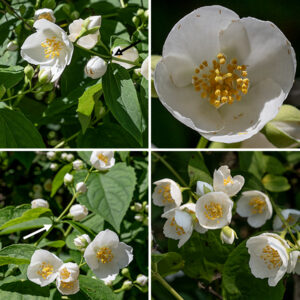
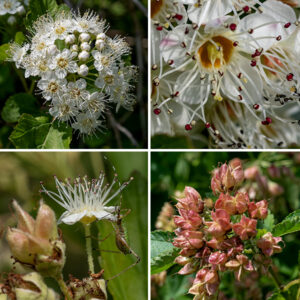
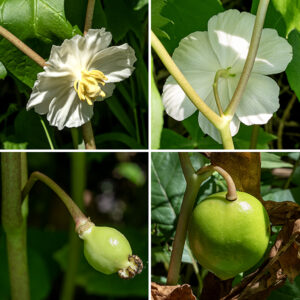
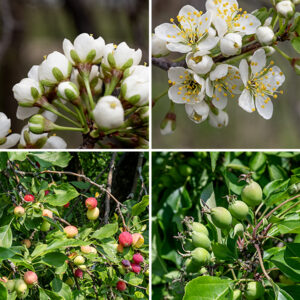
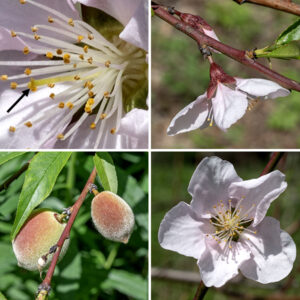
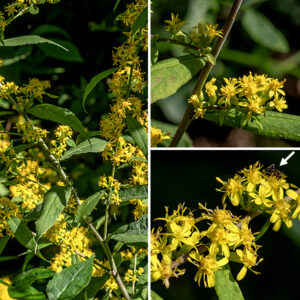
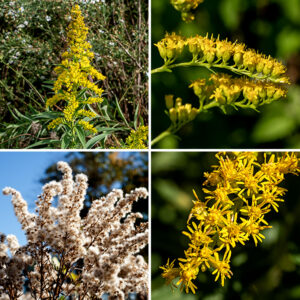
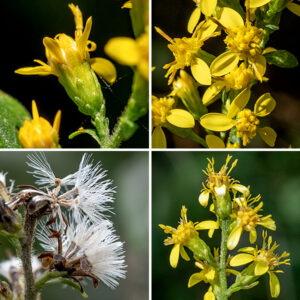
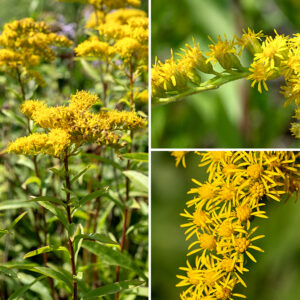
Siberian crabapple (Malus baccata) flowers and fruit. Top right: a newly opened Siberian crabapple flower with three unopened buds to the left. Note that both the numerous stamens and the four green styles (black arrow) remain tightly clustered. Top left: a fully opened flower with the stamens and styles widely spread. Note the very narrow bases of the white petals. Bottom right: lateral and three-quarters views of the back of Siberian crabapple flowers. Note the lance-shaped, reddish green sepals. Bottom left: developing fruits of Siberian crabapples.
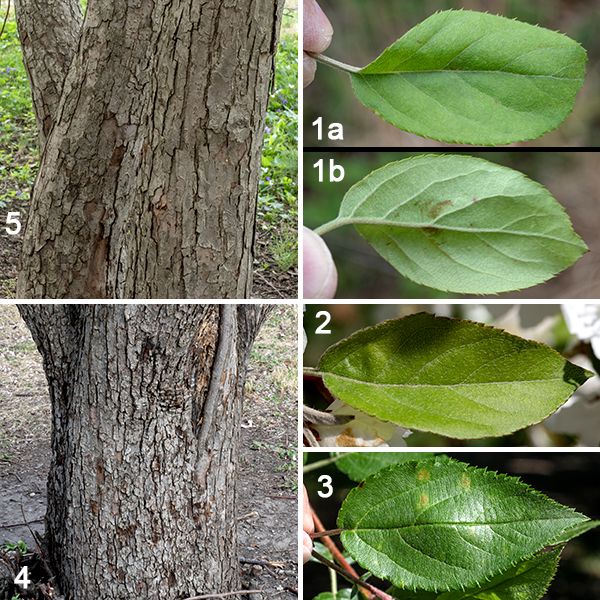
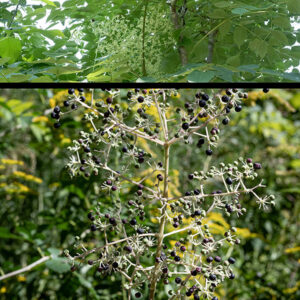
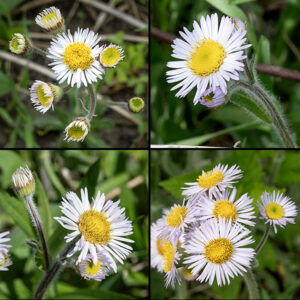
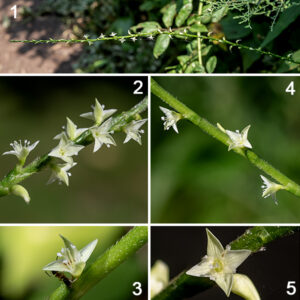
Siberian crabapple (Malus baccata) stems and leaves. (1) A newly opened leaf in late April showing the upper surface of the leaf (1a) and the underside of the same leaf (1b). The fuzziness on both surfaces is due to a coating of fine hairs. (2) A maturing leaf in early May. A fuzz of fine hairs is still present but noticeably thinner. (3) A mature Siberian crabapple leaf in mid-June. The leaf surfaces by now are virtually hairless. (4, 5) Close-up photos of the bark of two different Siberian crabapple trees. Note that the color can vary from gray to gray-brown, but the “platey” appearance of the bark is manifest in both images.
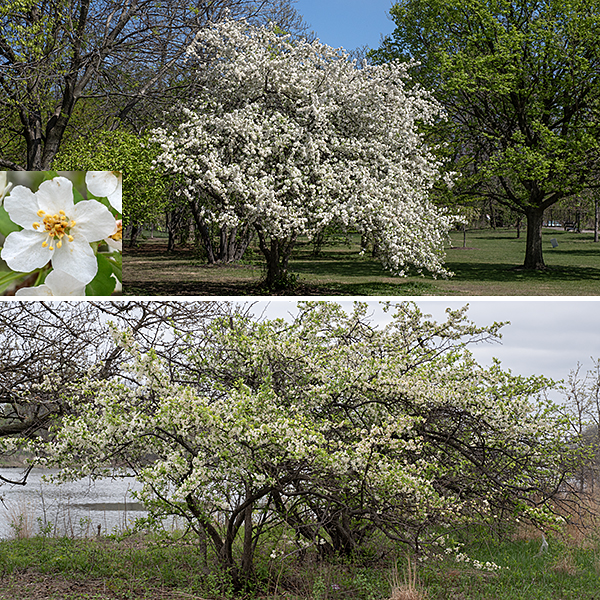
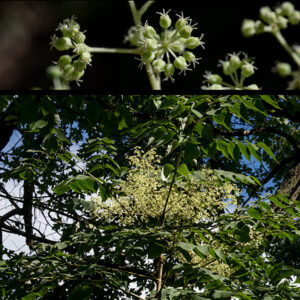
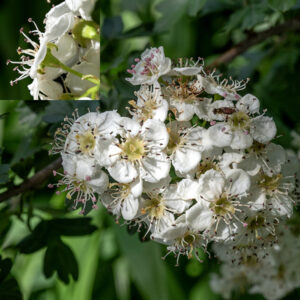
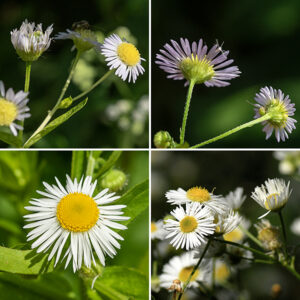
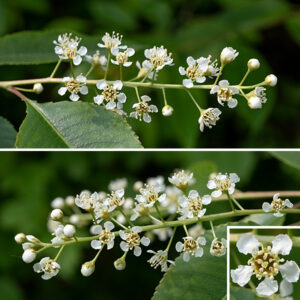
Two Siberian crabapples (Malus baccata) in full bloom. The upper image is of a Siberian crabapple growing south of Columbia Basin in early May, 2025; Wooded Island would be off the right-hand side of this image. In the lower left of this image is an enlarged image of a typical Siberian crabapple flower. The lower image is of two young Siberian crabapples growing on the northwest shore of West Lagoon in late April, 2026.
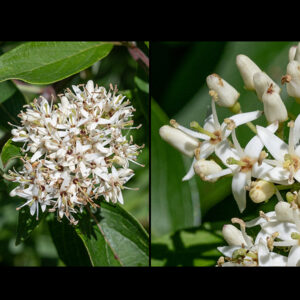
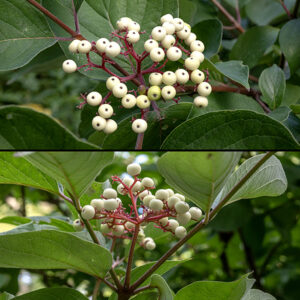
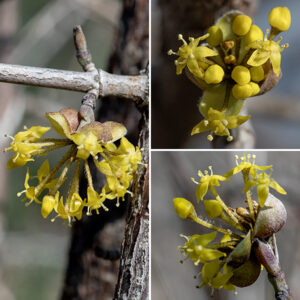
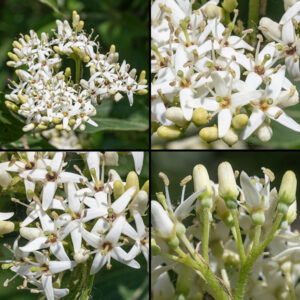
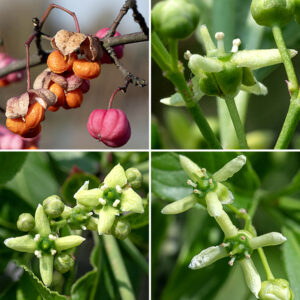
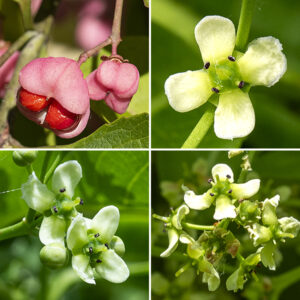
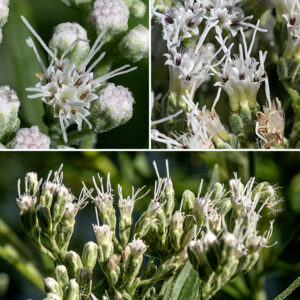
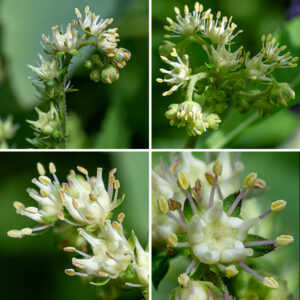
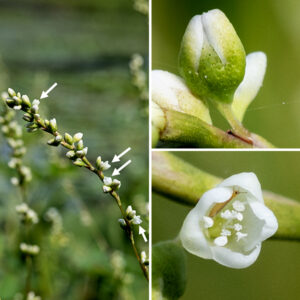
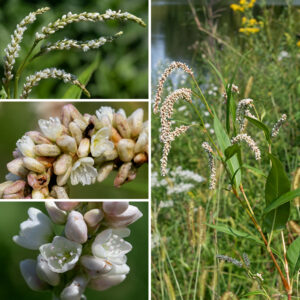
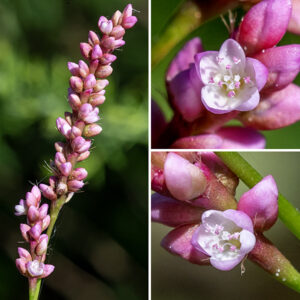
Siberian crabapple (Malus baccata) is an exotic tree that is native to cold-temperate habits throughout Asia and has been widely planted as an ornamental in the U.S. It is the most cold-hardy (Zone 2) of all the species of Malus (apples) and is often used as a rootstock for grafting other species. Siberian crabapple grows to 30-40 feet tall, often with attractive, arching branches. The trunk may be up to about a foot across. The bark on the trunk is dark gray and divided into scaly plates; young branches have reddish orange to reddish brown bark. The leaves are alternate, elliptical or egg shaped, up to 3″ long and about 1.5″ across, with serrate margins and long pointed tips; the petioles are 1-2″ long. Young leaves are hairy, but the hairs disappear as the leaves mature. The flowers occur in groups of 4-6. Individual flowers are 1.25″ across; they have five reddish-green, lance-shaped sepals; five white, circular petals with a narrow (1-2 mm) base (“claw”) attaching them to the rest of the flower; 15-20 white stamens, each 7-9 mm long with a yellow to tan anther; and five (sometimes four) green styles that are slightly longer (8-10 mm) than the stamens that have globose stigmas at their tips. The fruits (pomes) are red or yellow crabapples about 5/8″ in diameter; both humans and birds find them edible. Siberian crabapple has been widely planted in Jackson Park, especially on the lawn south of Columbia Basin and west of the Darrow Bridge. Siberian crabapples make a spectacular display — rivaling the cherry blossoms — when in full bloom in early spring.
Browse more plants
Want to keep exploring more plants? You can view other plants like this one by selecting a characteristic from the list below, or 'browse more plants' to go back to the Plant Finder.
Related Plants