Fraxinus pennsylvanica
green ash [Blooms: May?]

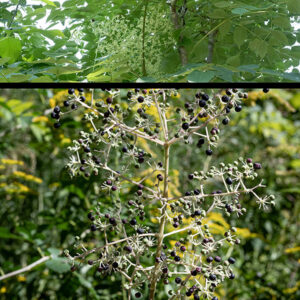
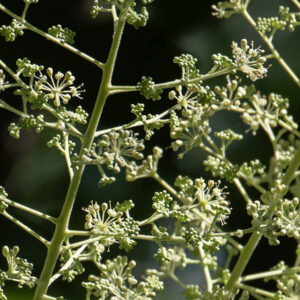
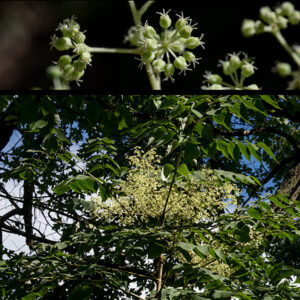
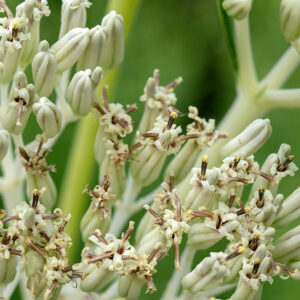
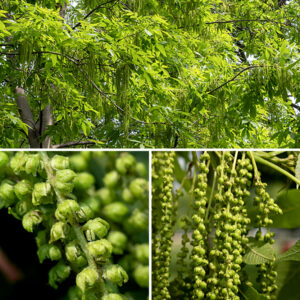
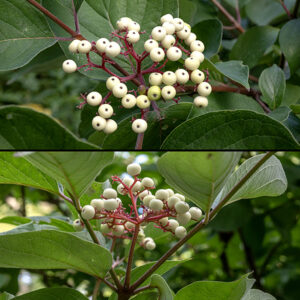
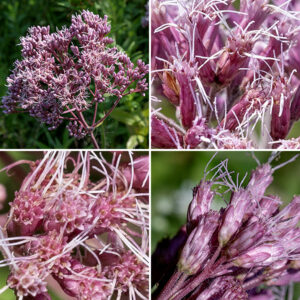
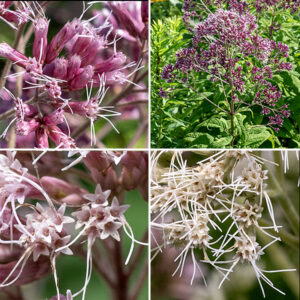
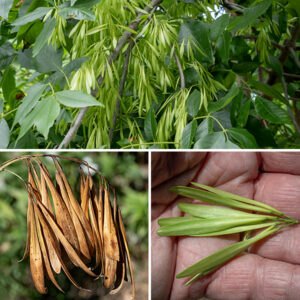
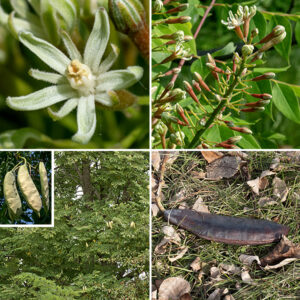
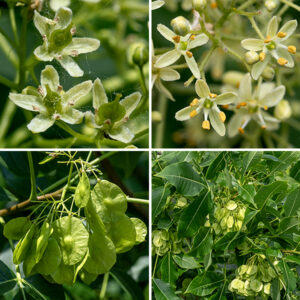
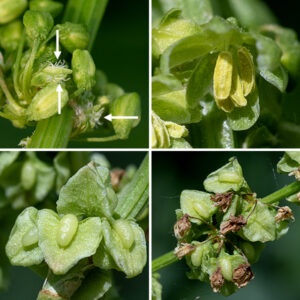
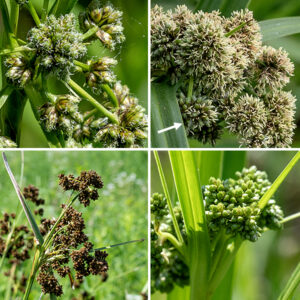
Green ash (Fraxinus pennsylvanica) fruit. To date I’ve only found a single green ash in Jackson Park, a female whose flowers had already produced their fruit (ash seeds). Thus, I have no guidance for you in terms of the appearance of either the male of female flowers (although I will include that information below). Here I offer an image of the profuse production of the ash samaras in this small tree (top image), a view of the panicles of the mature ash samaras in early October (bottom left), reflecting the original architecture of the inflorescence, and a close-up of a cluster of ash samaras with my left hand for scale (bottom right).
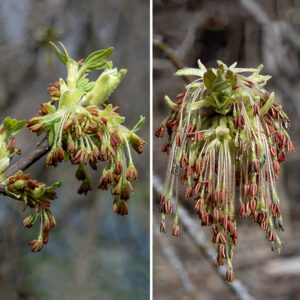
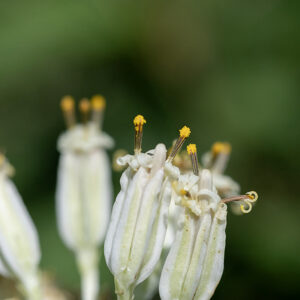
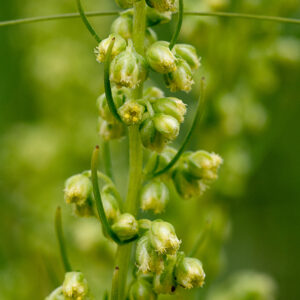
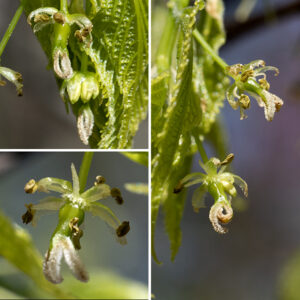
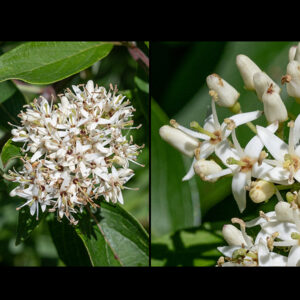
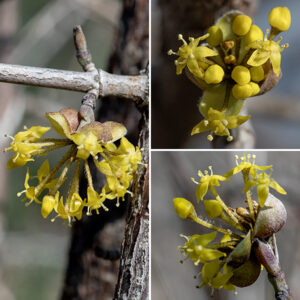
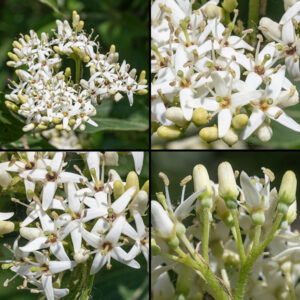
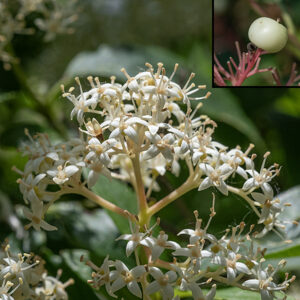
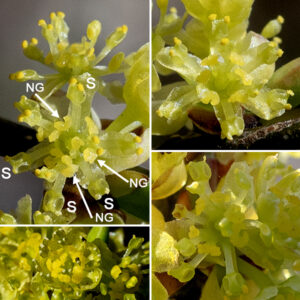
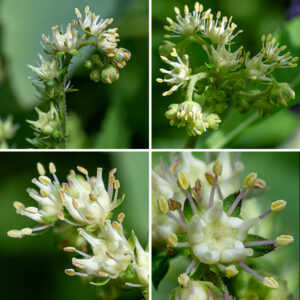
Green ash is dioecius; each tree produces only either male (staminate) or female (pistillate) flowers (which are wind pollinated). The flowers open in mid-spring, before the leaves emerge. Male flowers are produced in compact clusters that envelop short sections of the second-year twigs. Each staminate flower is yellowish green to greenish purple and less than 1/8″ (3 mm) across, consisting of a tiny, four-lobed, tubular calyx and a pair of purplish stamens. Petals are absent. Female flowers are also produced on the second-year twigs, in this case in small panicles. Each female flower consists of a tiny four-lobed, tubular calyx and a pistil with a single, long style; again, petals are absent. Fertilized flowers are replaced by panicles of drooping, spatula-shaped, winged seeds 1-2.5″ long and 1/4-1/3″ wide that have an ellipsoid swelling at one end containing the seed and a single elongated, membranous wing with a rounded or notched tip. When released in the autumn, the greenish to tan fruits spin around the seed, reducing their rate of fall so they can be carried greater distances by the ambient wind.

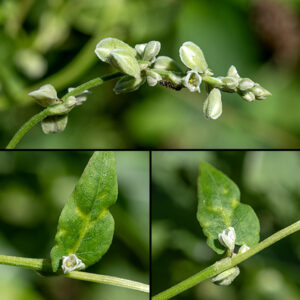
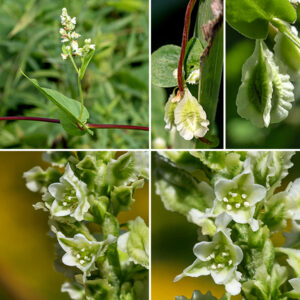
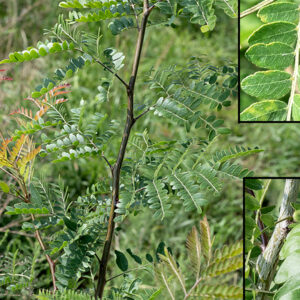
Green ash (Fraxinus pennsylvanica) stems and leaves. Left: a single compound leaf of green ash showing the upper surface of the leaf in the topmost image and the underside of the same leaf in the middle image. This leaf is “typical” in that it has seven leaflets; the leaflets have smooth margins. The image on the bottom left is a close-up of the apical leaflet of another ash leaf. On the right is an image of the bark of (one of the) trunks of this rather small tree.
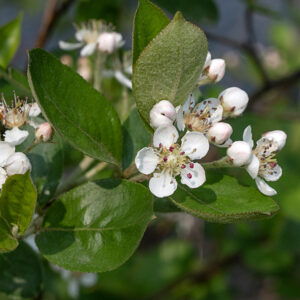
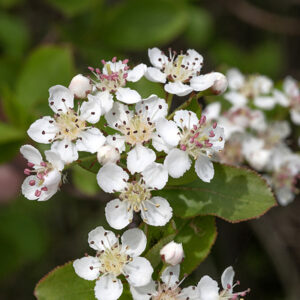
Green ash (Fraxinus pennsylvanica) is a native tree that typically grows 50-70 feet tall (occasionally, up to 100 feet). Green ash usually produces a single trunk 2-3.5 feet in diameter and an ovoid to irregular crown. The trunk bark is thick and gray, with interlaced ridges that form narrow, diamond-shaped cavities. Larger branches have gray, somewhat scaly bark; young twigs are gray and smooth. New leafy shoots are green and hairless. The leaves are opposite and odd-pinnate with 5-9 (usually 7) leaflets; the leaves are 6-14″ long and about half as wide with a short, light green, hairless petiolule. Each leaflet is 2-5″ long and 3/4-2″ across, elliptical or lance-shaped with either smooth or low serrated margins. The leaflets are shiny dark green on their upper surface, paler and duller on their underside. Leaves are restricted to the new shoots and twigs.

A small green ash (Fraxinus pennsylvanica) on the west side of Wooded Island. The green ash is about 15 feet tall, located just west of West Trail. In this image, it has the darkest green foliage and extends over about 75% of the vertical image; the most distal three leaflets on many of the compound leaves can be seen.
Green ash is tolerant of shading so can grow in mature forests; it prefers moist soils and can tolerate some flooding. It is a relatively fast-growing tree but not as fast as red maple; it can live for over 100 years. It is vulnerable to the emerald ash borer (Agrilus planipennis), an insect whose larvae feed on the phloem and cambium of ash tree bark. The tree figured here is a relatively young plant. The (undated) “Wooded Island Tree Identification” map distributed occasionally by the Jackson Park Advisory Council lists a single green ash (tree #41) on the west side of Wooded Island halfway down the West Trail, but the tree presently bearing the “41” badge is a mature white mulberry (Morus alba) with a four-foot diameter trunk located about 25 m north of the green ash shown. Apparently, the tree numbers have been reassigned since the map was originally produced.
Browse more plants
Want to keep exploring more plants? You can view other plants like this one by selecting a characteristic from the list below, or 'browse more plants' to go back to the Plant Finder.