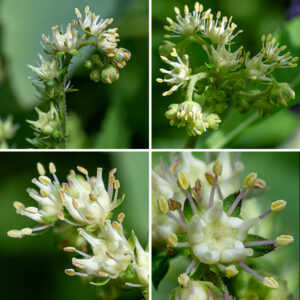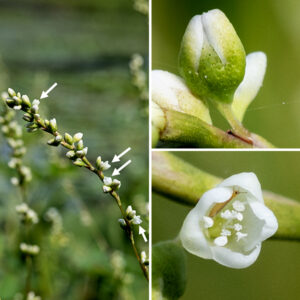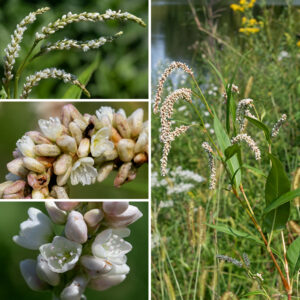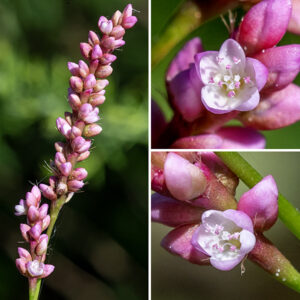
Brassica nigra
black mustard [Blooms: Jun-Jul]

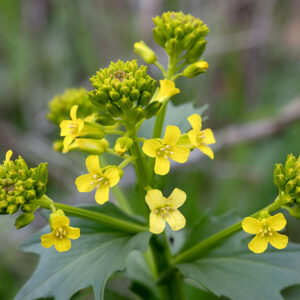
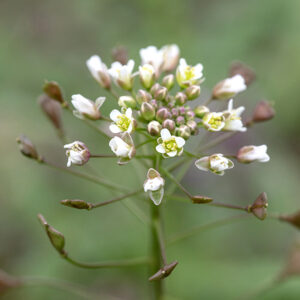
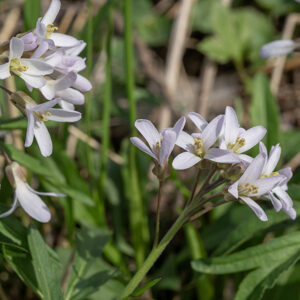
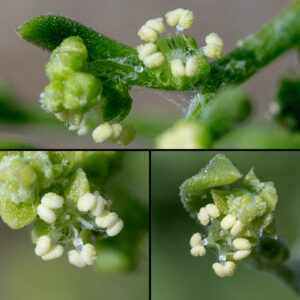
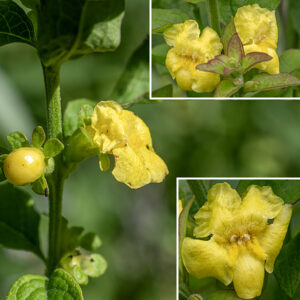
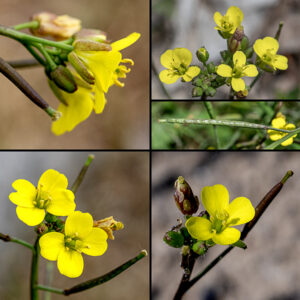
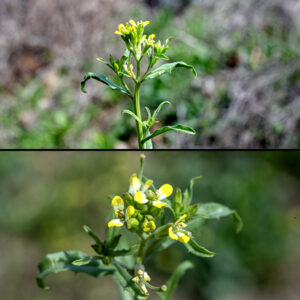
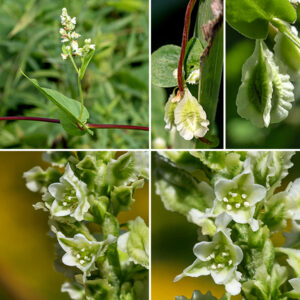
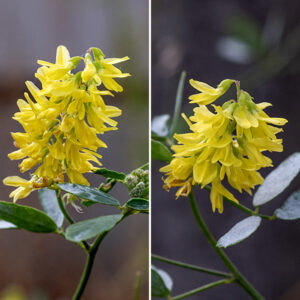
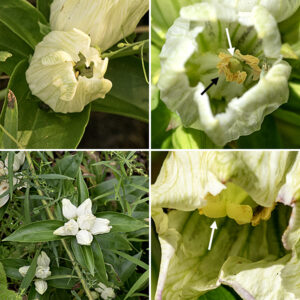
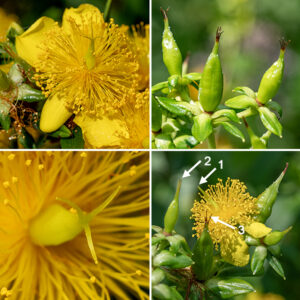
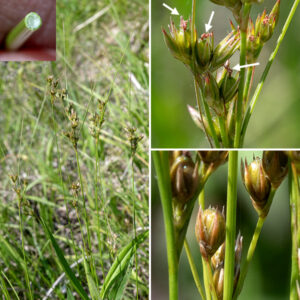
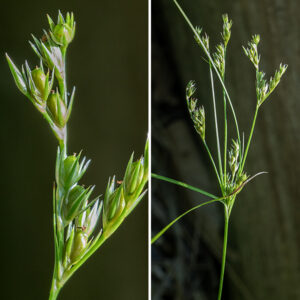
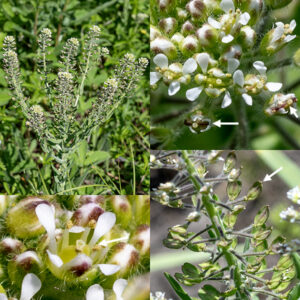
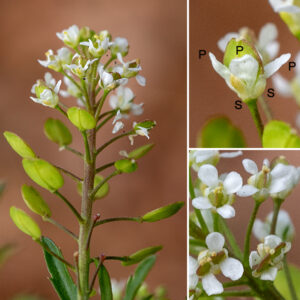
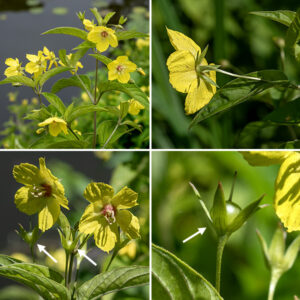
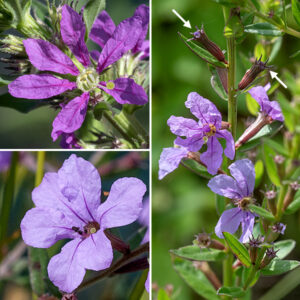
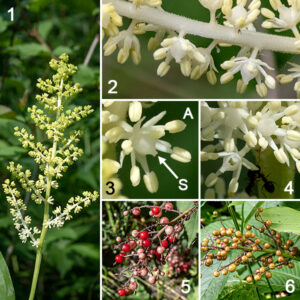
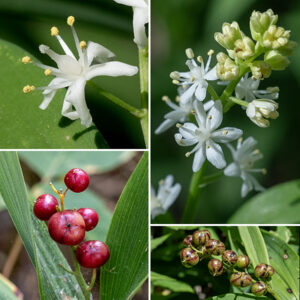
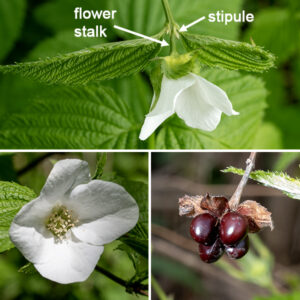
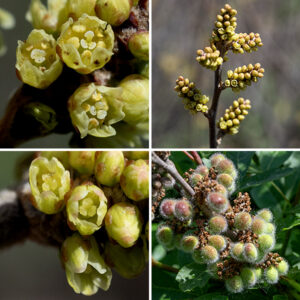
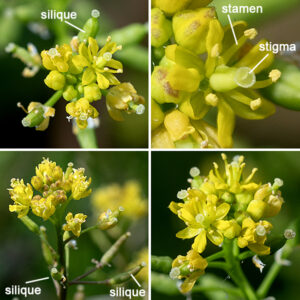
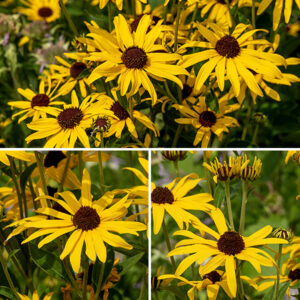
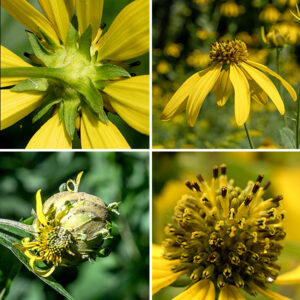
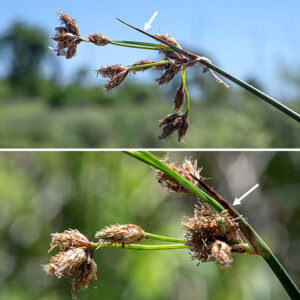
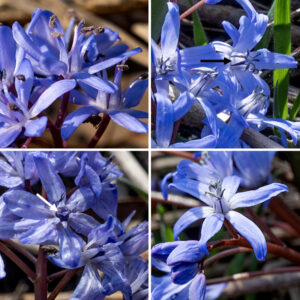
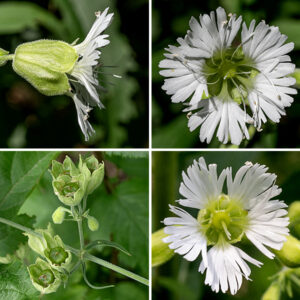
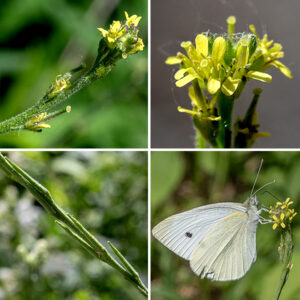
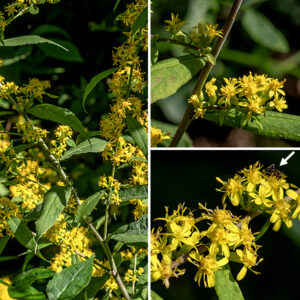
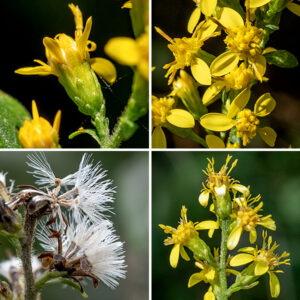
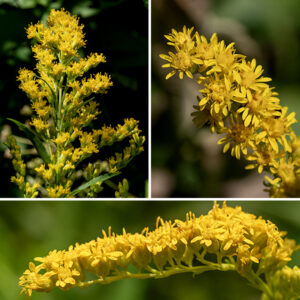
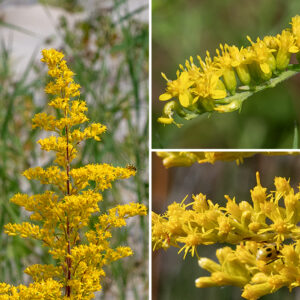
Black mustard (Brassica nigra) flowers and fruit. Left: a cluster (raceme) of flowers at the tip of a stem. As the flowers are fertilized and transform into seed pods, the stem grows at its tip and produces new floral buds which, in turn, open and spread their petals. The elongated seed pods (siliques) sit on the flower pedicel and parallel the stem; at the tip of each silique, the remnants of the flower’s style and stigma persist. Right top: face-on view of a black mustard flower. The narrow sepals (labelled) will later turn yellow. The four bright yellow petals dominate the aspect of the flower. The single style (labelled) is surrounded by six anthers. Bottom right: lateral view of a black mustard flower. The flower sits on a short pedicel (labeled) with the narrow sepals loosely cupping the rest of the flower.
In black mustard, racemes of yellow flowers arise from the tip of the stems, with the siliques (fruit) of previously fertilized flowers arrayed along the stem below the flowers. The racemes of flowers are 1/2-2″ long. Each flower is about 1/3″ (8 mm) across, consisting of a short (2-4 mm) pedicel, 4 sepals (green in the buds, turning yellow after the flower opens), 4 yellow, oval to round petals with a narrow base (“claw”), 6 greenish-yellow stamens with yellow anthers, and a green ovary with a short style (which persists in the siliques) at its apex. Fertilized flowers produce smooth, elongate fruits (siliques) 2-3 mm across, approximately four-angled in section, and 1/2-1″ long, tapering to a conical or cylindrical beak with the remnant of the style at its tip. The siliques contain 4-15 seeds and are often closely appressed to the stem. The seeds are dark brown or black with networks of furrows on their surface.

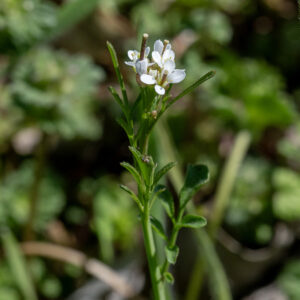
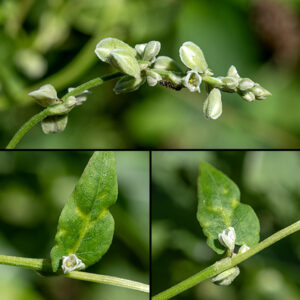
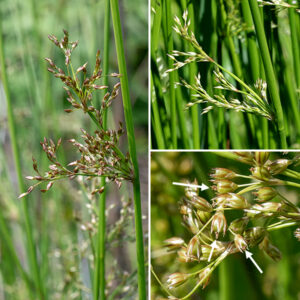
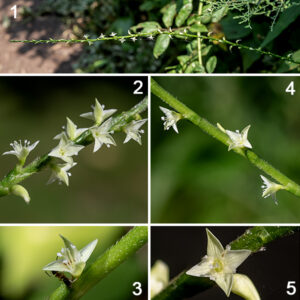
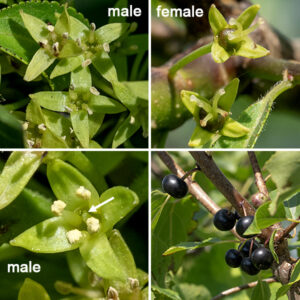
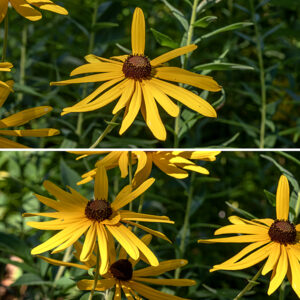
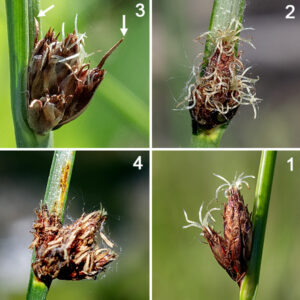
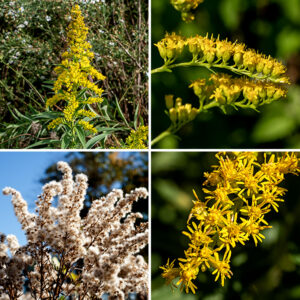
Black mustard (Brassica nigra) stems and leaves. (1) The upper side (1a) of one of the lower leaves of black mustard and the underside (1b) of the same leaf. Note the long petiole, the multiple lobes along the leaf, and the dominance of the apical (terminal) lobe over the lateral lobes. (2) A lower leaf of black mustard still attached to a stem, with my fingertips for scale. Again, note the long petiole, the multiple lobes along the leaf, and the dominance of the apical (terminal) lobe over the lateral lobes. (3) A stem bearing a single leaf and a lateral stem arising from the axil of the leaf. Note the waxy bloom on the exterior of the stem. (4) Another stem with a leaf and another lateral stem emerging from the leaf axil.
Black mustard is an exotic annual that is native to North Africa, western Asia, and eastern Europe, now naturalized across the U.S.; it grows to an imposing eight feet tall. The stem is round in section, hairless except near the base, and covered with a waxy bloom (like a plum). The leaves are alternate, up to 10″ long and 3″ across, decreasing in size higher on the stem. The lower leaves are up to 10″ long and 4″ wide; they are bristly with scattered stiff, white hairs and pinnately lobed with the lobes decreasing markedly in size towards the base of the long, stout petiole. The terminal lobe on all the leaves is much larger than any of the lateral lobes. The upper leaves are often lance-shaped or broadly elliptical and tend to lose their petiole higher on the stem; they may have only a few lobes or none.

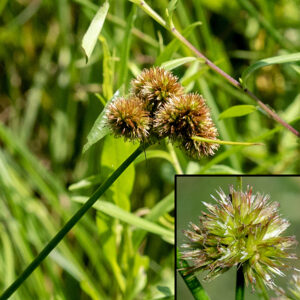
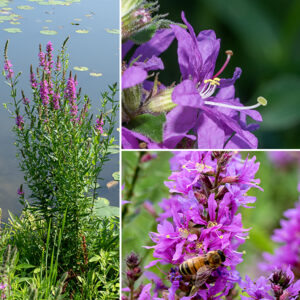
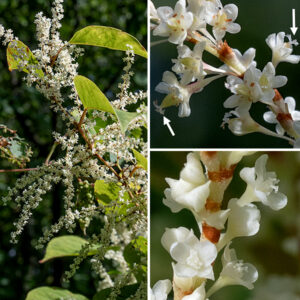
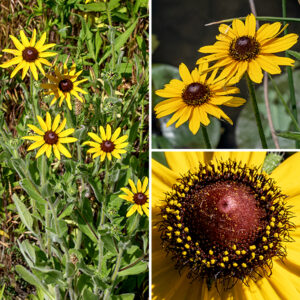
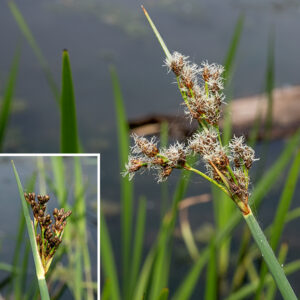
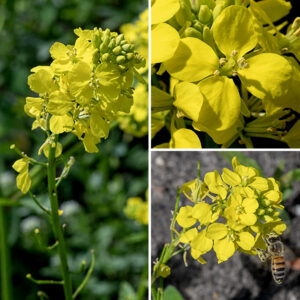
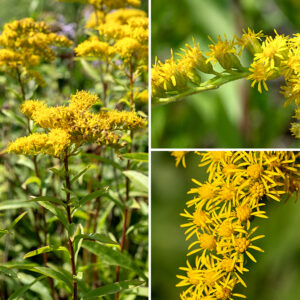
A colony of black mustard (Brassica nigra) plants growing just west of the DuSable Lake Shore Drive underpass to 63rd St. Beach. The image on the left shows a number of stems of black mustard with a streetlight pole in the background for scale. The panel on the right shows a closer view of a cluster of black mustard flowers at the tip of one of the stems.
Black mustard (Brassica nigra) is an exotic annual that is native to North Africa, western Asia, and eastern Europe, now naturalized across the U.S.; it grows to an imposing eight feet tall. Black mustard has been used as a spice for over 2,000 years, grown in the New World since the late 1700s, and used as a condiment (“mustard”) since the 13th century when people in France mixed the ground seeds with grape juice. Common yellow mustard (the condiment, colored with turmeric) was introduced at the 1904 St. Louis World’s Fair by the R.T French Co. Hot dogs in a bun may have been sold at the Columbian Exposition of 1893 (held in Jackson Park), but nobody could (yet) put yellow mustard on them. Brassica nigra has largely been replaced by a species from India (Brassica juncea) for applications where price is major factor; harvesting B. juncea is more easily mechanized. The young leaves, buds, and flowers of black mustard are all edible, but older leaves are not palatable. Black mustard is also known as Mutarda nigra and Rhamphospermum nigrum, but neither name is considered valid by ITIS.gov. (Both ITIS and USDA Plants recognize Brassica nigra as the valid binomial for black mustard.) Black mustard prefers disturbed areas with good soil; it does not compete well in healthy native ecosystems.
Browse more plants
Want to keep exploring more plants? You can view other plants like this one by selecting a characteristic from the list below, or 'browse more plants' to go back to the Plant Finder.