Claytonia caroliniana
Carolina spring beauty [Blooms: Apr]

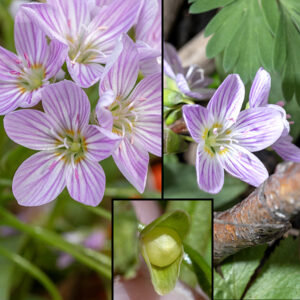
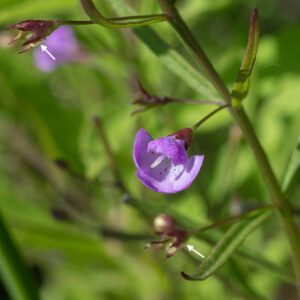
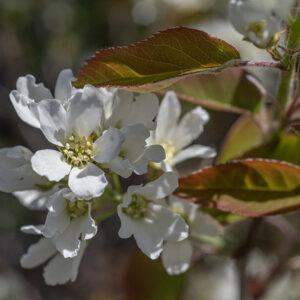
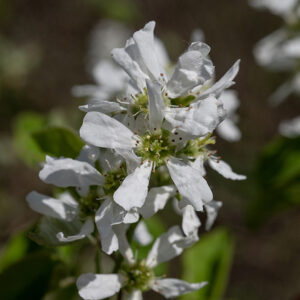
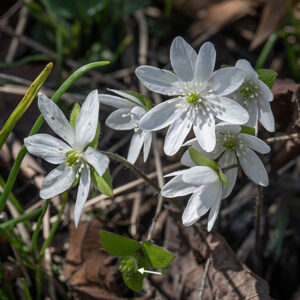
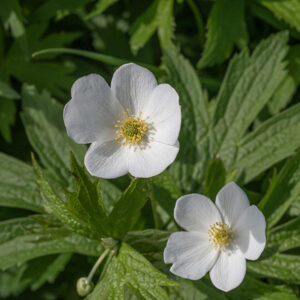
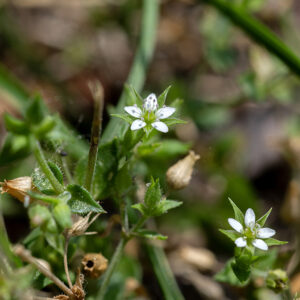
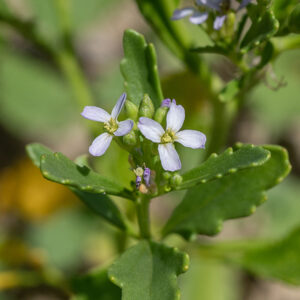
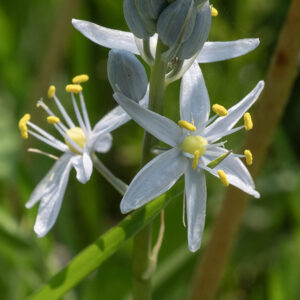
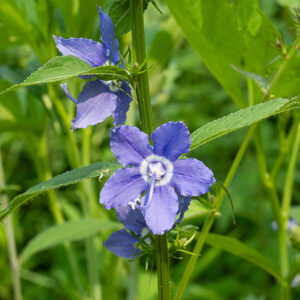
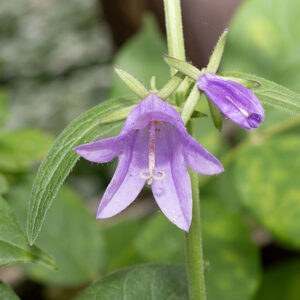
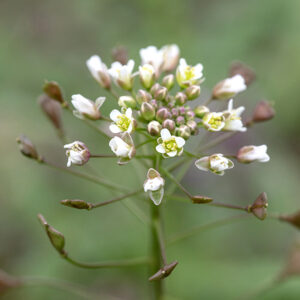
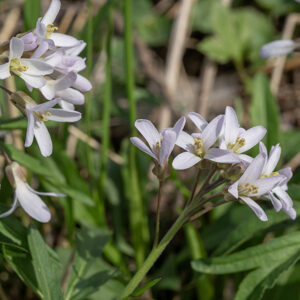
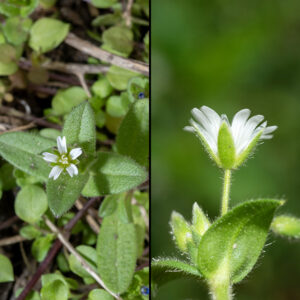
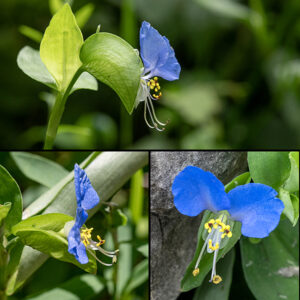
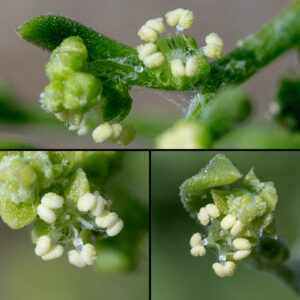
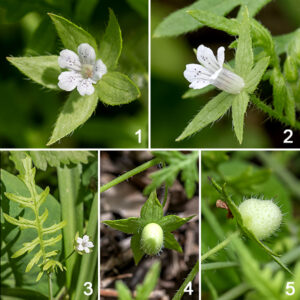
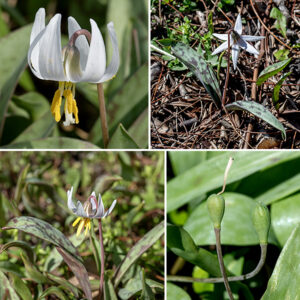
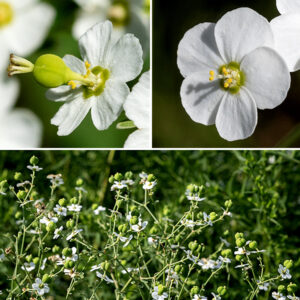
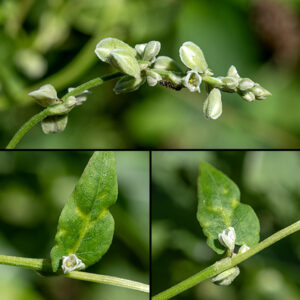
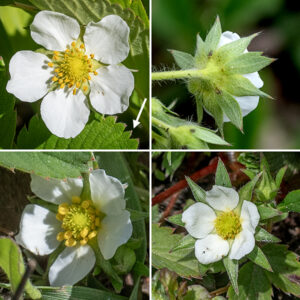
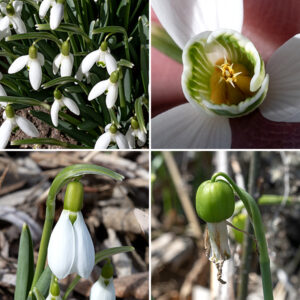
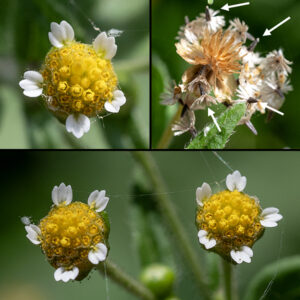
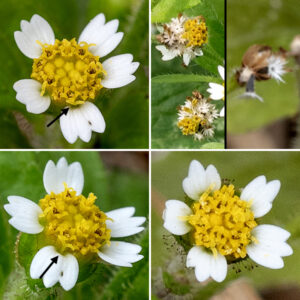
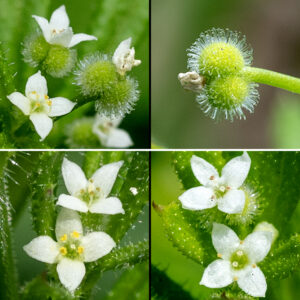
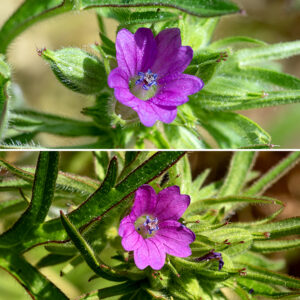
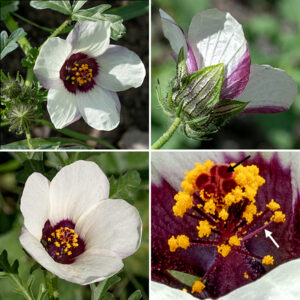
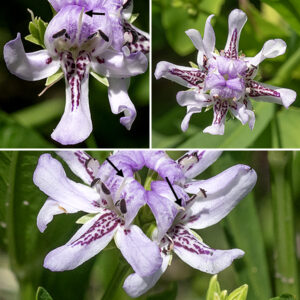
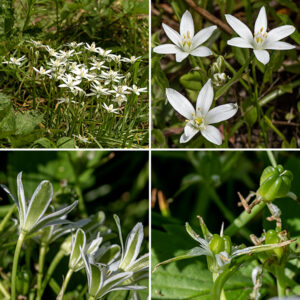
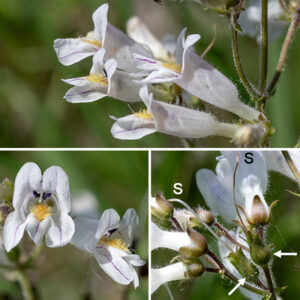
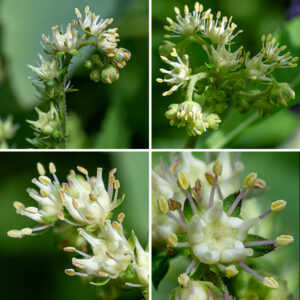
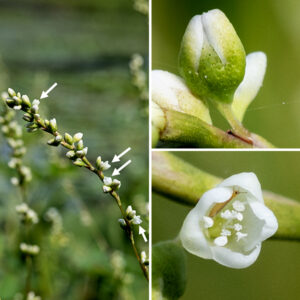
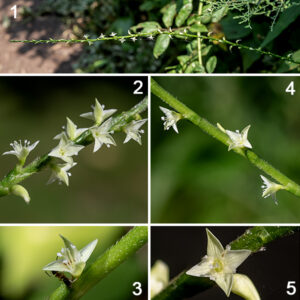
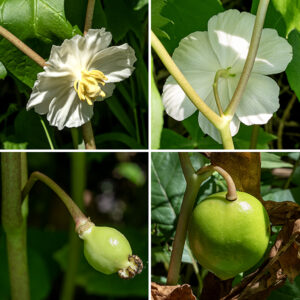
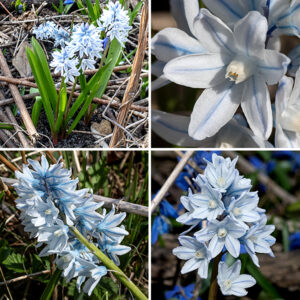
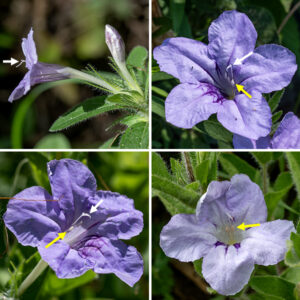
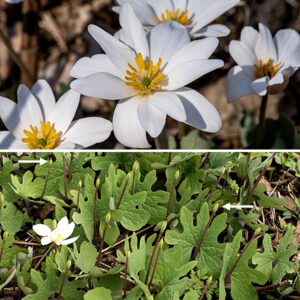
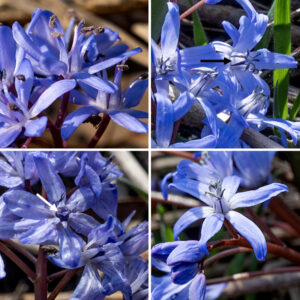
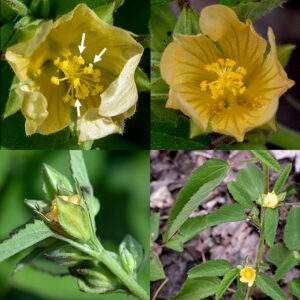
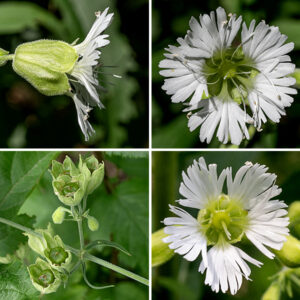
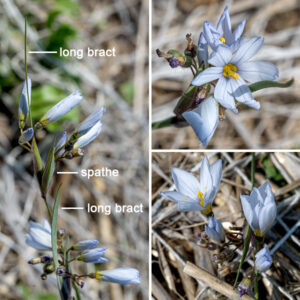
Carolina spring beauty (Claytonia caroliniana) flowers. The flowers of Carolina spring beauty are superficially identical to those of Virginia spring beauty (Claytonia virginica), which also occurs in Jackson Park. Top right: face on a view of a Carolina spring beauty flower. The purple nectar guides and five stamens are prominent; the style is difficult to make out here. Top left: a three quarters view of a Carolina spring beauty flower. The trifurcated tip of the style and the basal ovary are visible. Bottom left: a Carolina spring beauty bud viewed from behind. One of the two green sepals is labelled. Bottom right: lateral view of a Carolina spring beauty flower; one of the two sepals is labelled.
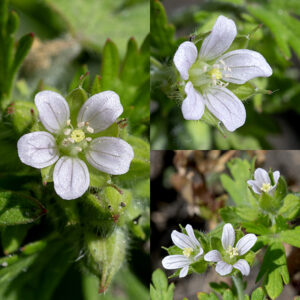
The flowers of both Carolina spring beauty (Claytonia caroliniana) and Virginia spring beauty (Claytonia virginica) occur in clusters (racemes) of 2-10 at the tip of the stem and are small (1/3-1/2″) with long flower stalks. The flowers of both species contain (only) two green sepals; five petals with pinkish-purple stripes on a white background; five stamens with deeply purplish-pink anthers; and a single style that splits into three above its midpoint. The flowers of both species close at night or on cloudy days and nod down; they perk up and reopen when the light increases. The fruit of both species is a three-part, egg-shaped capsule nestled between the two sepals. Each capsule contains 1-6 shiny, black seeds 2-4 mm long which have a coating that attracts ants; the ants carry the seed off to their nests, thus dispersing them. You can’t distinguish between the two species on the basis of the flowers.

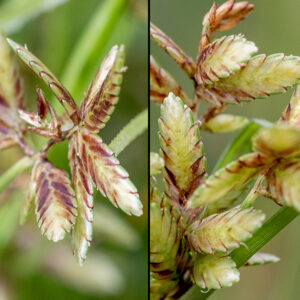
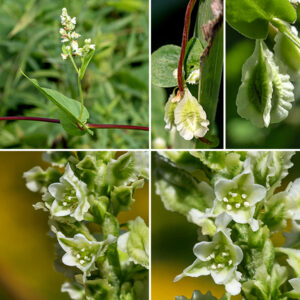
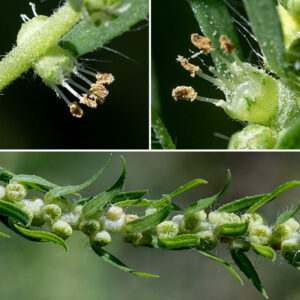
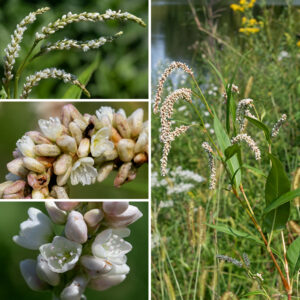
Carolina spring beauty (Claytonia caroliniana) stems and leaves. Two views of the stems and stem leaves of Carolina spring beauty (three quarters view above, lateral view below). Note the thick, fleshy, diamond-shaped leaves attached to short, stout petioles.
Virginia spring beauty (Claytonia virginica) has leaves (both basal and stem leaves) that are long and strap-like (2-5″ long, 8-10 times longer than wide), while Claytonia caroliniana has leaves (both basal and stem leaves) that range from diamond shaped to elongated ellipses, 1-3″ long and only one to three times longer than wide. The leaves of both species are somewhat fleshy, have smooth margins, and a have single (midline) vein. Most of the leaves in both species are basal and have petioles, although the petioles in the basal leaves of Claytonia virginica are very short and easy to overlook, while the petioles in the basal leaves of Claytonia caroliniana are obvious, ranging from slightly shorter than the leaf blade to as long as the leaf blade (1-3″). Both species have only a single, opposite pair of stem leaves which are attached about halfway up the stem, but the strap-like stem leaves of Claytonia virginica are sessile or nearly sessile on the stem, while the much more rotund stem leaves of Claytonia caroliniana have obvious petioles that may be nearly as long as the leaf blade.

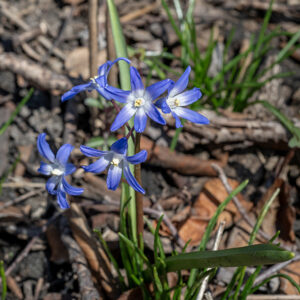
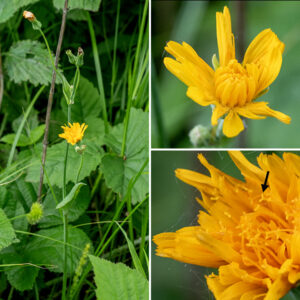
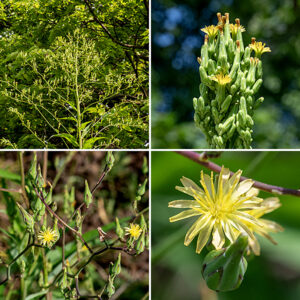
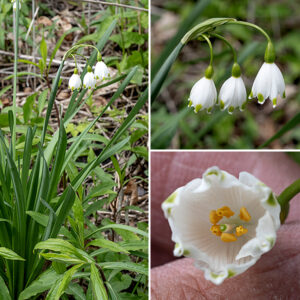
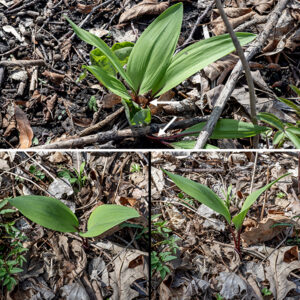
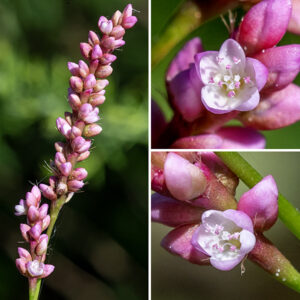
Two Carolina spring beauty (Claytonia caroliniana) plants in mid-April in a Jackson Park woodland. At this time in the spring, few other wildflowers are present except wild ginger (Asarum canadense) and Dutchman’s breeches (Dicentra cucullaria). Note the reddish-brown stems on the Carolina spring beauty, the single pair of ellipsoidal stem leaves on stout petioles, and the terminal flower buds.
Carolina spring beauty (Claytonia caroliniana) is a native perennial that is nearly identical to another native perennial, also known as a “spring beauty” — Claytonia virginica. This is apparently the first report of Carolina spring beauty (Claytonia caroliniana) in the state of Illinois but Claytonia virginica is present widely across the state, including in Jackson Park. I first found it in Jackson Park in 2022 but misidentified it at the time; Carolina spring beauty has been blooming in Jackson Park for at least four years (as of 2026). Claytonia virginica is reported to prefer open sunny habitats while Claytonia caroliniana is said to prefer shadier, woodland habitats and these claims are consistent with my observations of the two species in Jackson Park. The website bplant.org suggests that the two species also differ in the relative sizes of the sepals and the petals. Claytonia virginica is said to have sepals that are larger both in absolute terms (5-7 mm long) and relative to the petals (about 3/4 the length of the petals, which are 7-14 mm long) while Claytonia caroliniana has sepals that are shorter both in absolute terms (3-5 mm long) and relative to the petals (about 1/3 the length of the petals, which are 6-10 mm long). I find the difference in leaf shape and size a more reliable guide. Claytonia virginica is by far the more common of the two species in Jackson Park.
Browse more plants
Want to keep exploring more plants? You can view other plants like this one by selecting a characteristic from the list below, or 'browse more plants' to go back to the Plant Finder.
Related Plants